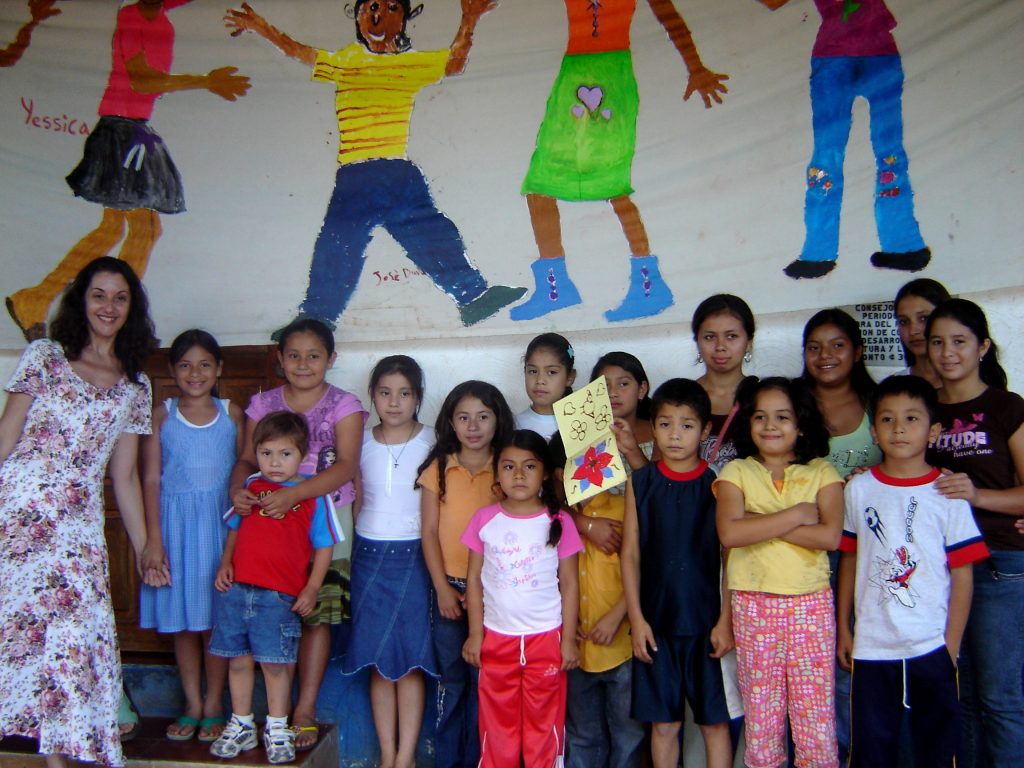
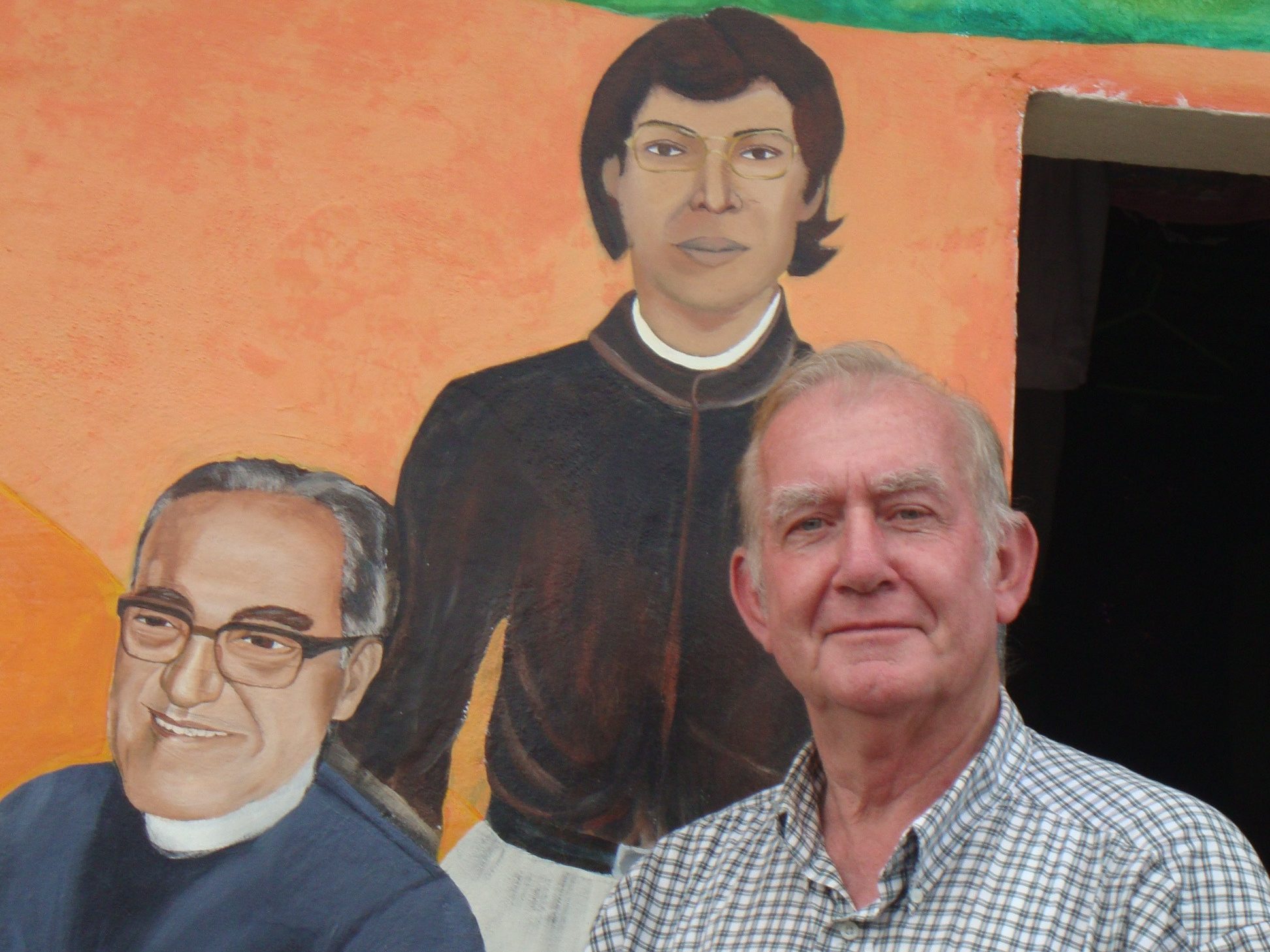
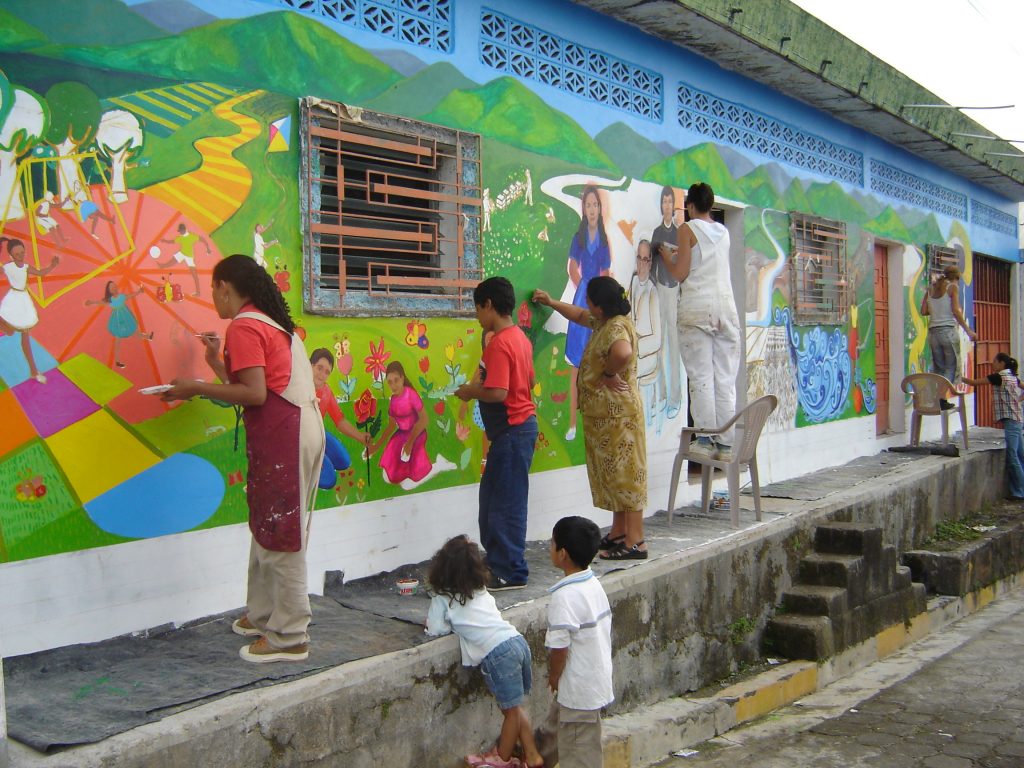
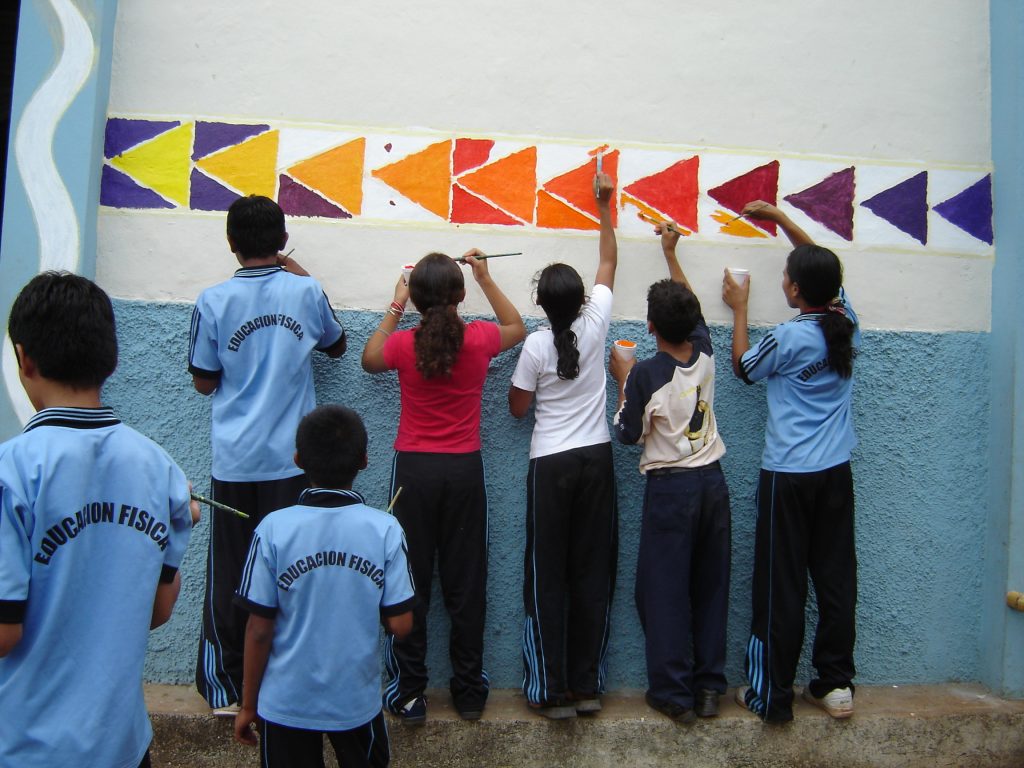
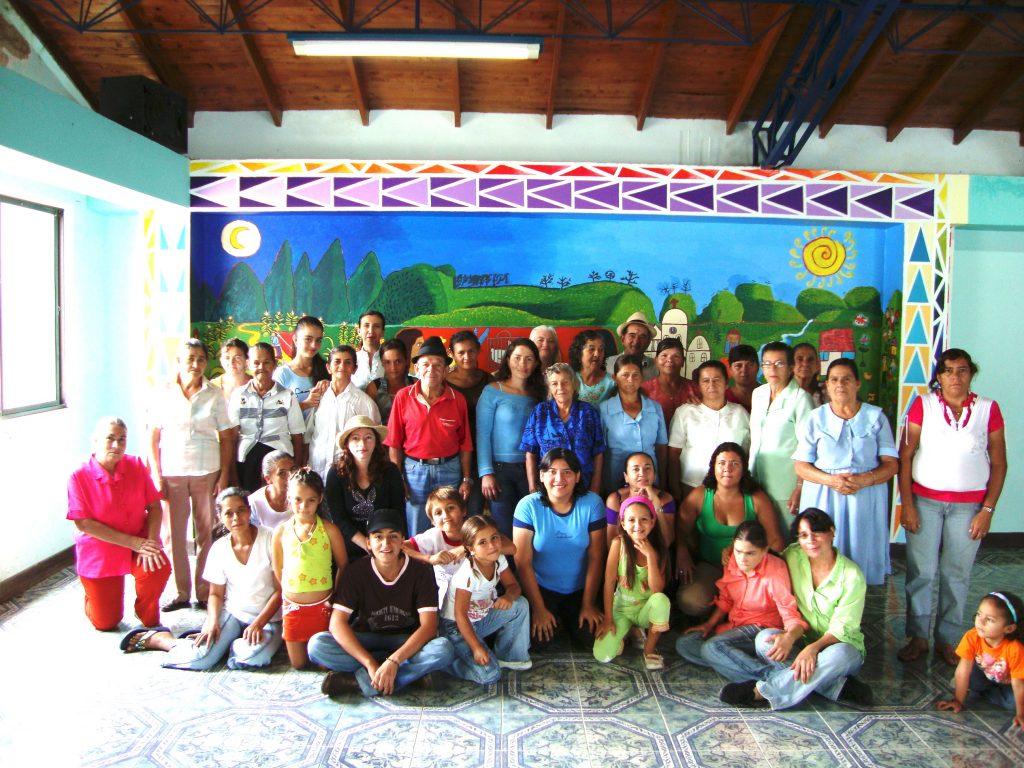
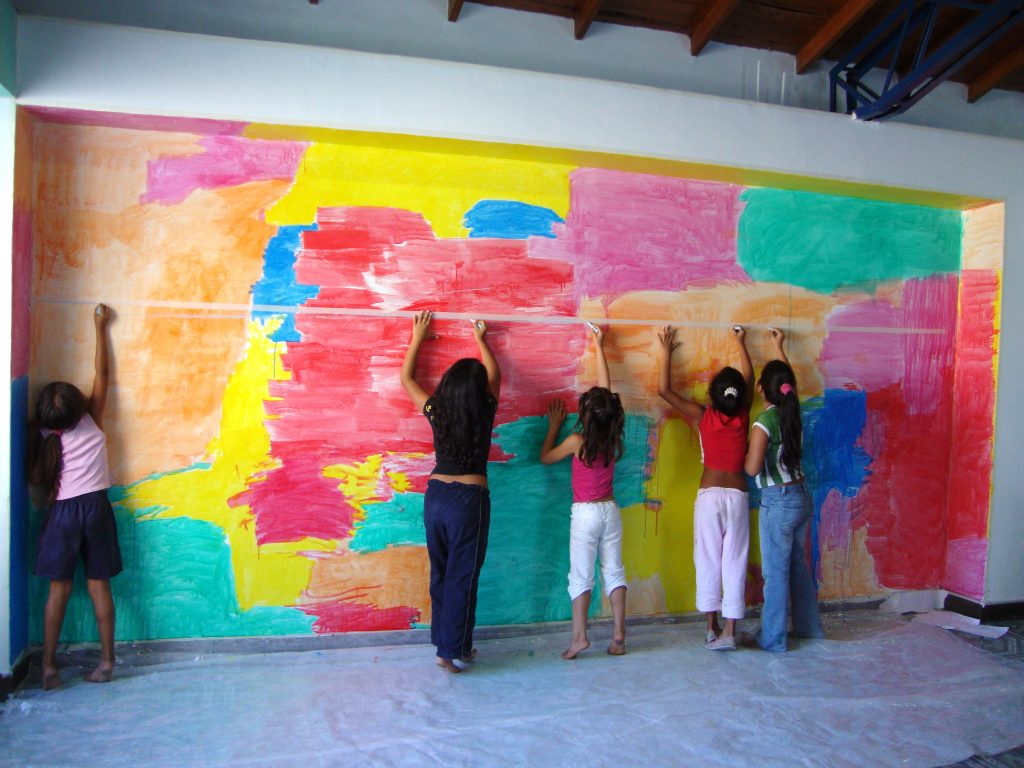
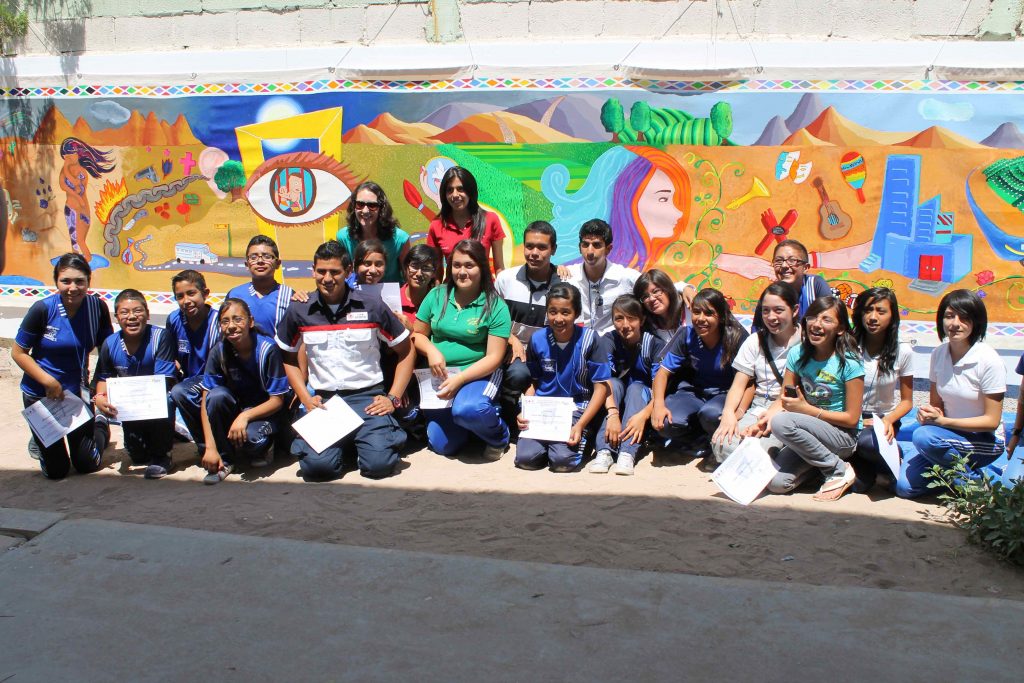
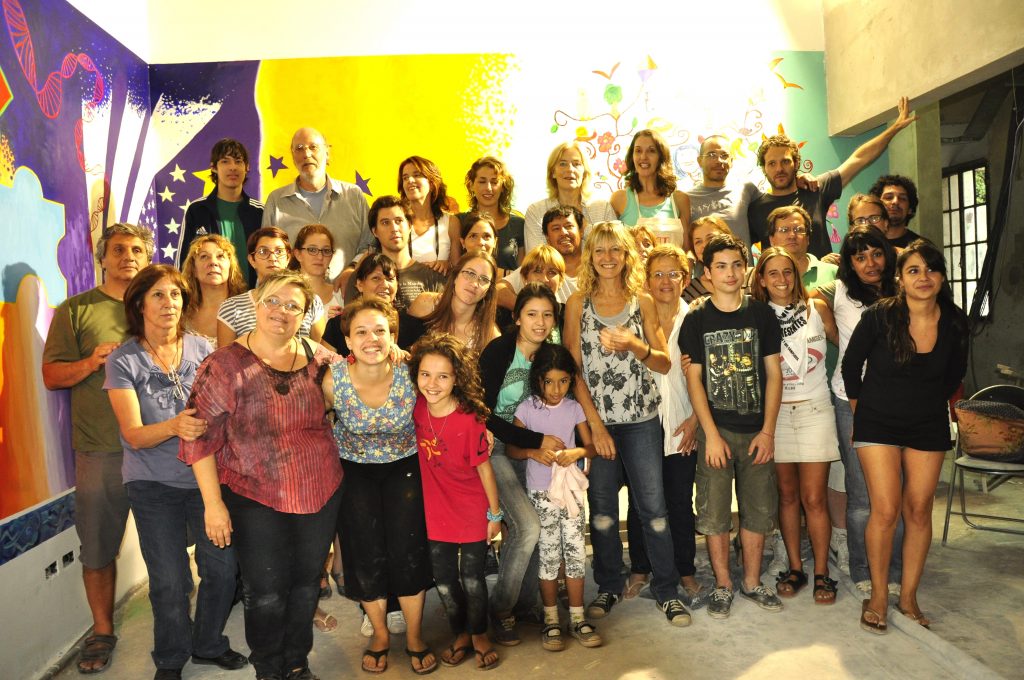
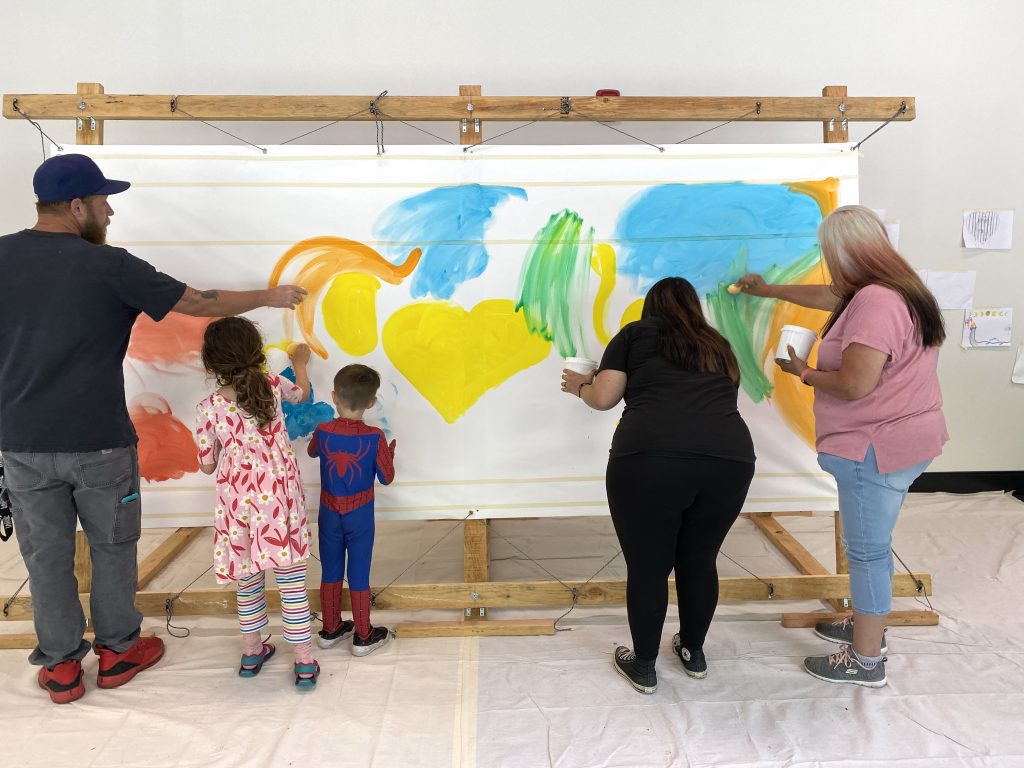
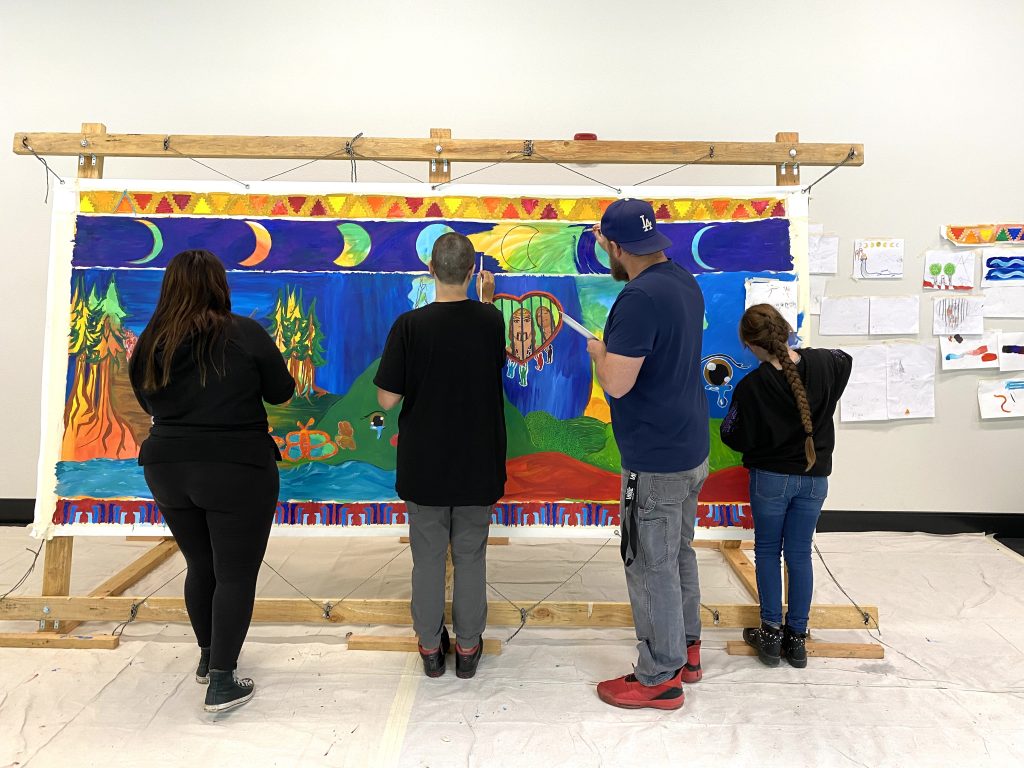
Children of Perquin in front of the silhouettes mural in which the children traced and painted their silhouettes on a portable mural painted on canvas which was exhibited in different parts of the community of Perquin during 2007 and 2008.
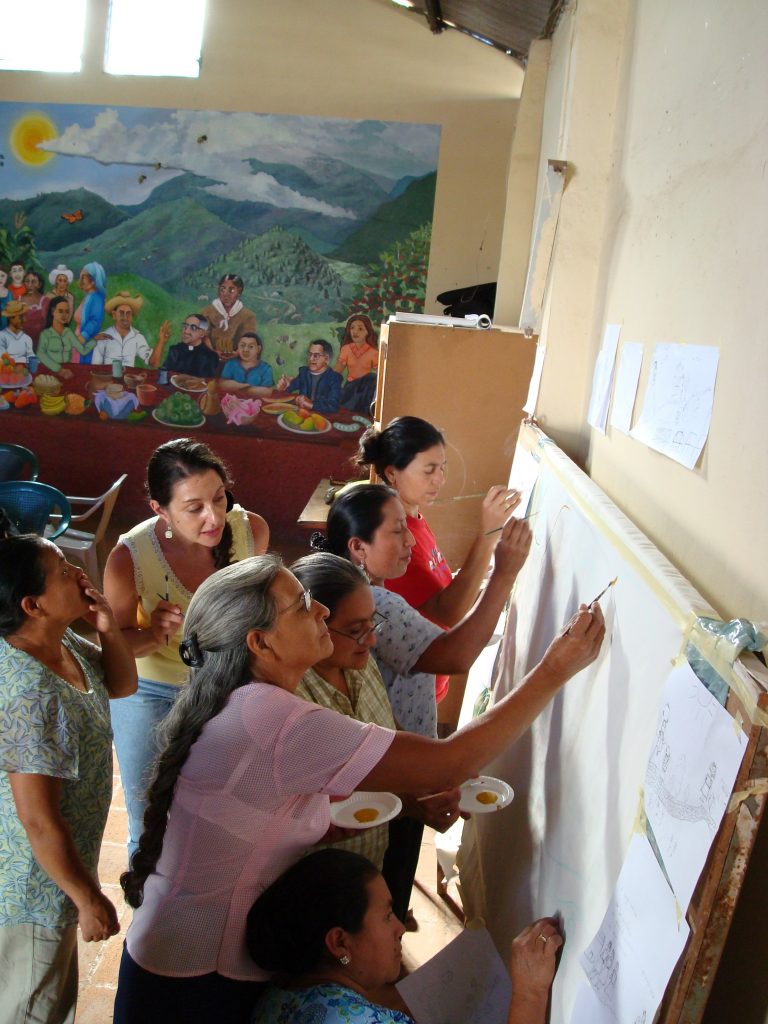
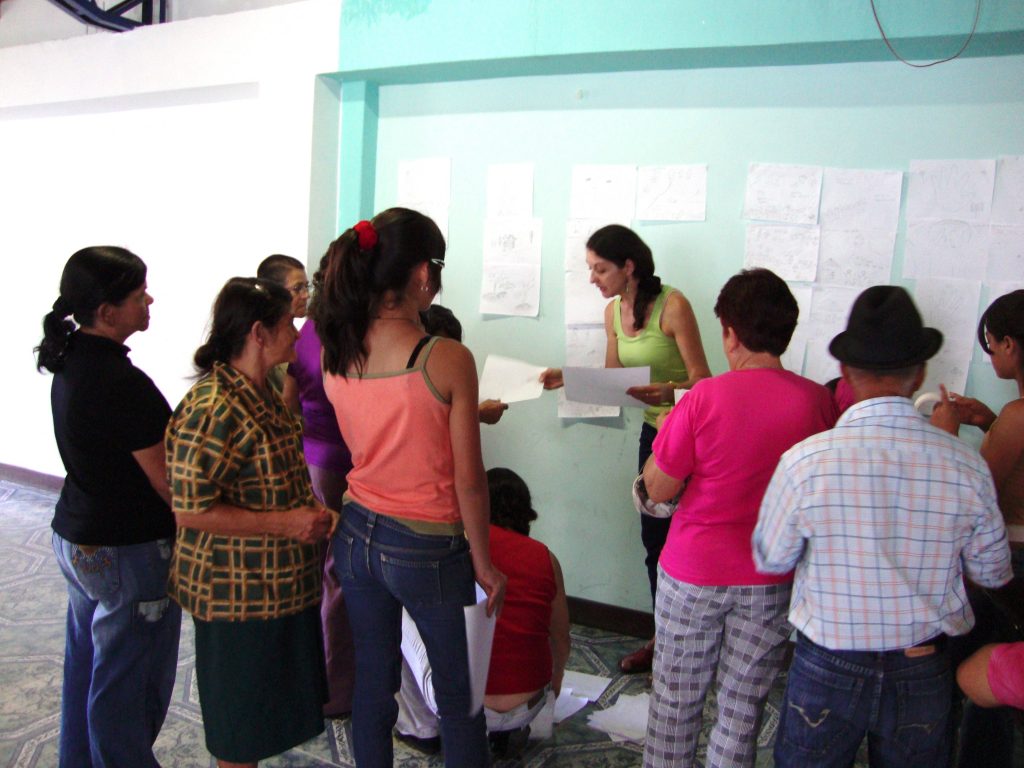
“The Hamlet of My Body/ El Cantón de Mi Cuerpo”, Women artists from Perquin developing drawings which culminated into a series of silhouette-like murals representing the location of memories within their bodies (2005)
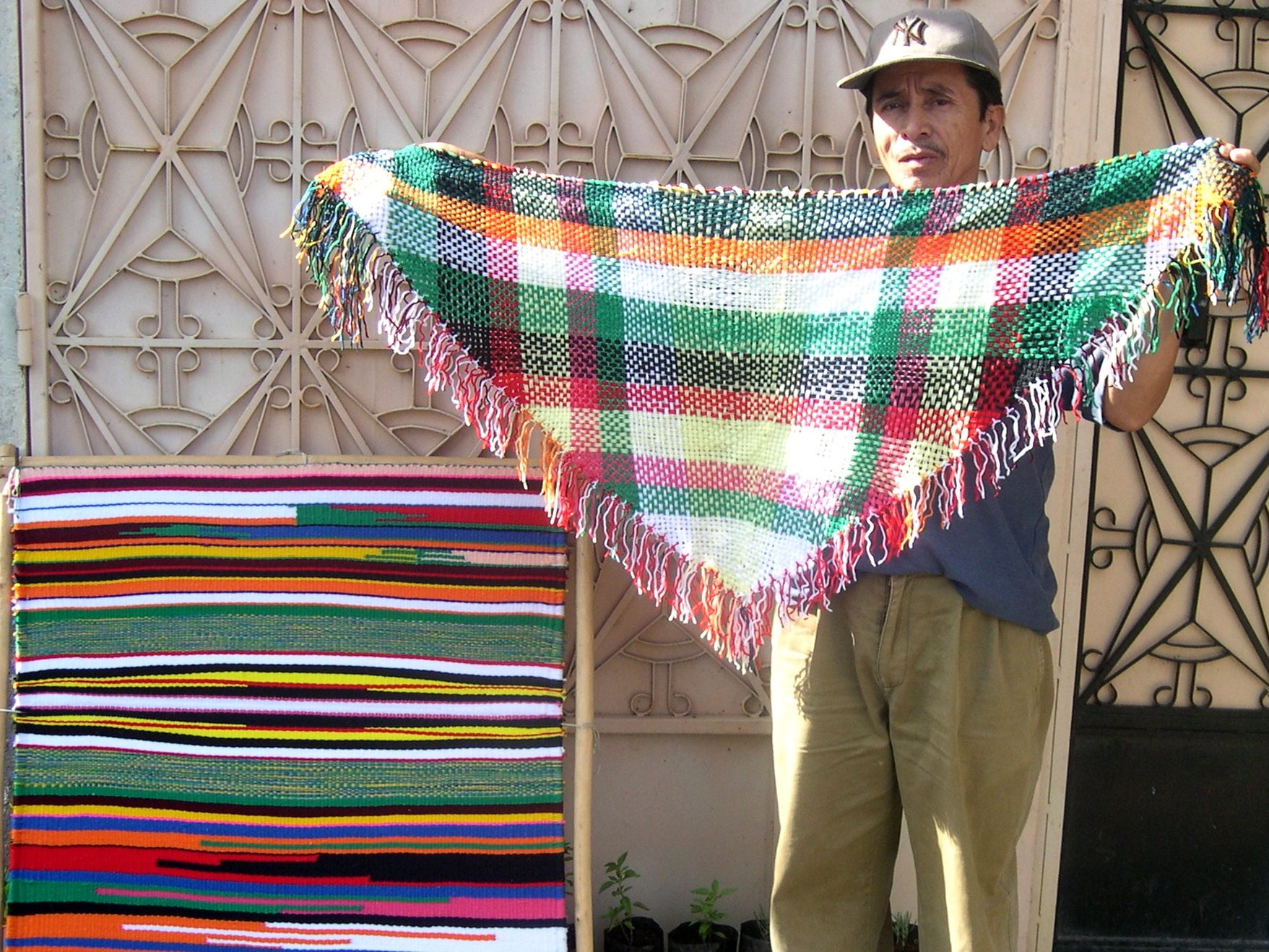
Textile Artist from Perquin exhibiting the weavings he created after learning how to work with textile techniques from visiting artist Inés Talón from Argentina. (2006)
Father Rogelio Ponseele (1939-2025), a beloved friend and a great supporter of Walls of Hope from the very beginning of this community-based and collaborative art vision. (2006)
Mural at the House of CEBES. The main theme of this mural was the right of communities in the North of Morazán to access water, starting by revering rainwater that becomes water in rivers and lakes, later distributed to communities in the border area between El Salvador and Honduras. (2006)
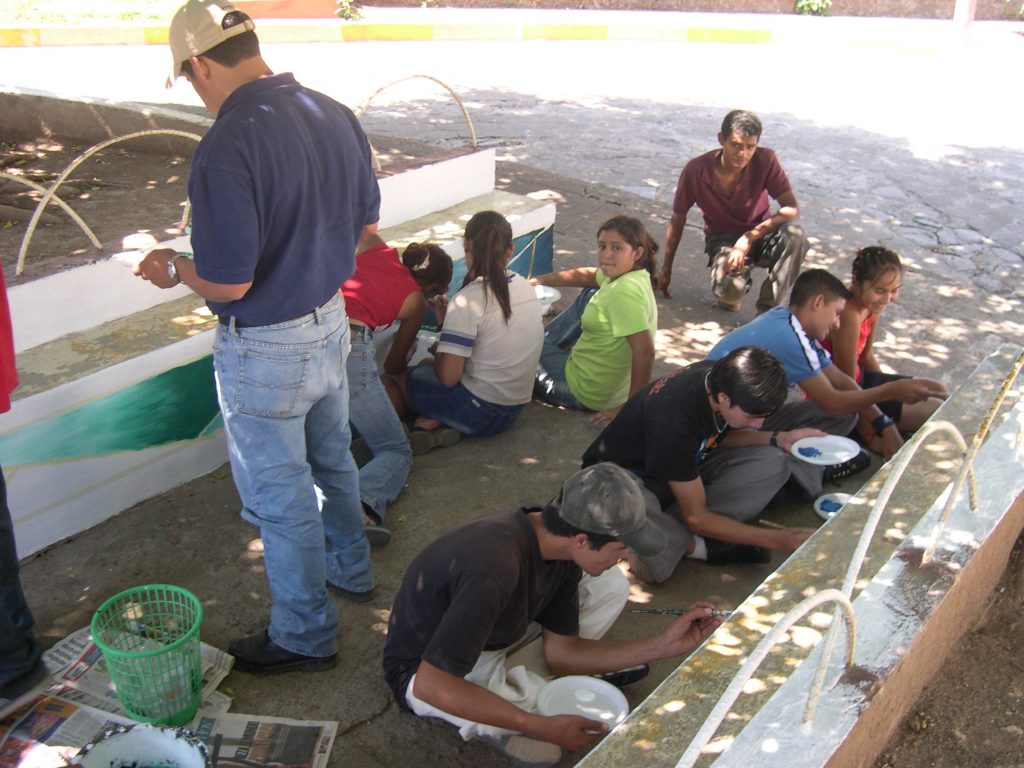
Community artists gather to paint and recover the central park of Perquin. (2005)
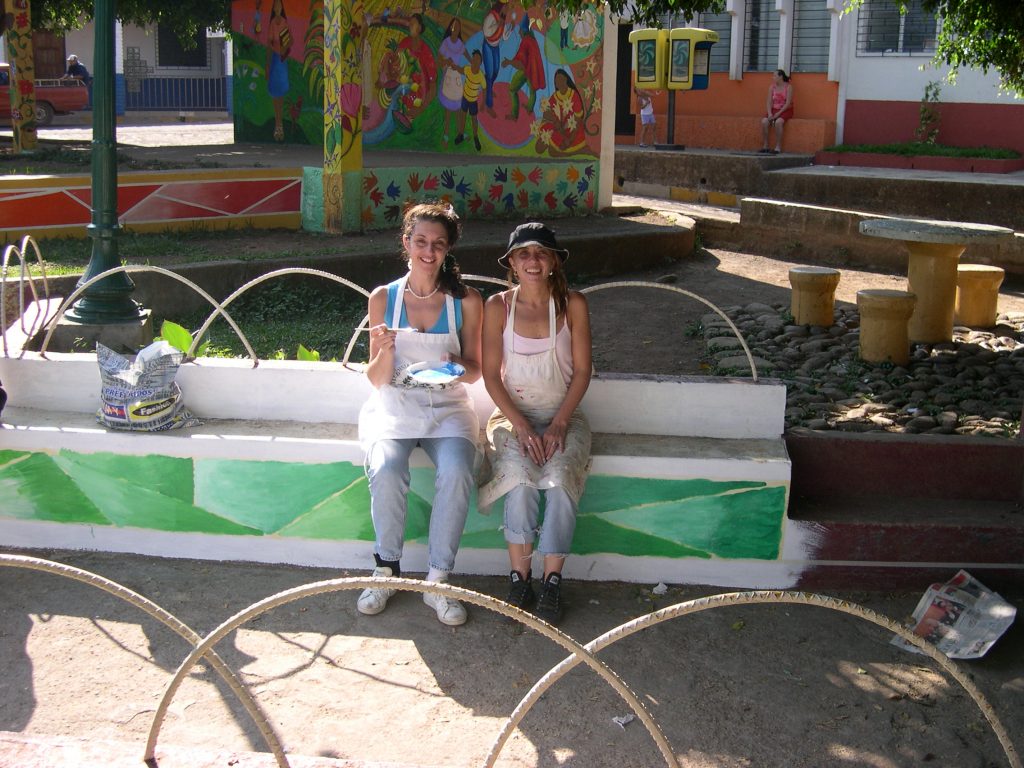
Valeria Galliso and Claudia Bernardi facilitating the recovery of the central park in Perquin. (2005) Photo Credit Claudia Verenice Flores Escolero
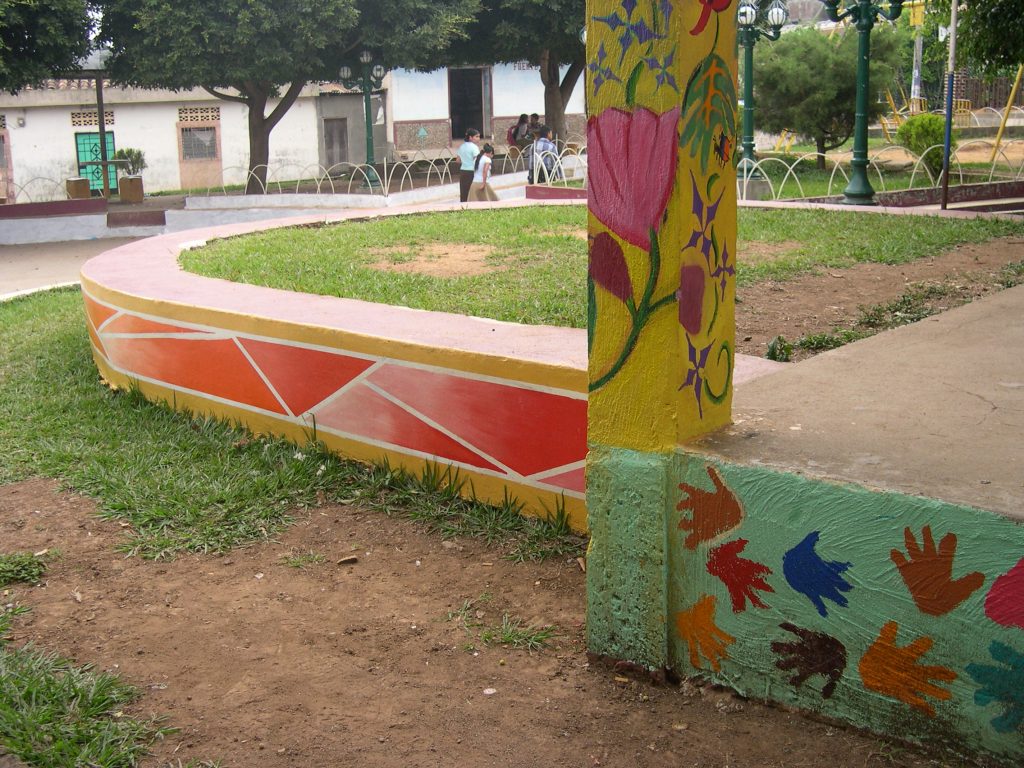
Partial view of the recovered central park in Perquin. (2005)
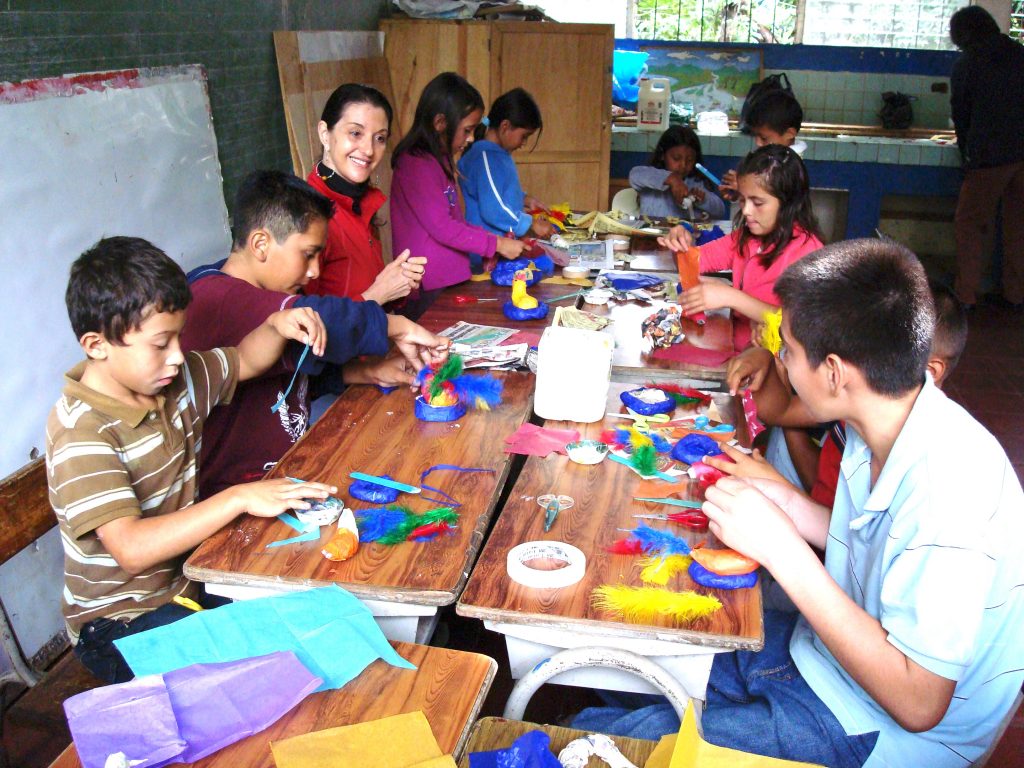
Modeling and soft sculpture workshop for children and youth from Perquin. (2007)
Chapter Two
“Memory Is What We Use to Forget”: Recovering Memory in El Mozote
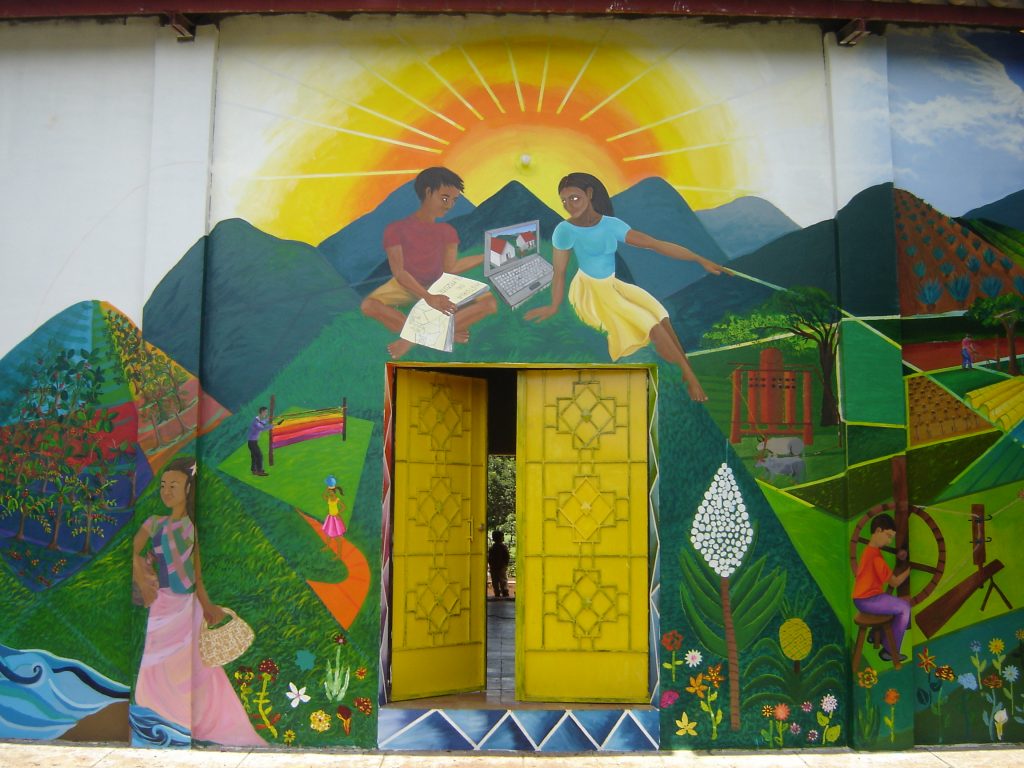
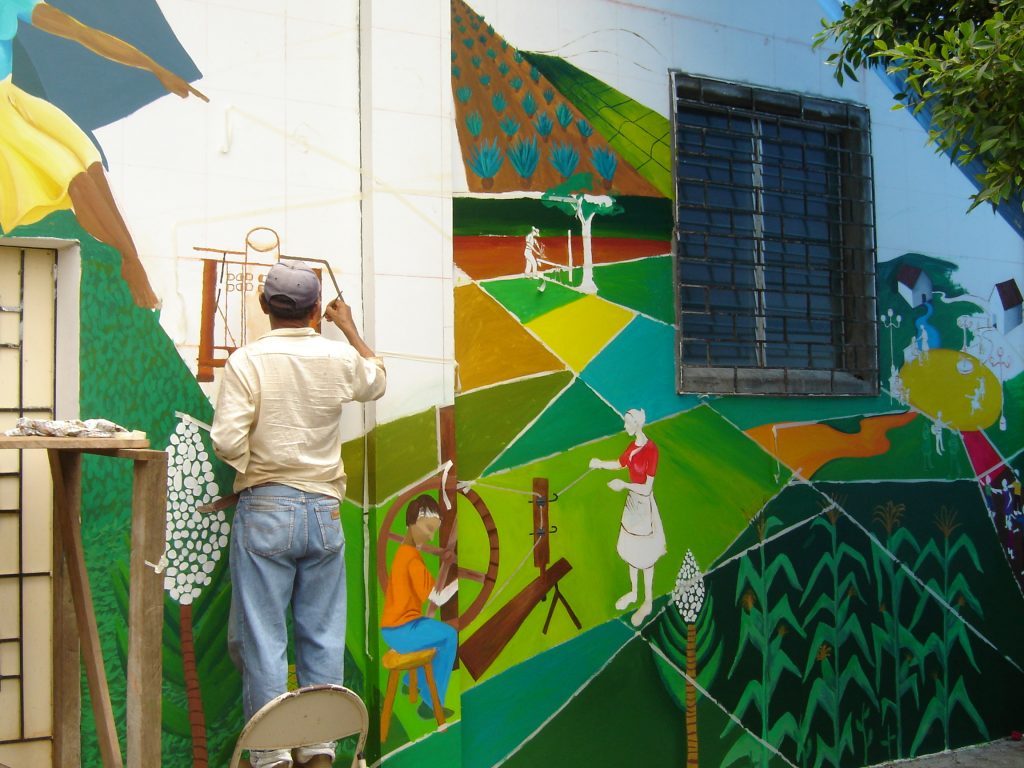
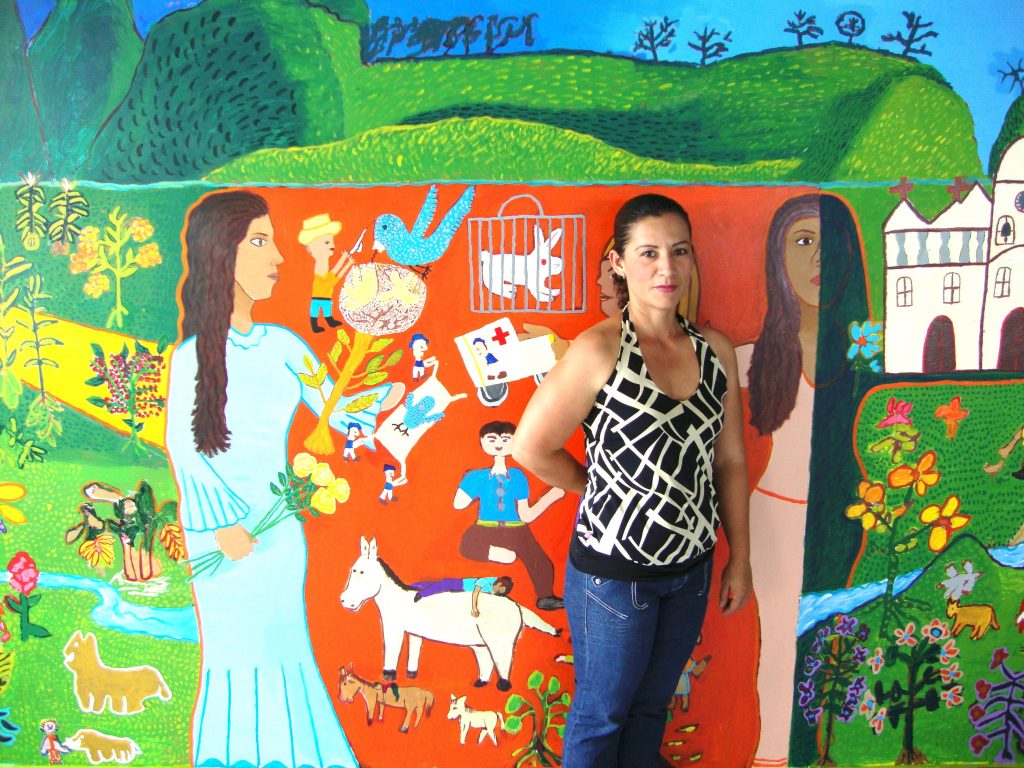
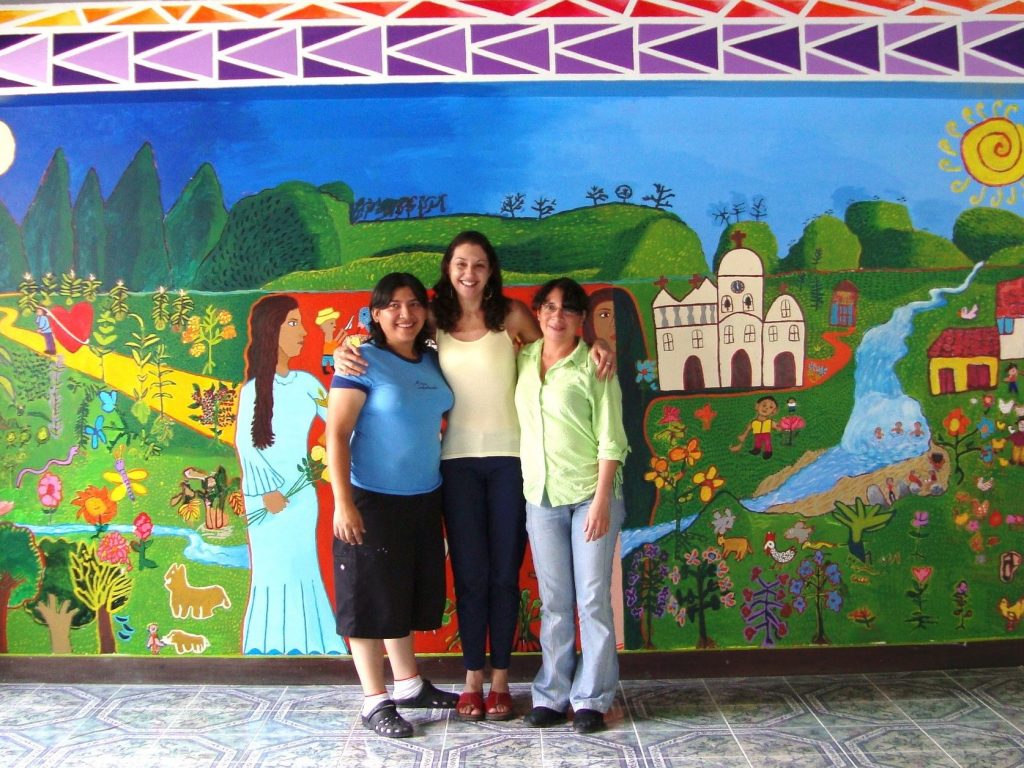
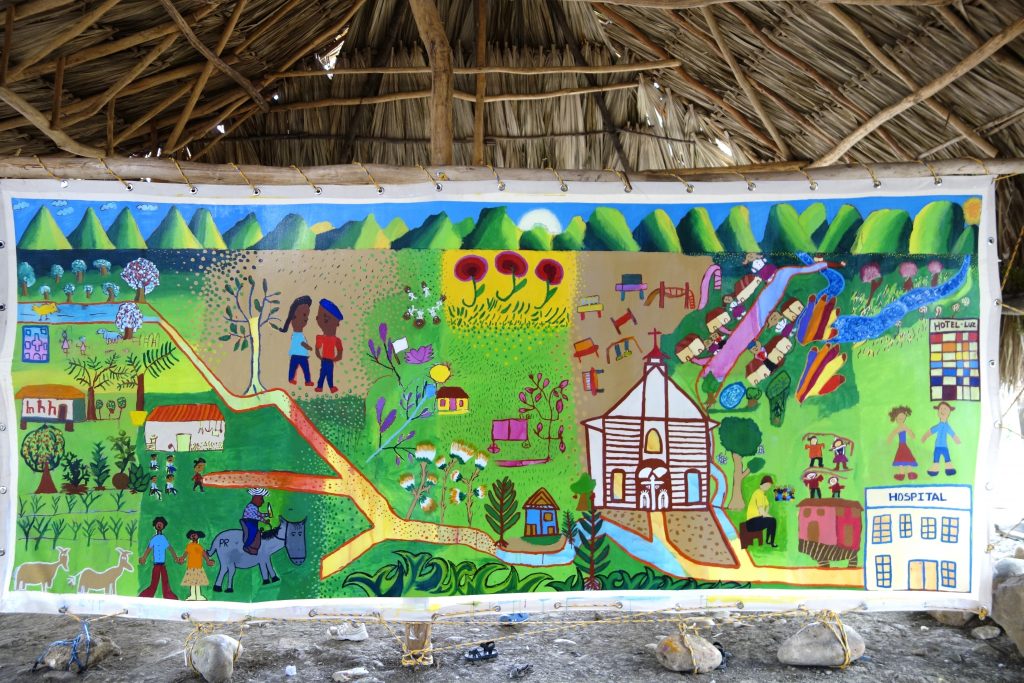
South entrance to the Church at El Mozote. To the left of the image there is a reference to the coffee plantations in the nearby mountain. At the right, a boy working on the manufacturing of rope with the agave fiber (henequén). Above the yellow door, a young boy and girl, learn about the history of the massacre at El Mozote by consulting a webpage on a computer.
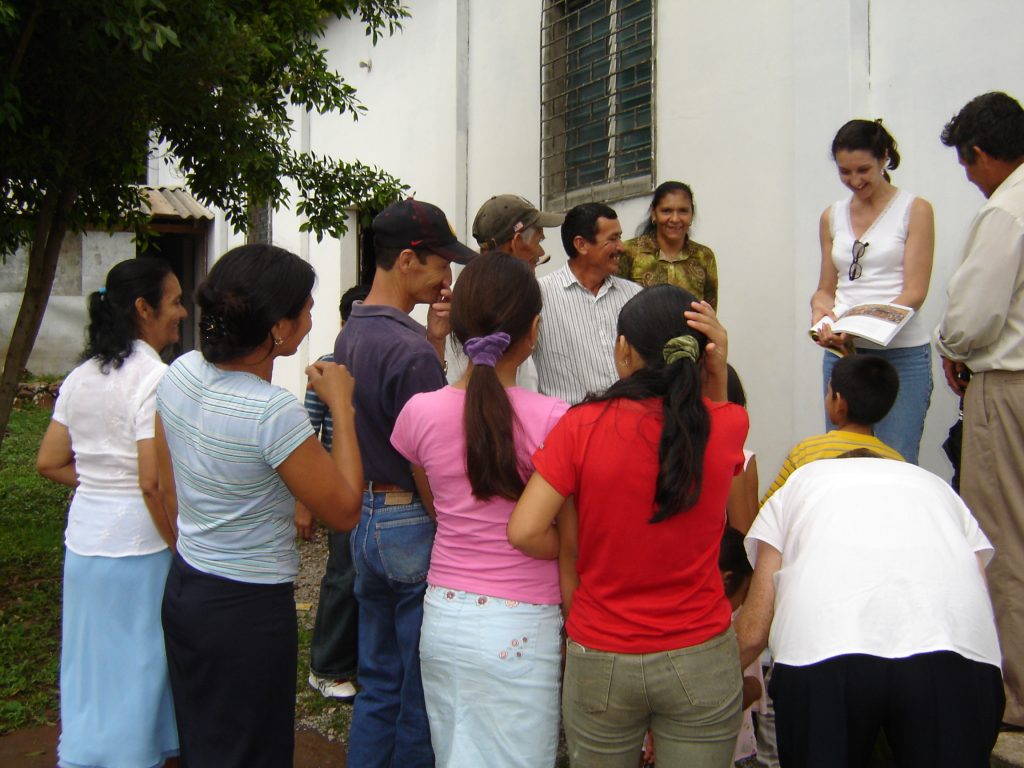
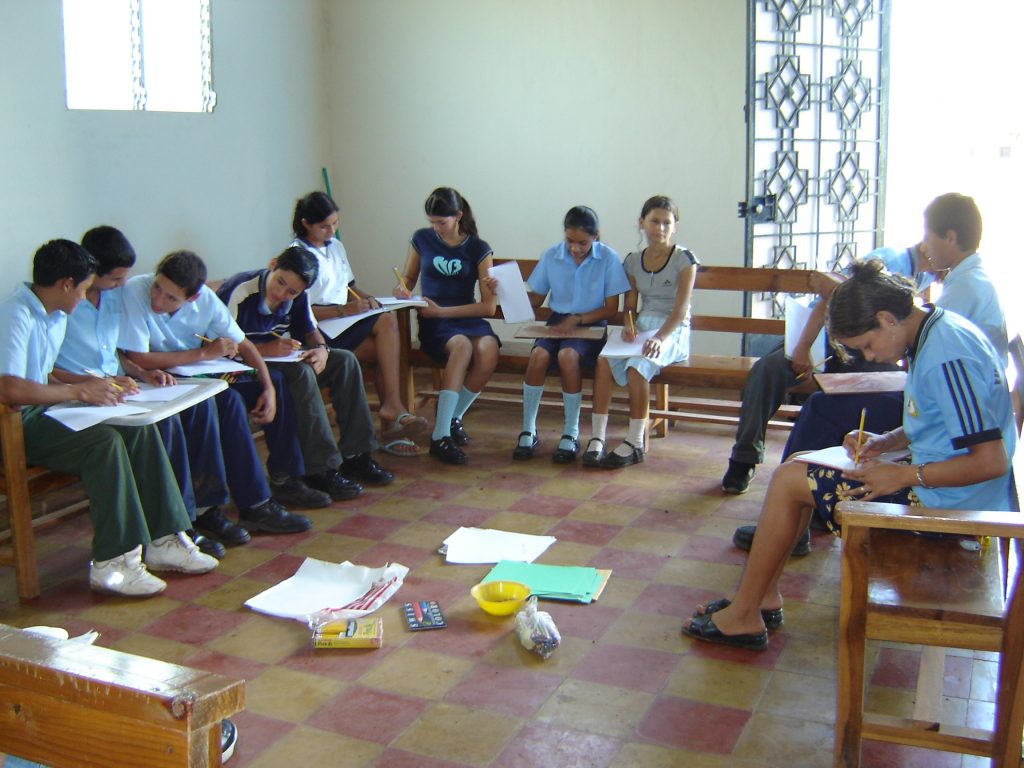
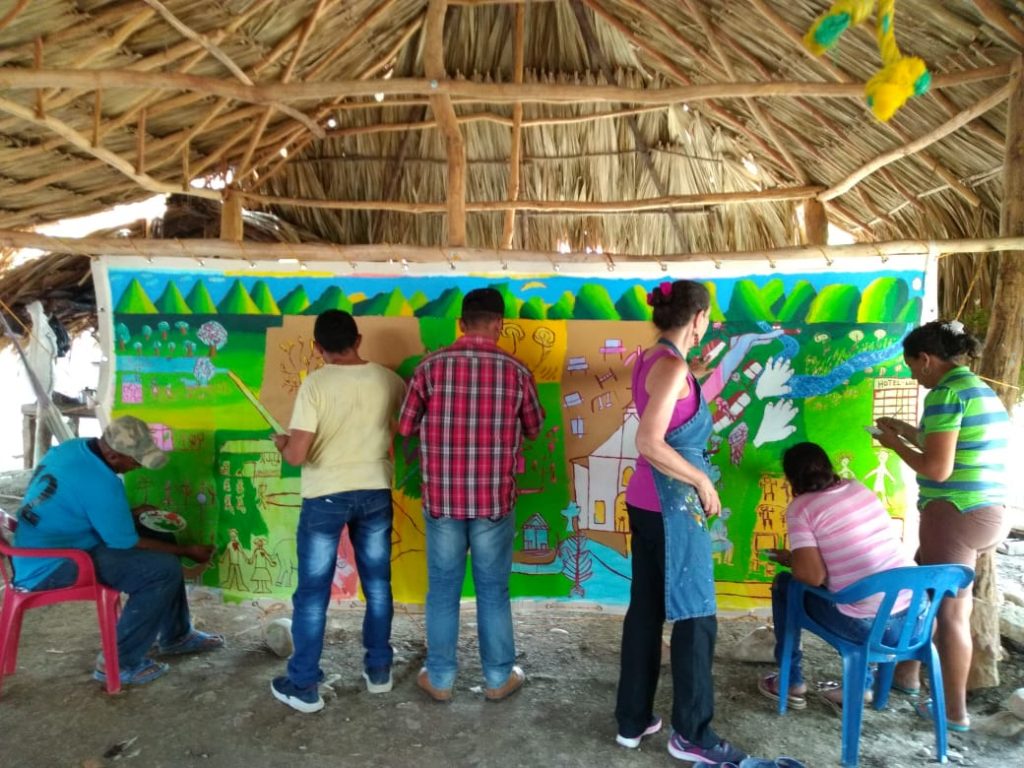
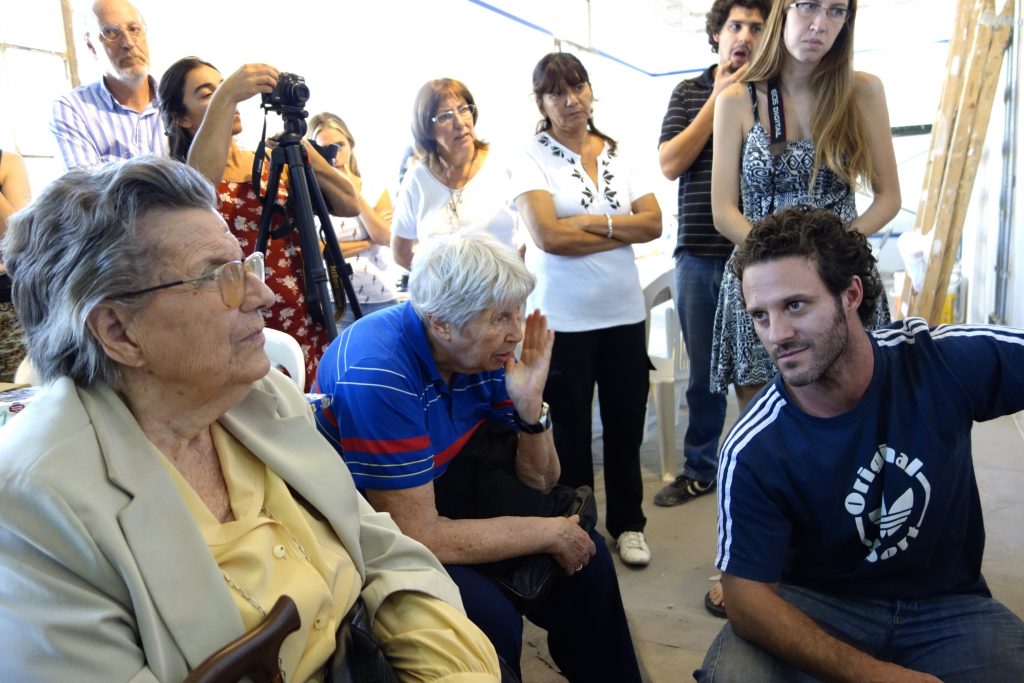
First talks with the community about the creation of the mural planned to be painted on the South wall of the Church at El Mozote.
Gathering with youth at El Mozote to brainstorm ideas, designing first drawings and sketches that would serve as the starting point of the theme of the mural.
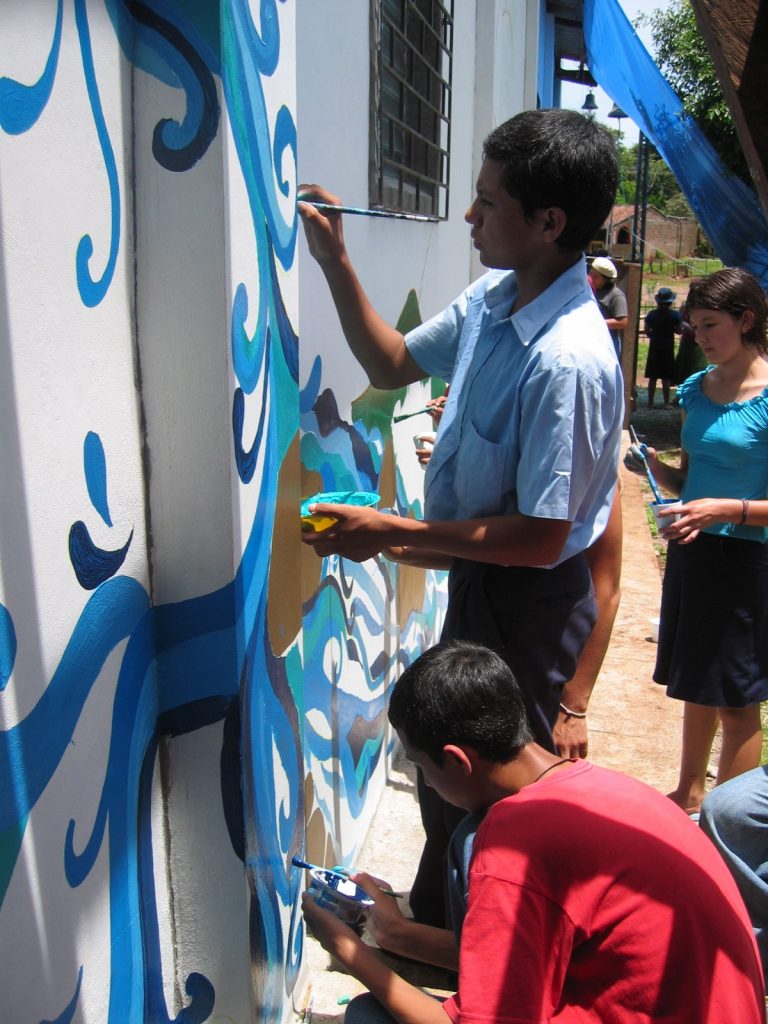
Young artists of El Mozote painting the waterfall which is located to the extreme left of the mural advancing from the top to the bottom of the painting creating a vital and agile presence of water and movement.
One of the artists from El Mozote painting a sugar cane mill.
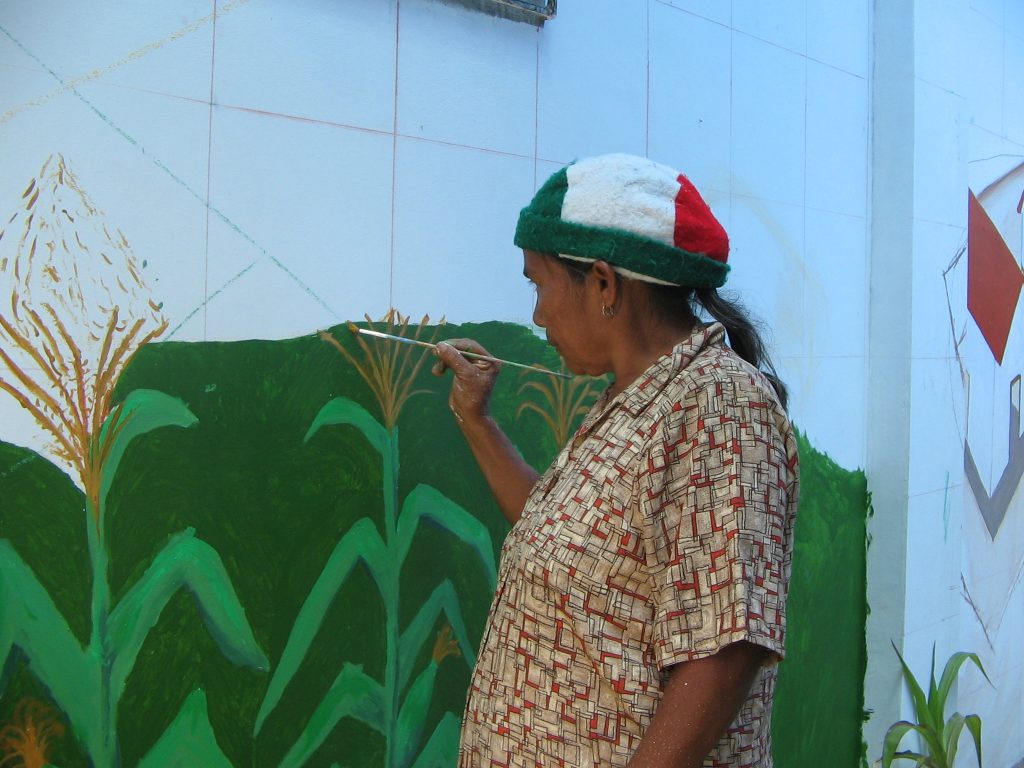
One of the artists from El Mozote painting a corn plantation.
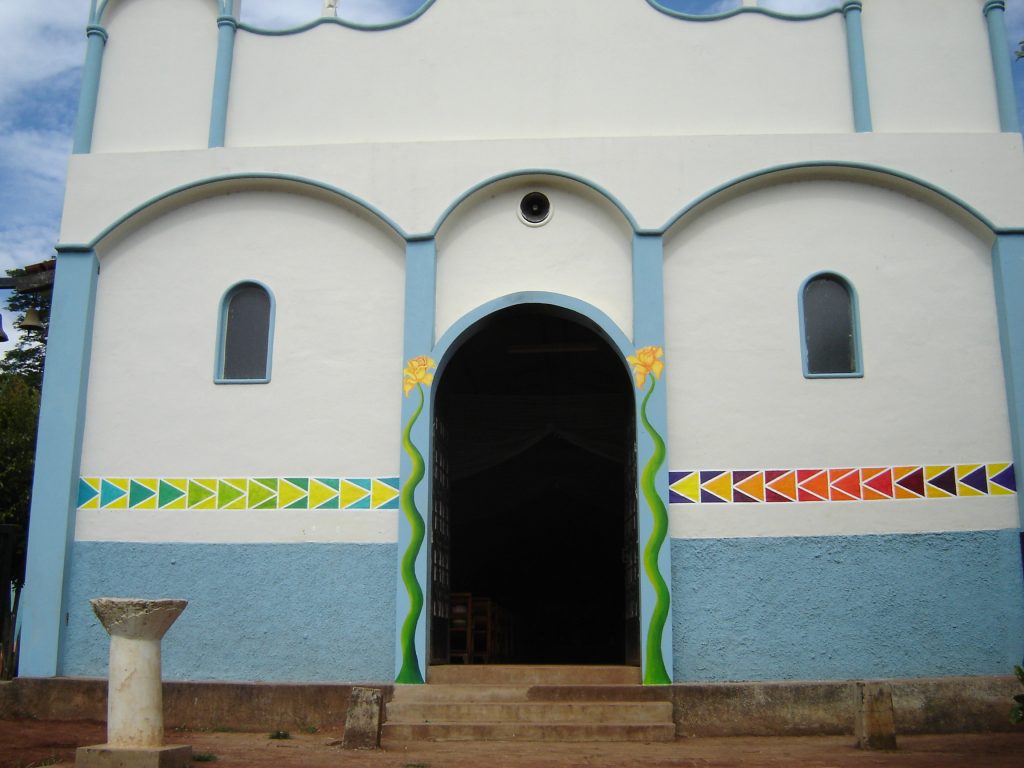
Young artists from El Mozote painting a decoration in the front of the Church at El Mozote.
Front of El Mozote Church.
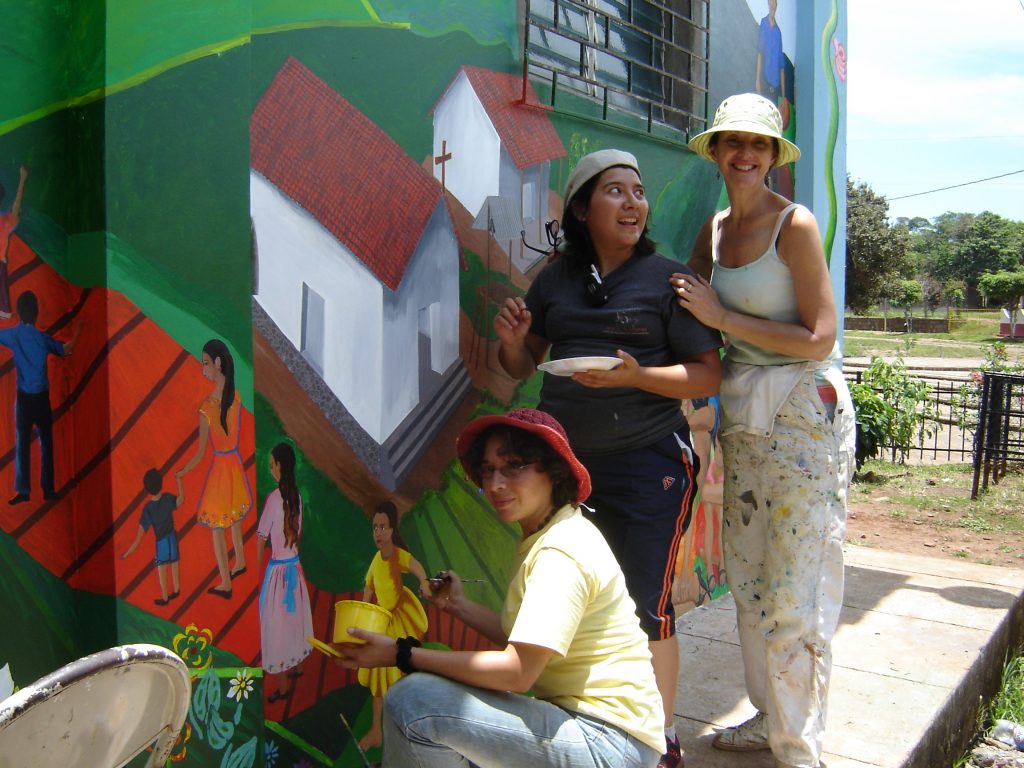
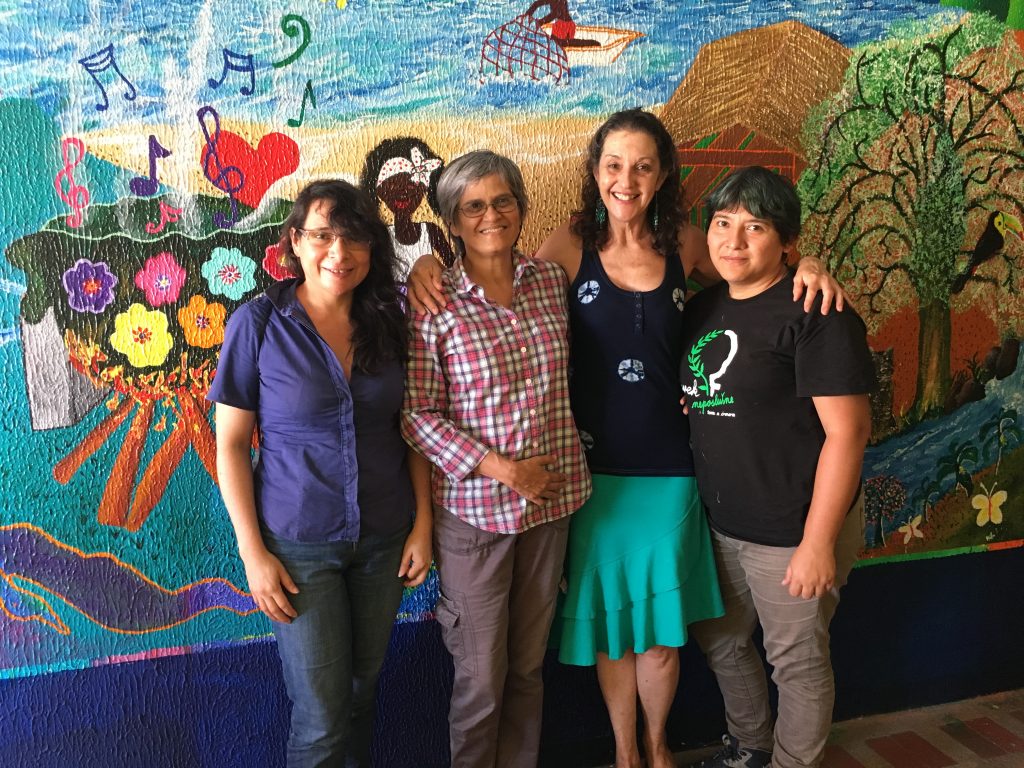
Rosa del Carmen Argueta (left), Claudia Verenice Flores Escolero (middle), and Claudia Bernardi (right) facilitating the mural project at El Mozote. (Photo Credit: America Argentina Vaquerano Romero)
Chapter Three
“The Moon Had Forgotten Us”: Weaving History with Indigenous Women Survivors of Sexual Violence During the Guatemalan Armed Conflict
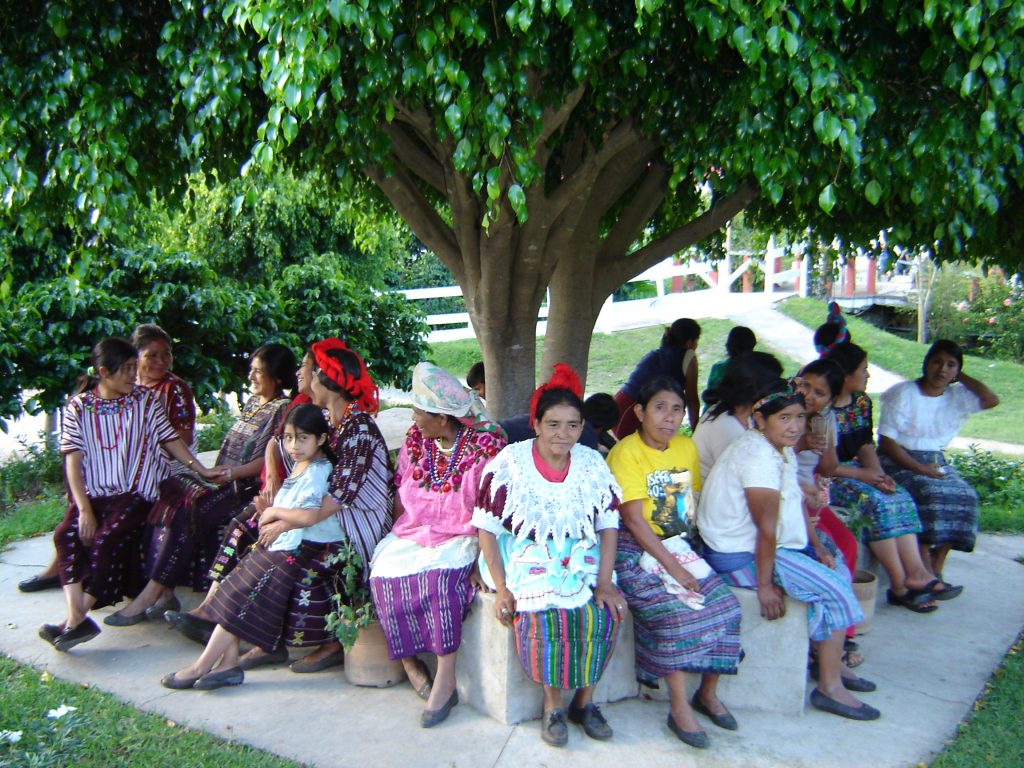
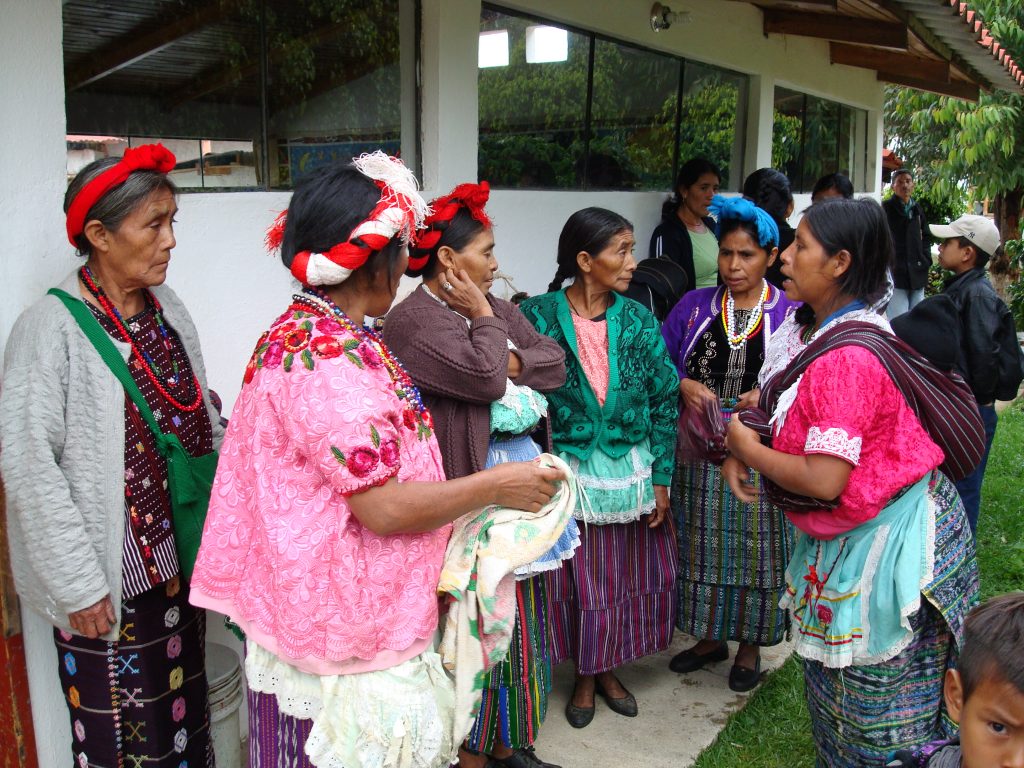
Indigenous Women of Huehuetenango survivors of sexual violence during the Guatemalan armed conflict. (2008)
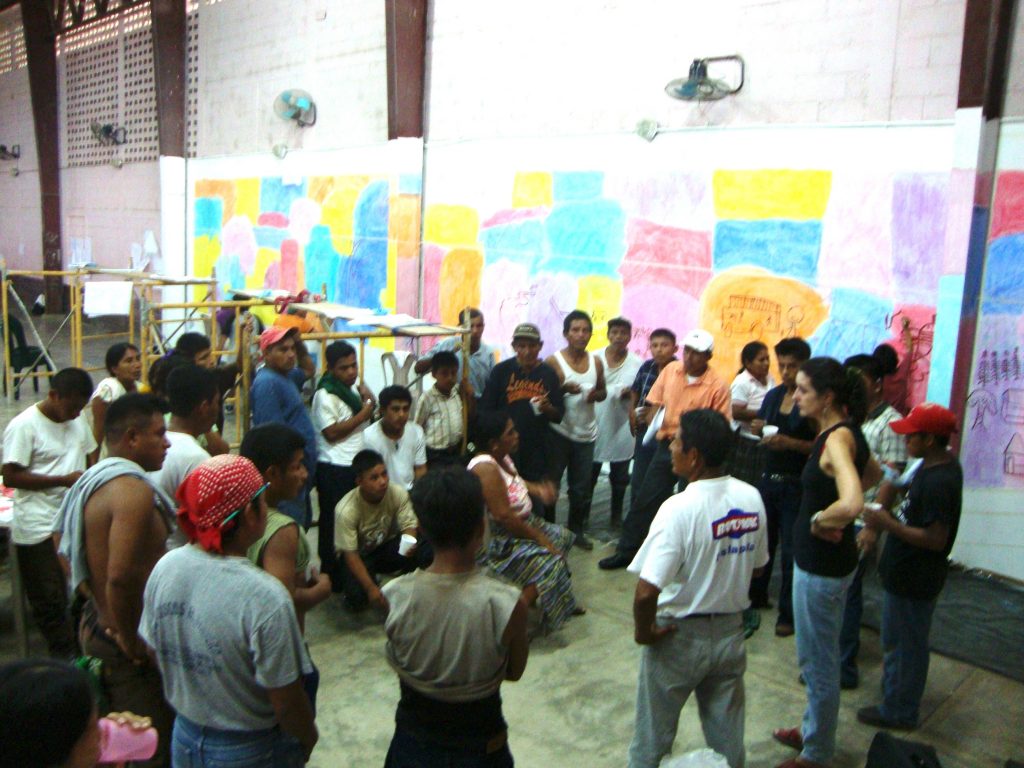
First conversations regarding shared ideas about the mural project reaching indigenous women in Huehuetenango, survivors of sexual violence during the Guatemalan armed conflict.
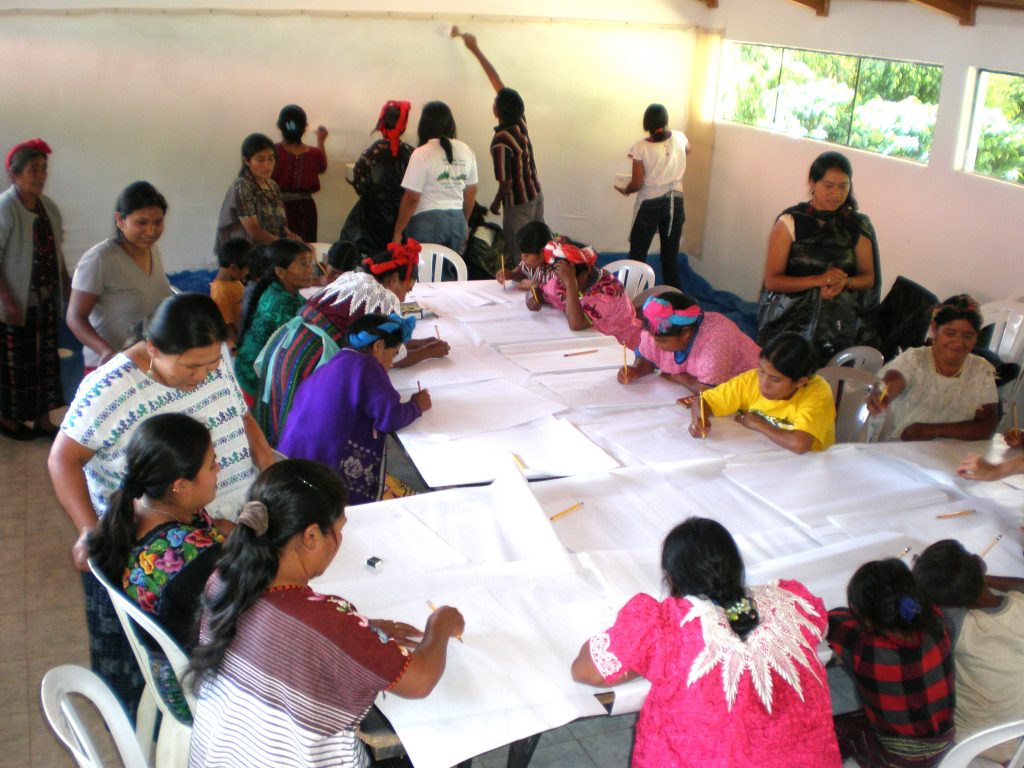
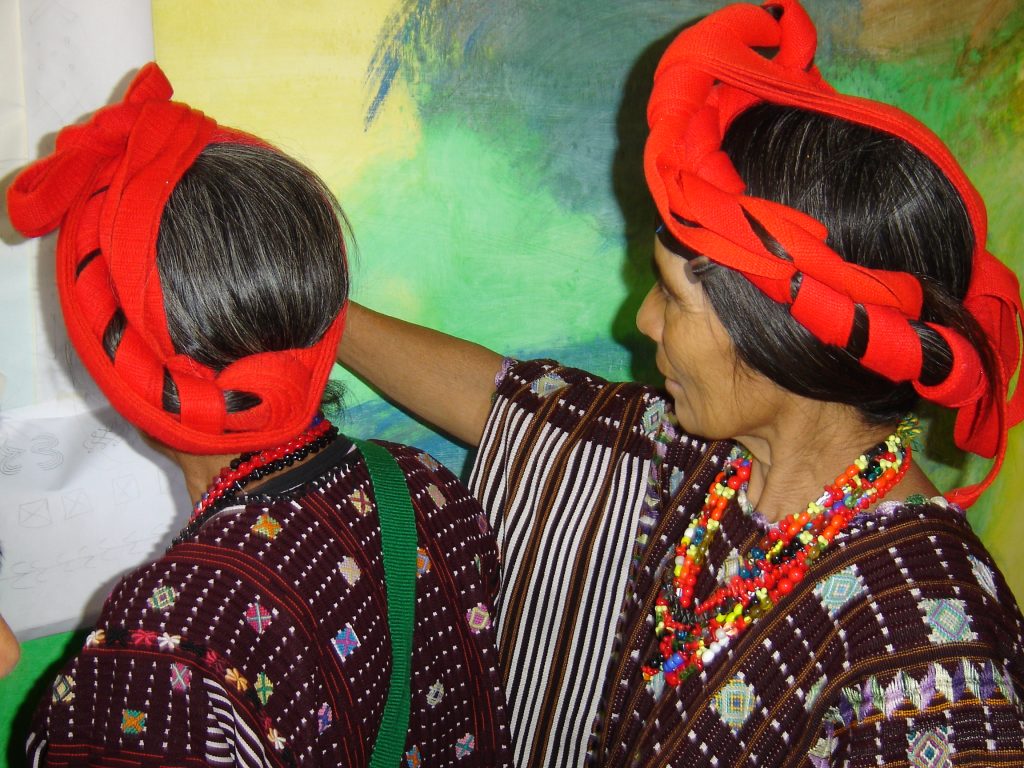
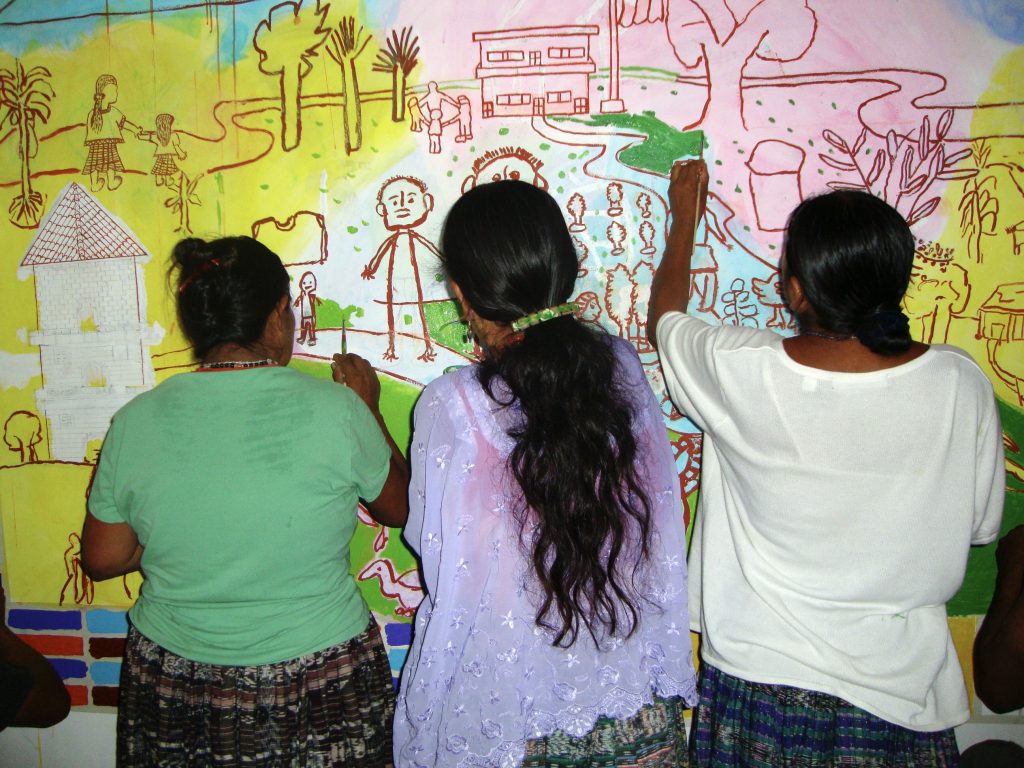
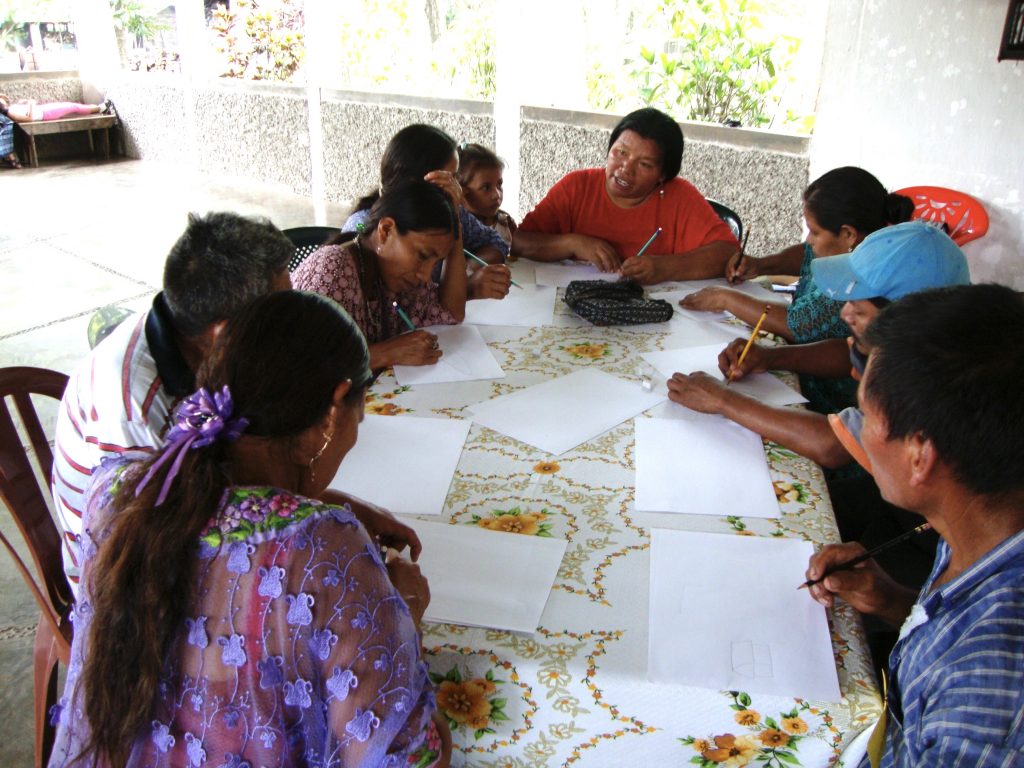
The participating women artists gather to draw ideas and sketches that would serve to develop the theme of this collaborative mural.
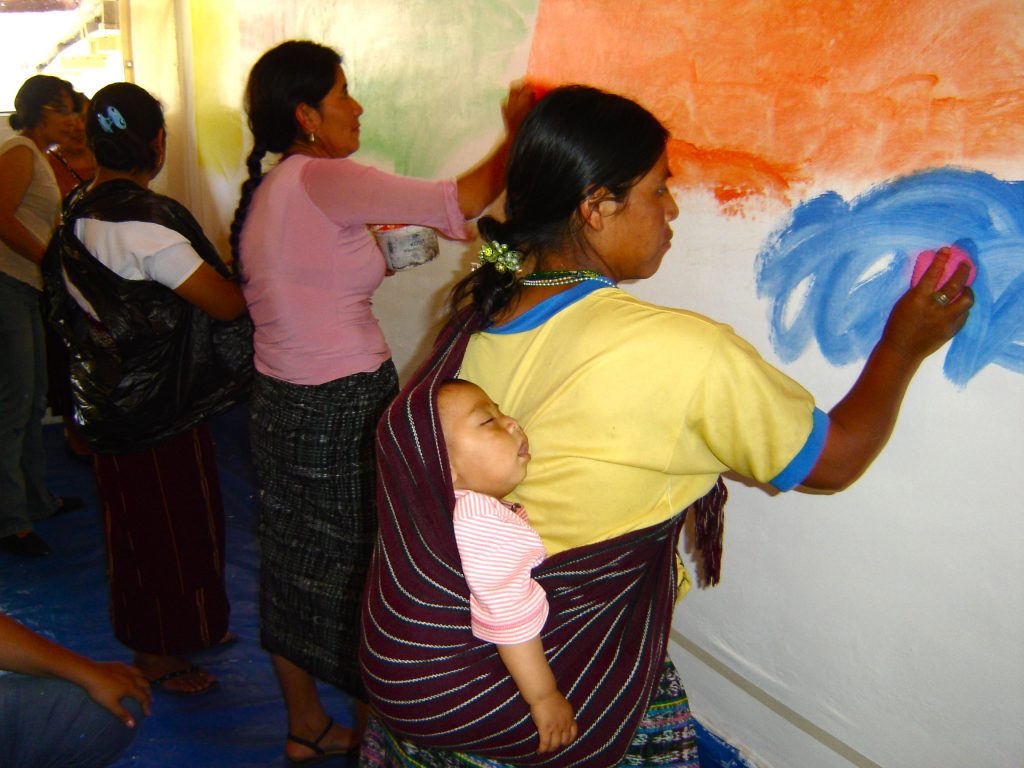
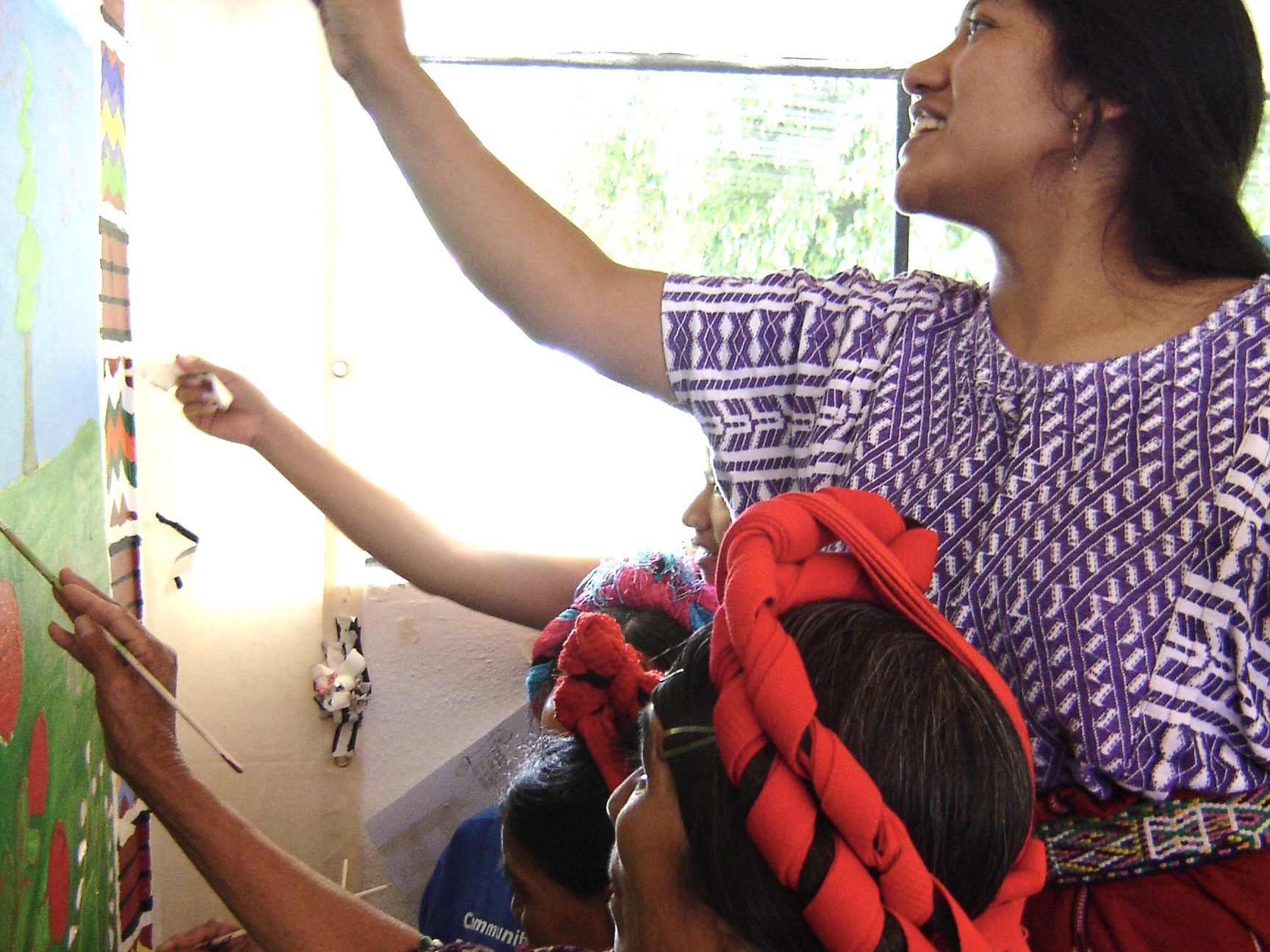
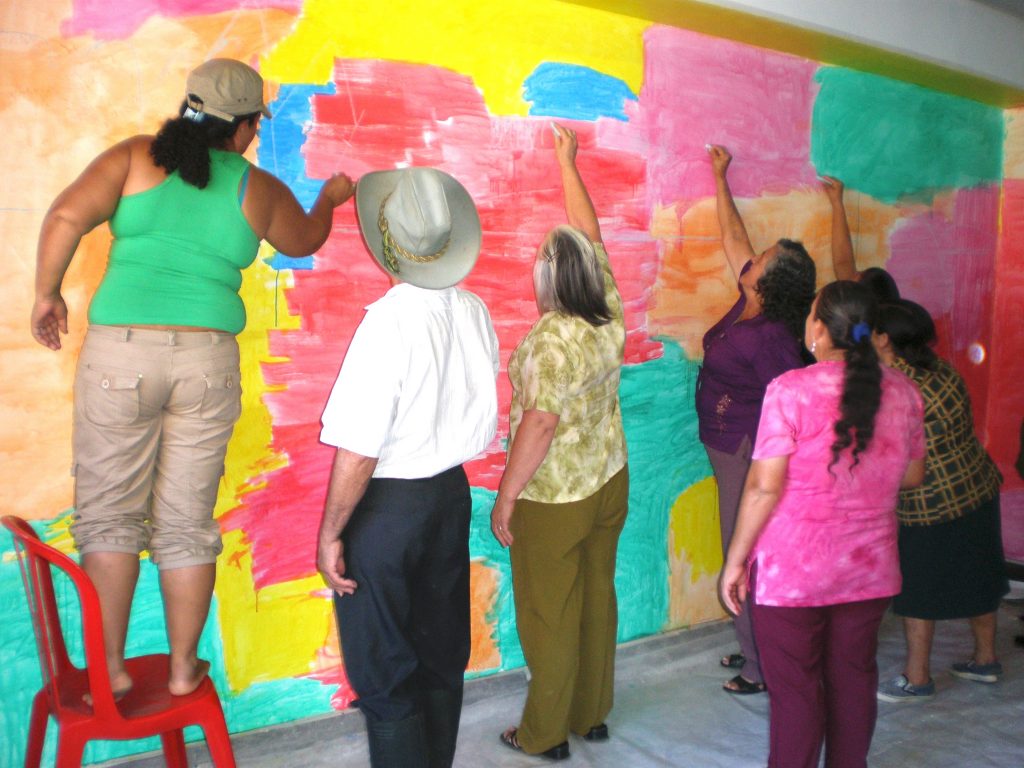
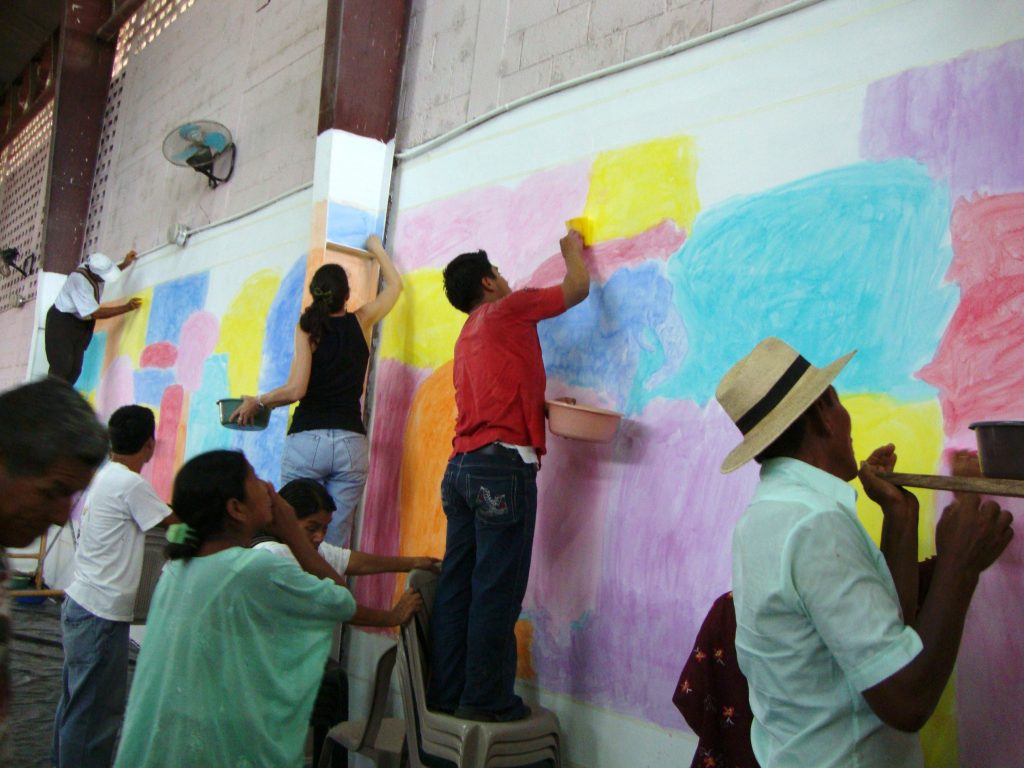
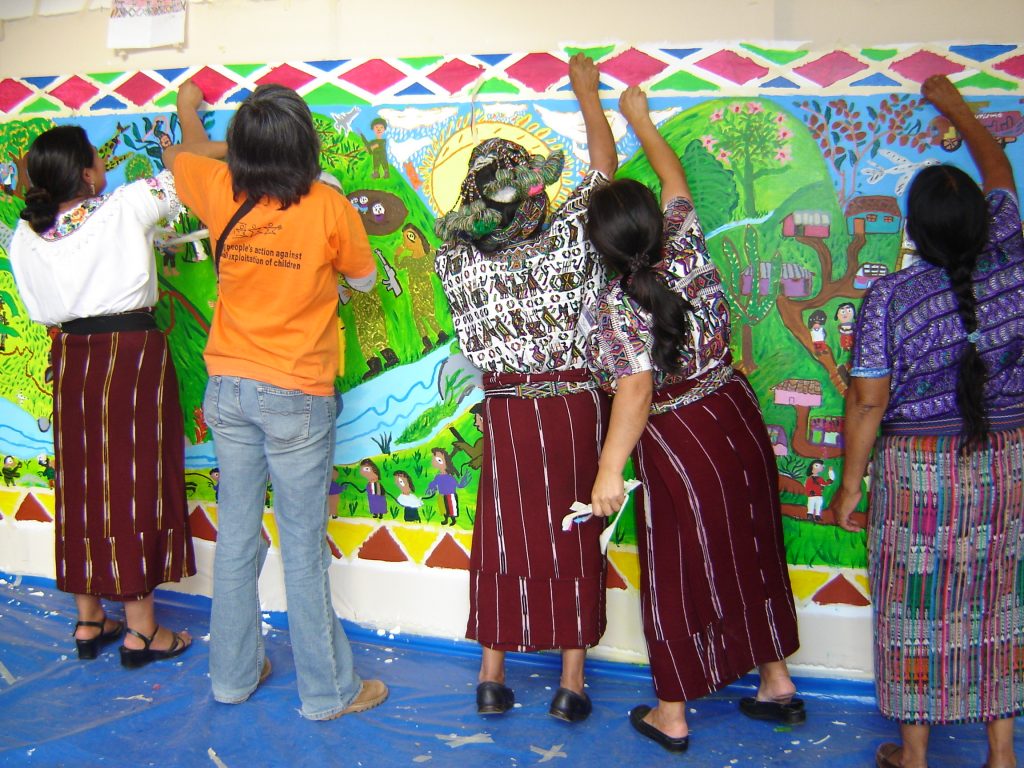
The participating women artists apply the first layers of thin mural paint (el “caldito”/ the “broth”) which renders bright colors on the white surface of the mural.
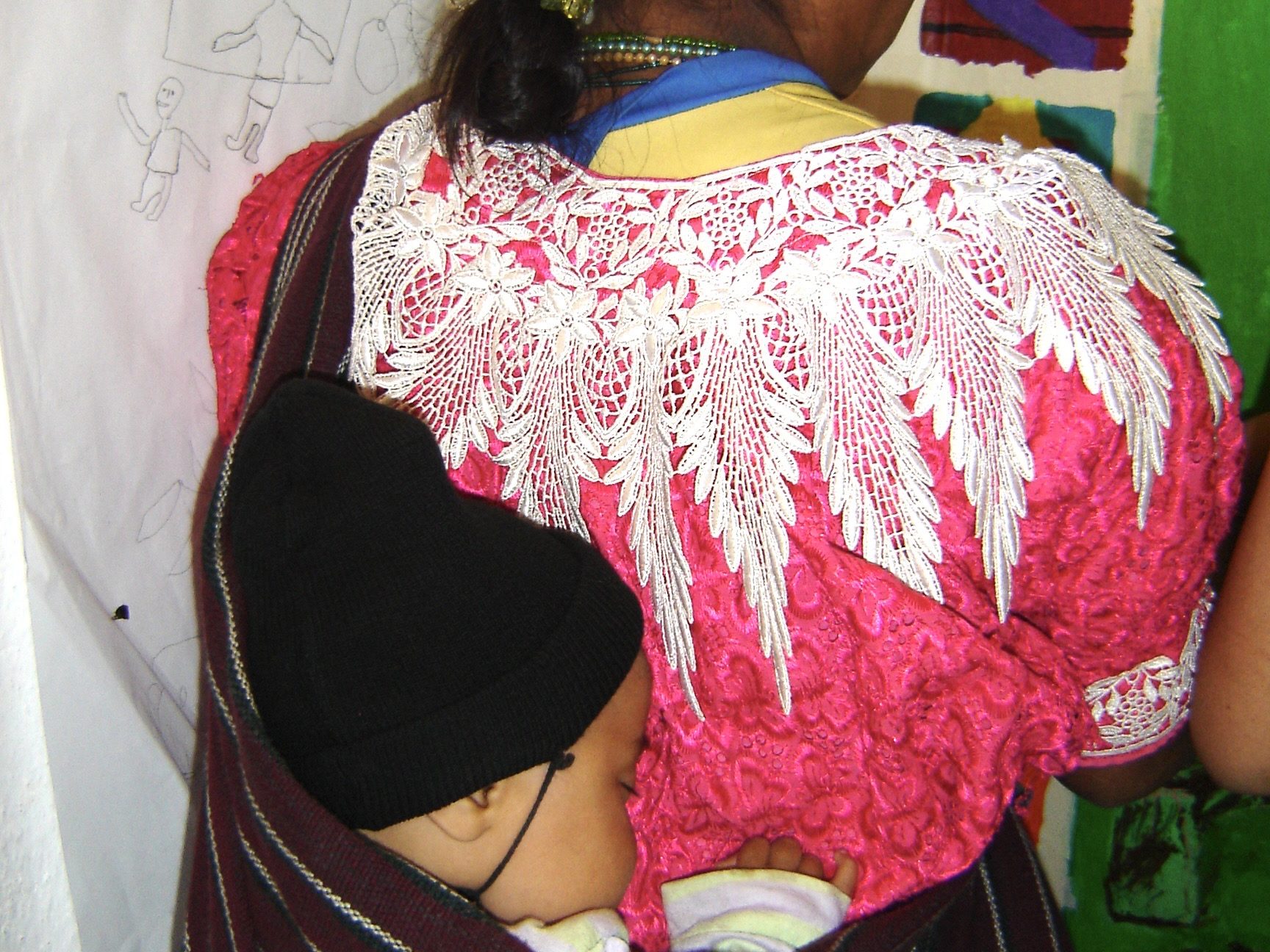
Artist painting while her child sleeps calmly.
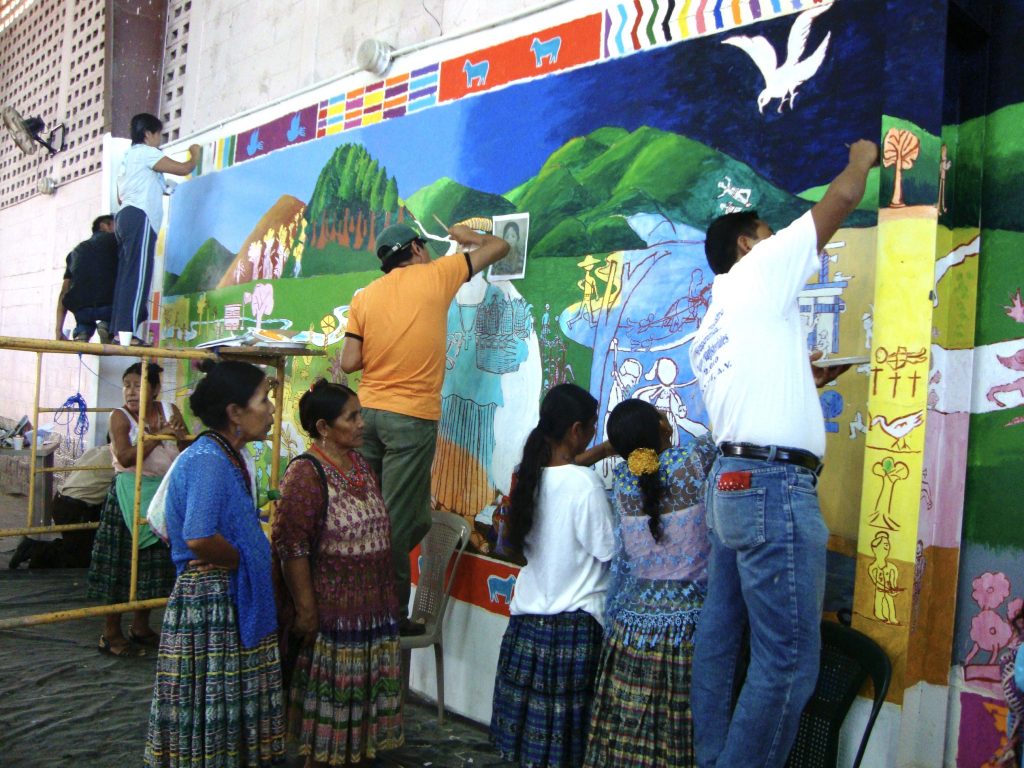
Artists from Huehuetenango advance with the painting of the mural.
Artists from Huehuetenango work collaboratively from the start to the end of the mural project.
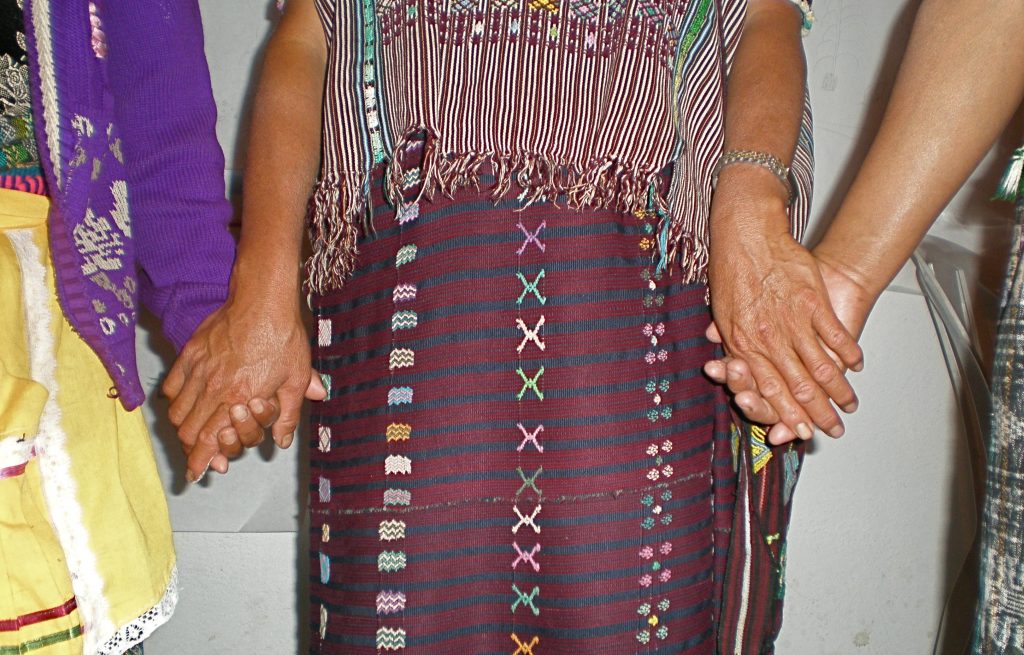
Women artists held hands to feel each other’s presence and conjure strength to remember the violence that they had suffered during the military occupation of their communities.
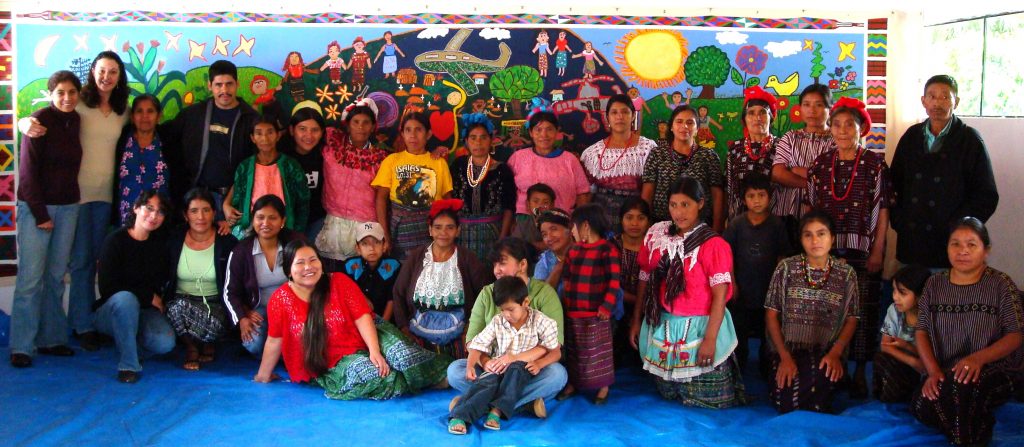
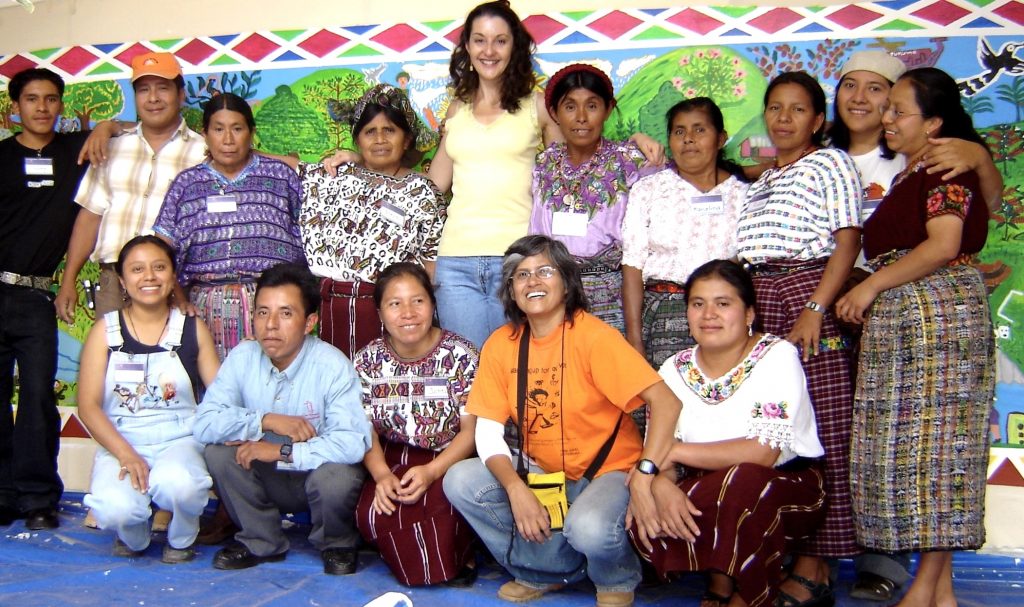
Artists of Huhuetenango after the mural was completed.
Chapter Four
On Peace and Fear: Mural Painted by Ex-combatants of the Revolutionary Armed Forces of Colombia and Civilians Victims of Political Violence.
Part I: Cocorná
Artists from Cocorná, Antioquia, Colombia, who gathered as part of AVVIC, Asociación de Víctimas de Violencia de Cocorná/ Association of Victims of Violence of Cocorná, to paint a collaborative and community-based mural in 2009.
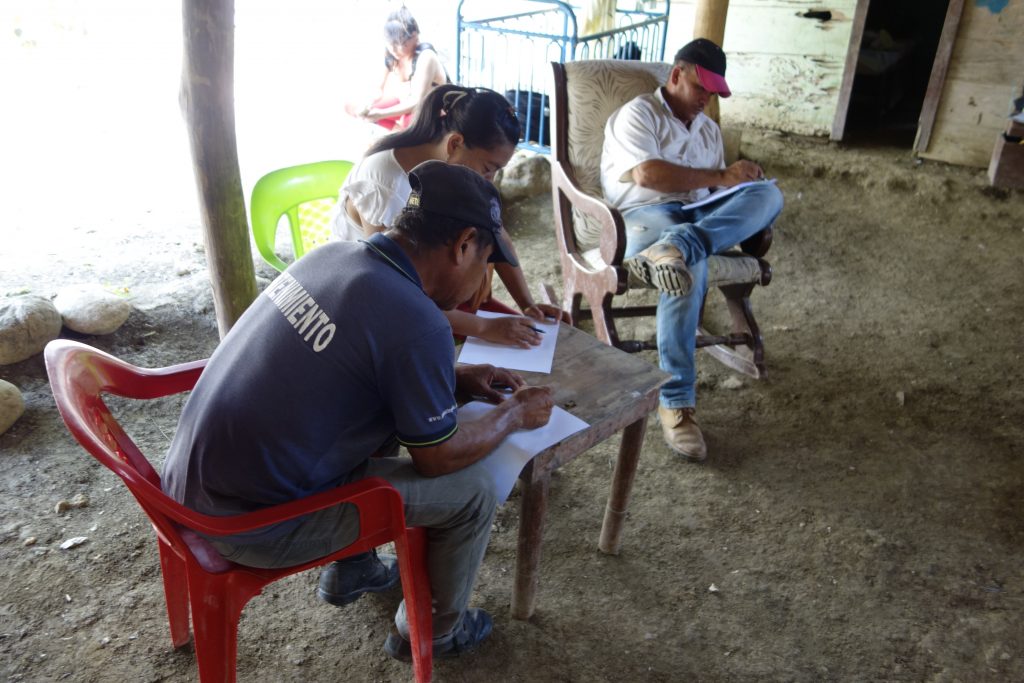
Artists of Cocorná working on the first ideas, making drawings and sketches that will serve to define the theme and composition of the mural. Photo credit: Claudia Verenice Flores Escolero
Artists of Cocorná, apply the first layers of very light/ watercolor-like colors on the surface of the wall and define the location of the line of horizon on the mural.
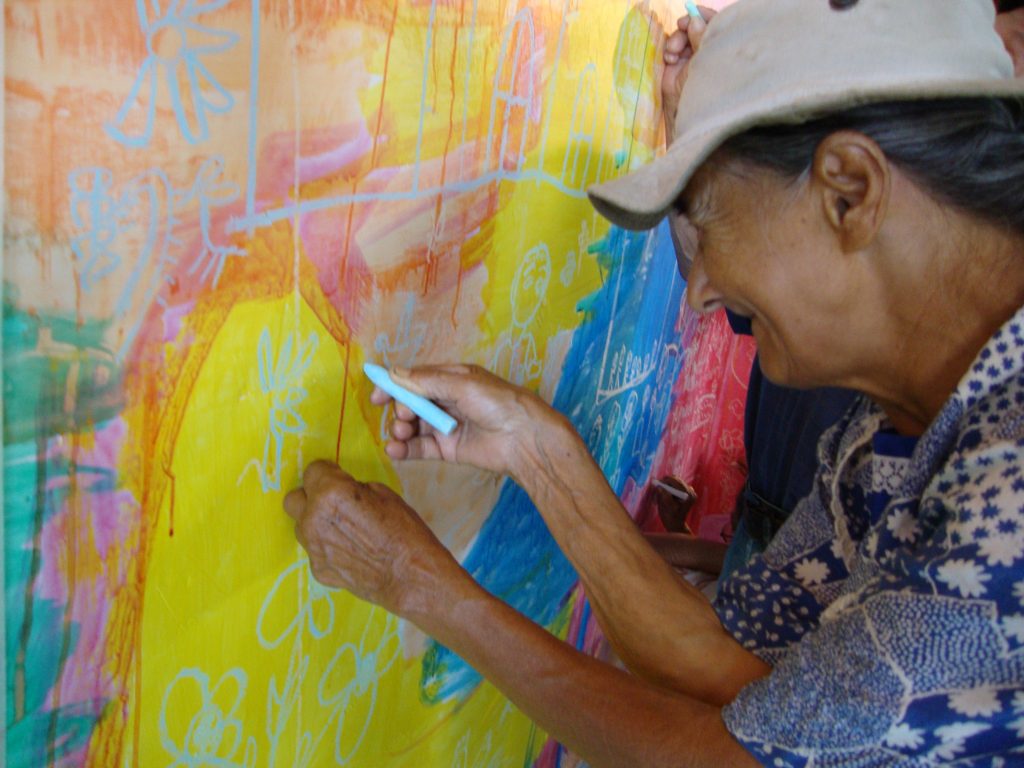
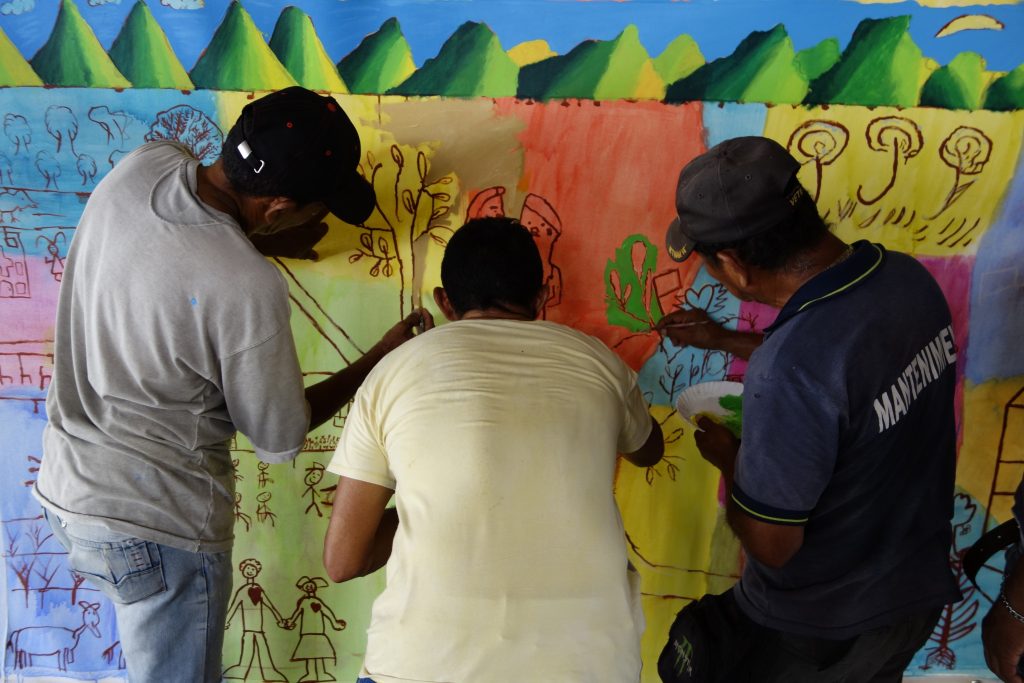
The drawings are transferred to the wall using chalks and soft pastels.
Artists from Cocorná, attentively transferring a drawing onto the surface of the mural.
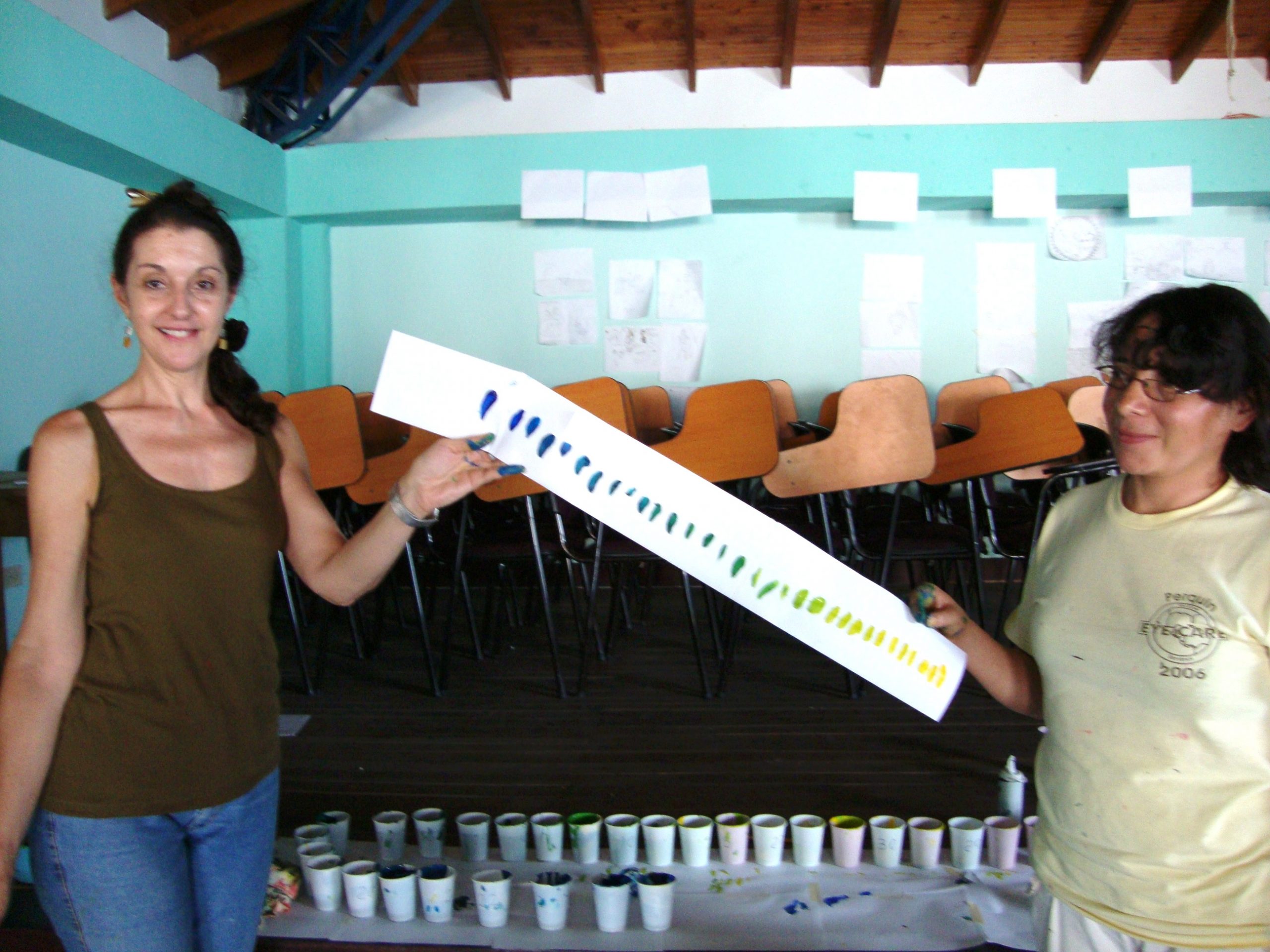
Rosa del Carmen Argueta and Claudia Bernardi develop a possible color progression to paint part of the mural’s upper border. Photo credit: Claudia Verenice Flores Escolero
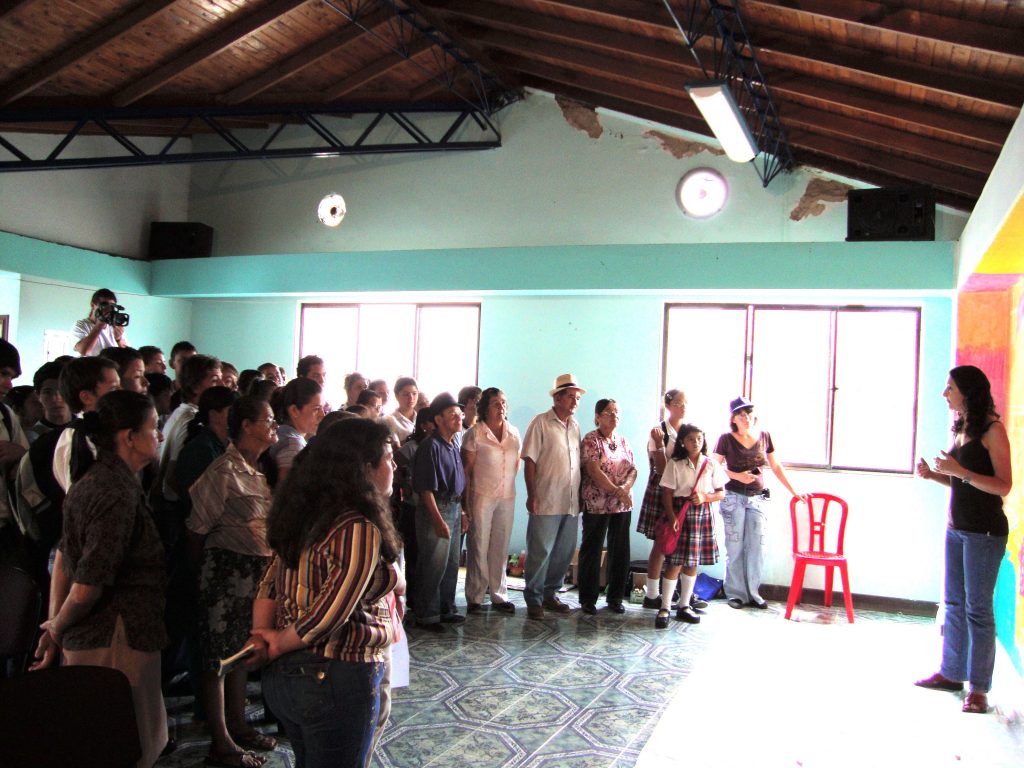
Artists of Cocorná congregate in front of the to the mural in progress agreeing by consensus whether the mural needs changes or additions. Photo credit: Claudia Verenice Flores Escolero
Artist of Cocorná with her contribution to the mural “The War Stole Half of Myself”.
Claudia Verenice Flores Escolero (left), Claudia Bernardi (middle) and Rosa del Carmen Argueta (right) after the mural project was completed, Photo Credit: Father Julio Jorge Mejía Mejía.
Part II: Colosó
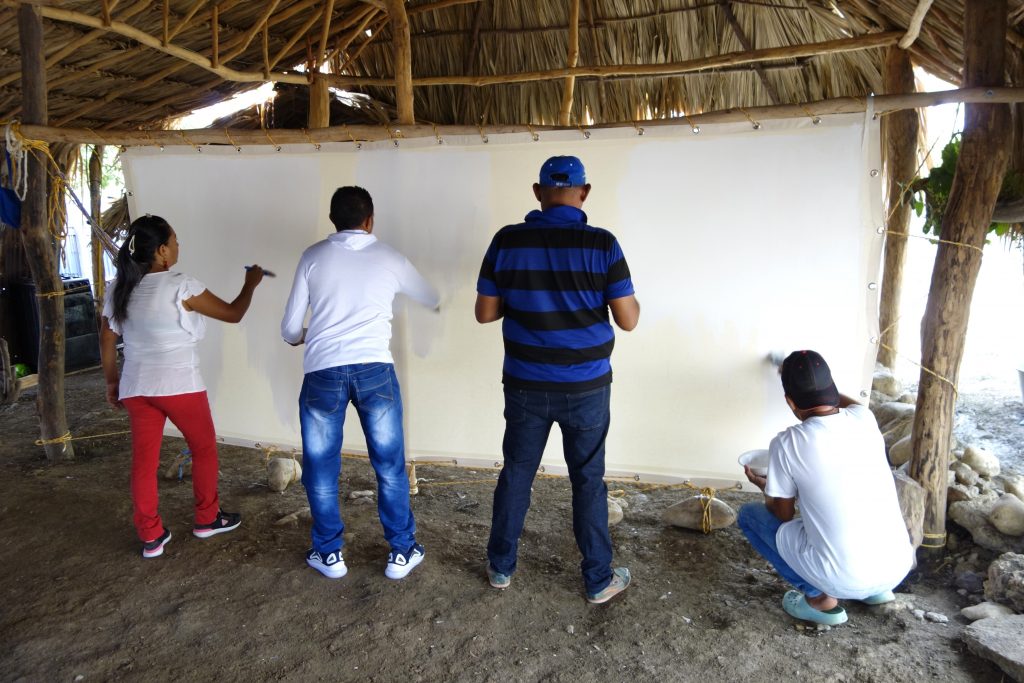
Artists from Colosó, department of Sucre in Montes de María, Colombia, painting a collaborative and community-based mural.
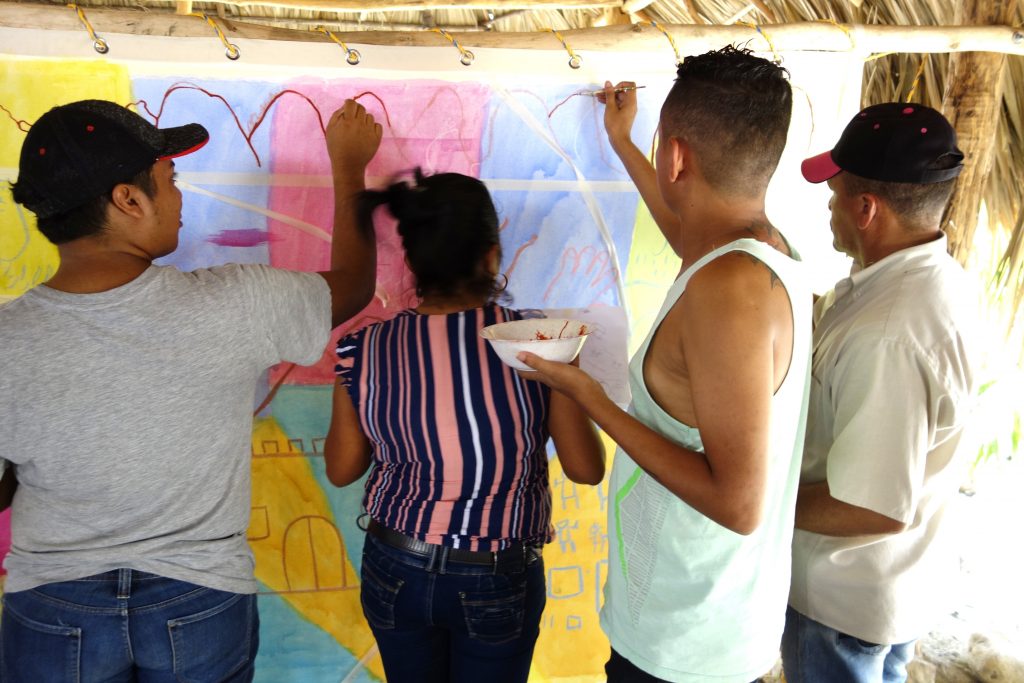
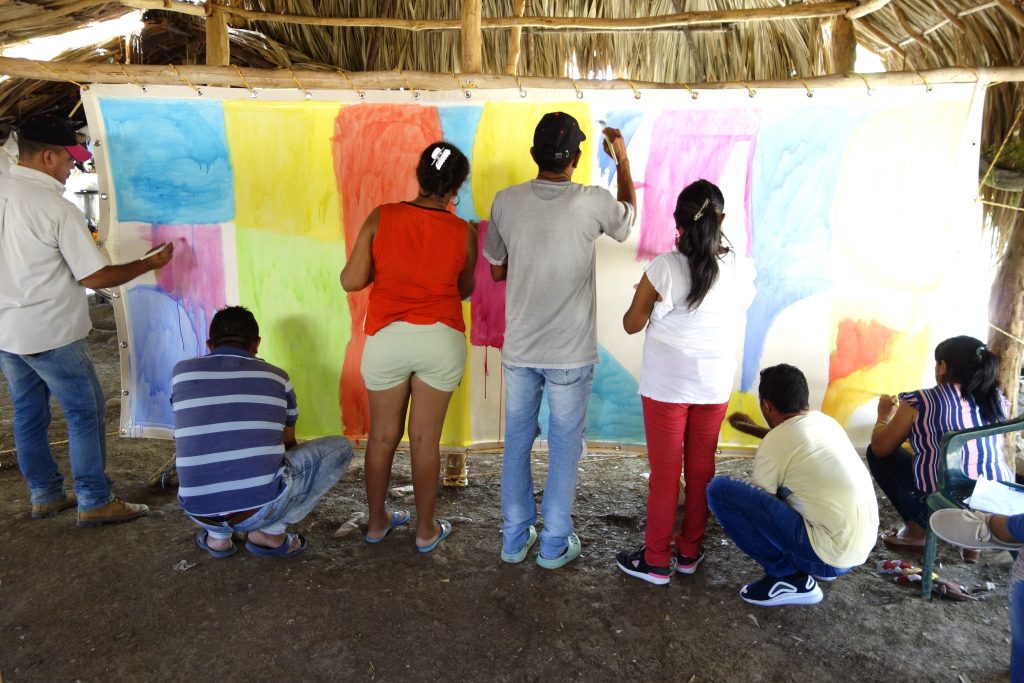
Artists of Colosó applying the first layers of Gesso on a stretched canvas. Because there was no wall upon which to attach the canvas, the artists stretched the canvas using the wooden roof structure and pulled the bottom part of the canvas using stones.
Artists of Colosó applying the first layer of thin/ watercolor like paint to bring luminosity to the painting.
Artists of Colosó start drawing the first ideas and sketches that will serve as the theme and composition of the mural.
Artists of Colosó transport the drawings on to the canvas by using chalk and soft pastels.
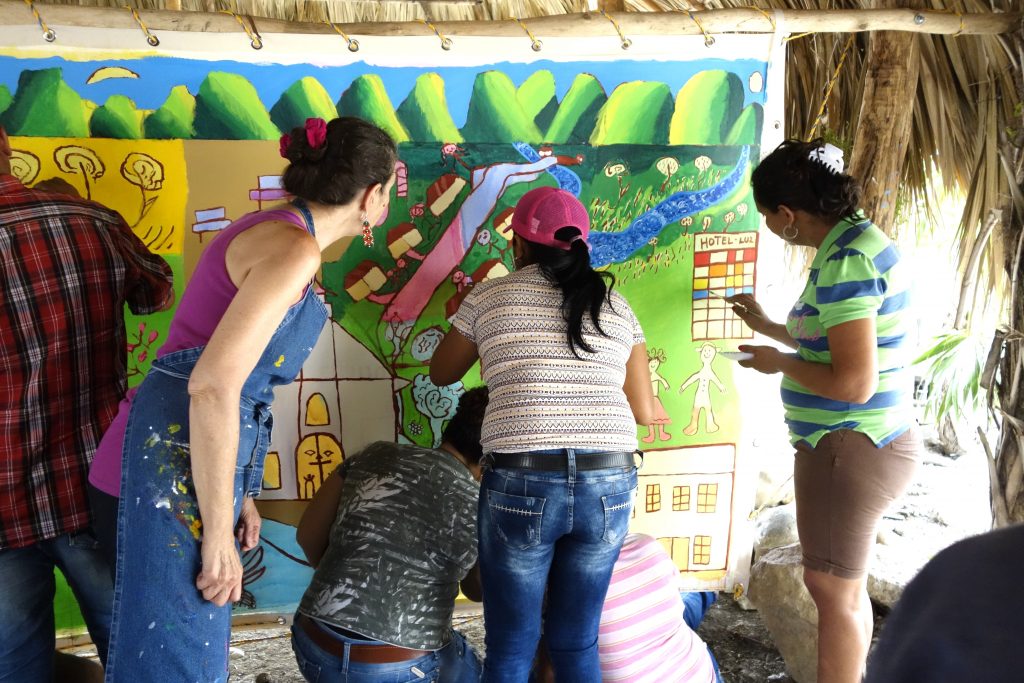
Artists of Colosó advance with the collaborative and community-based theme of the mural which was focus on the recovery of land, and the need of working together during the challenging post conflict period. Photo credit: Claudia Verenice Flores Escolero
Claudia Bernardi facilitates the progress of the mural. Photo credit: Claudia Verenice Flores Escolero
Completed Mural of Colosó.
From left to right: Rosa del Carmen Argueta, America Argentina Vaquerano Romero, Claudia Bernardi and Claudia Verenice Flores Escolero. Photo Credit: Ricardo Esquivia (Sembrando Paz)
Chapter Five
Tzuultaq’a: “Earth and Valley, High and Low, Woman and Man, Good and Evil, Opposites That Hold the Universe”: Survivors of the Panzós Massacre Reclaim Their Past in Alta Verapaz, Guatemala
Artists of Panzos, survivors of the massacre of Panzos, Alta Verapaz, Guatemala, painting a collaborative and community-based mural in 2010.
Artists of Panzos drawing and sketching the first ideas that would serve as the theme and composition of the mural.
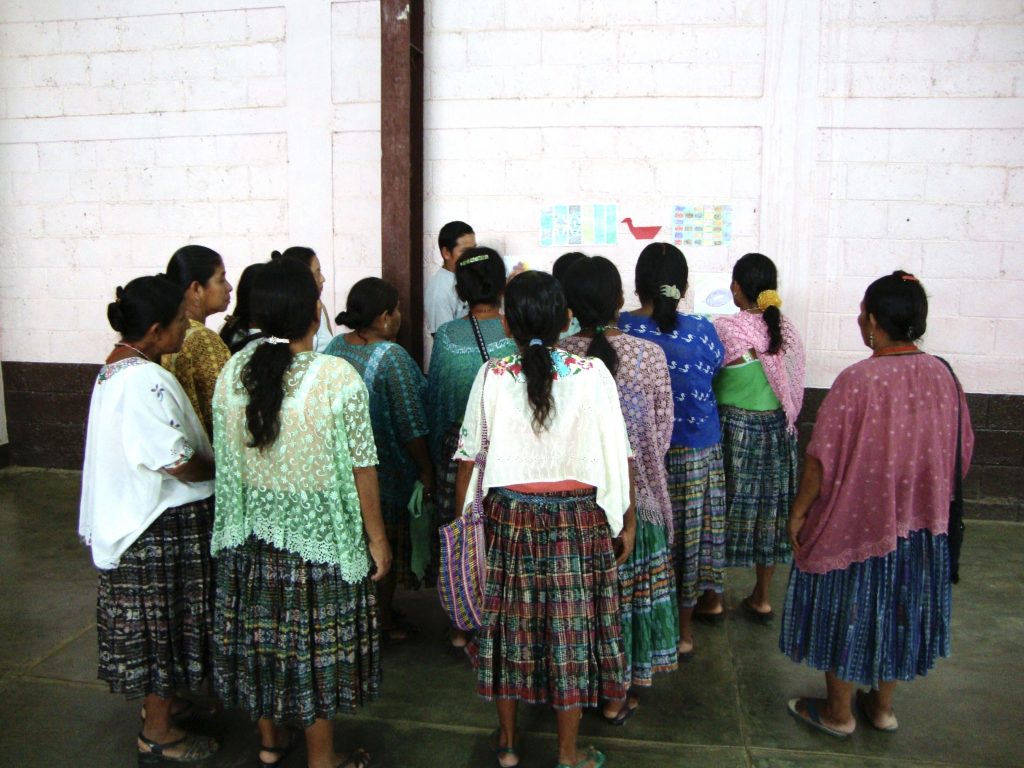
Artists of Panzos, conversing and deliberating about the progress of the theme of the mural and evaluating the story that this mural would tell.
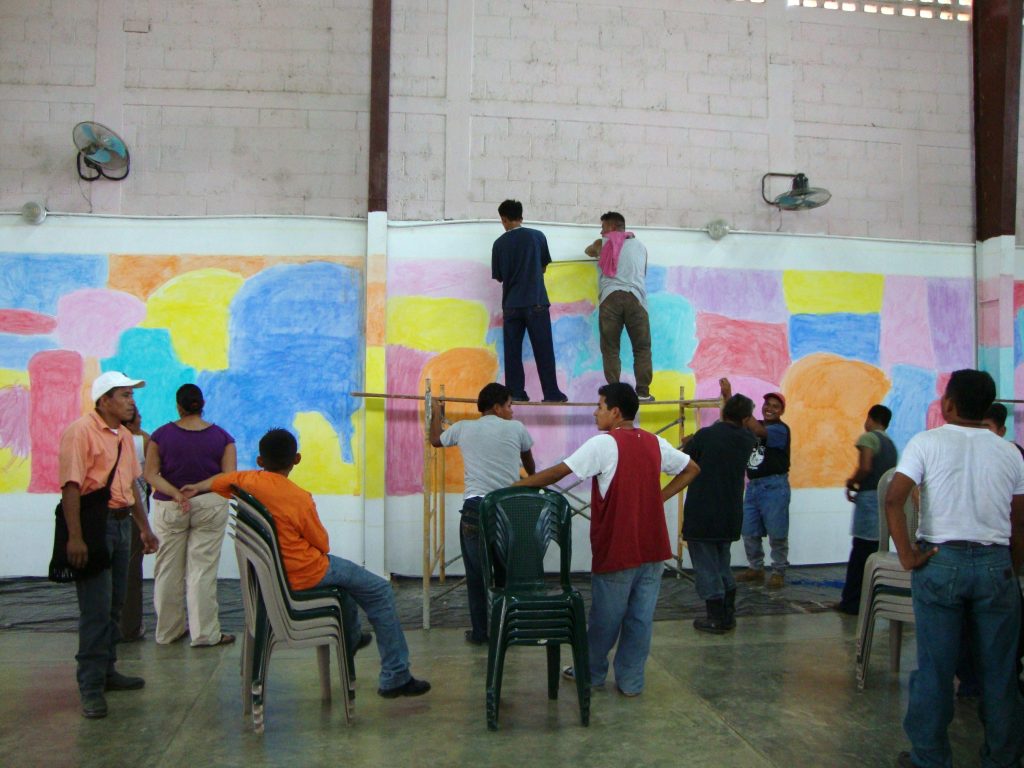
Artists of Panzós applying the first layers of thin/ watercolor-like mural paint that will bring luminosity to the mural.
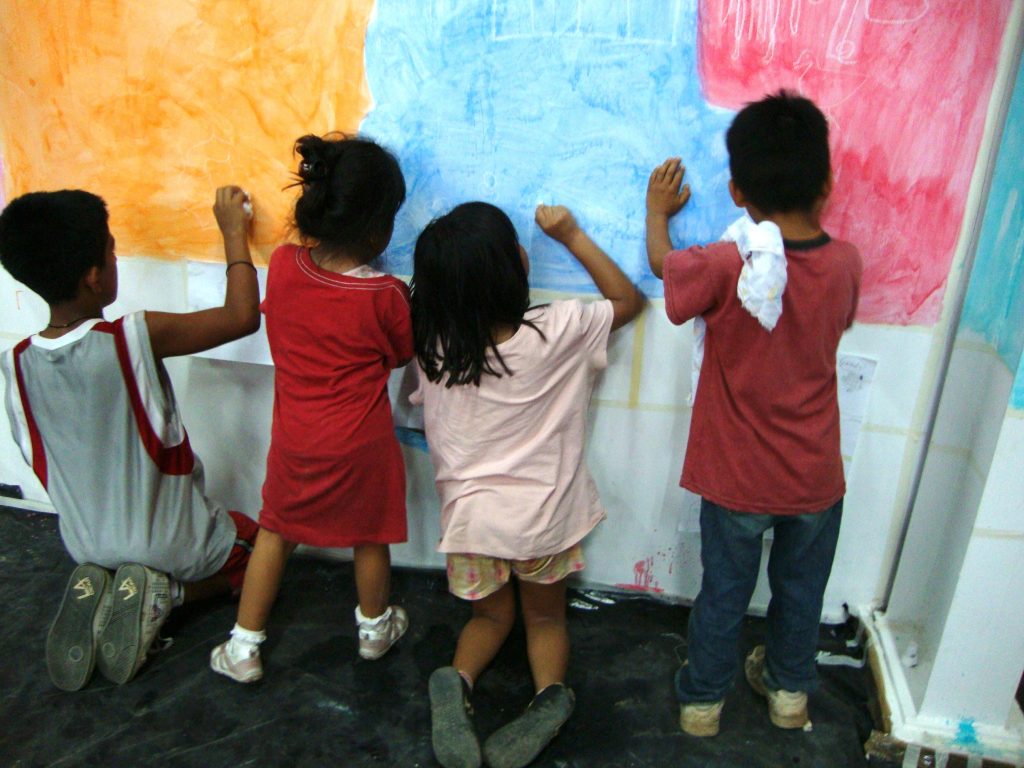
Young artists of Panzós drawing on the surface of the mural.
Artists of Panzós painting the collaborative and community-based mural.
Artists of Panzós deliberating, by consensus, whether the mural needed changes, additions or new contributions. The group re-assessed the mural borders and the location where Mamá Maquin, the main character of the mural, needed to be placed. Photo credit: Claudia Verenice Flores Escolero
Artists of Panzós advancing on the painting of the mural.
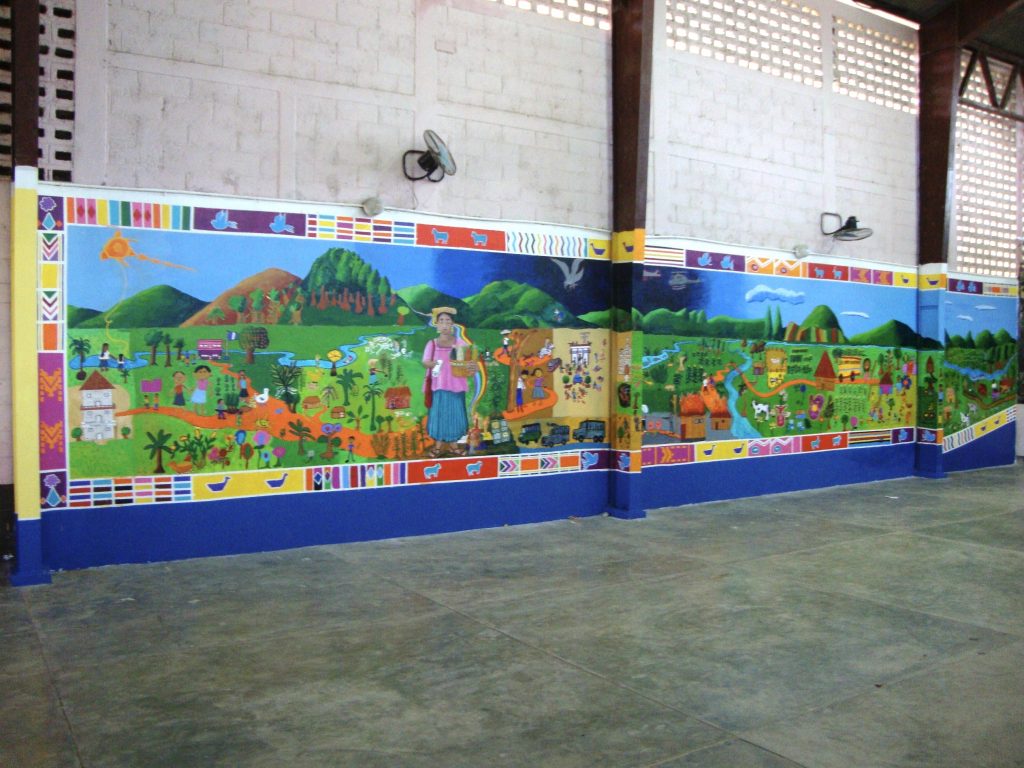
Partial view of the concluded mural of Panzós, Alta Verapaz. Guatemala.
Chapter Six
Whispers in the Desert: Ciudad Juárez, Art at the United States–Mexico Border
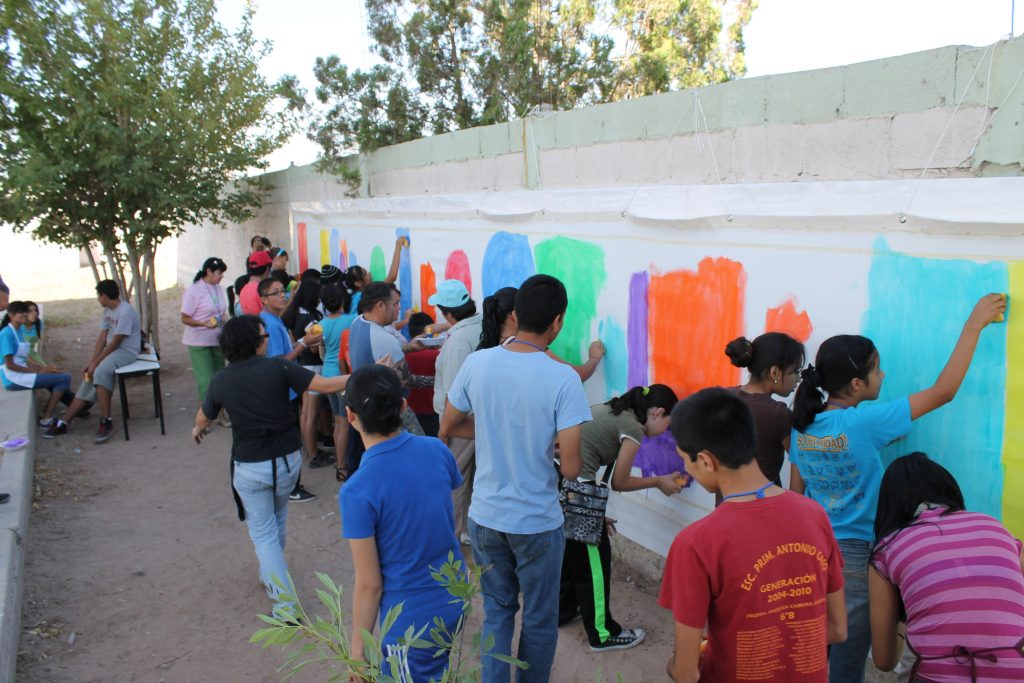
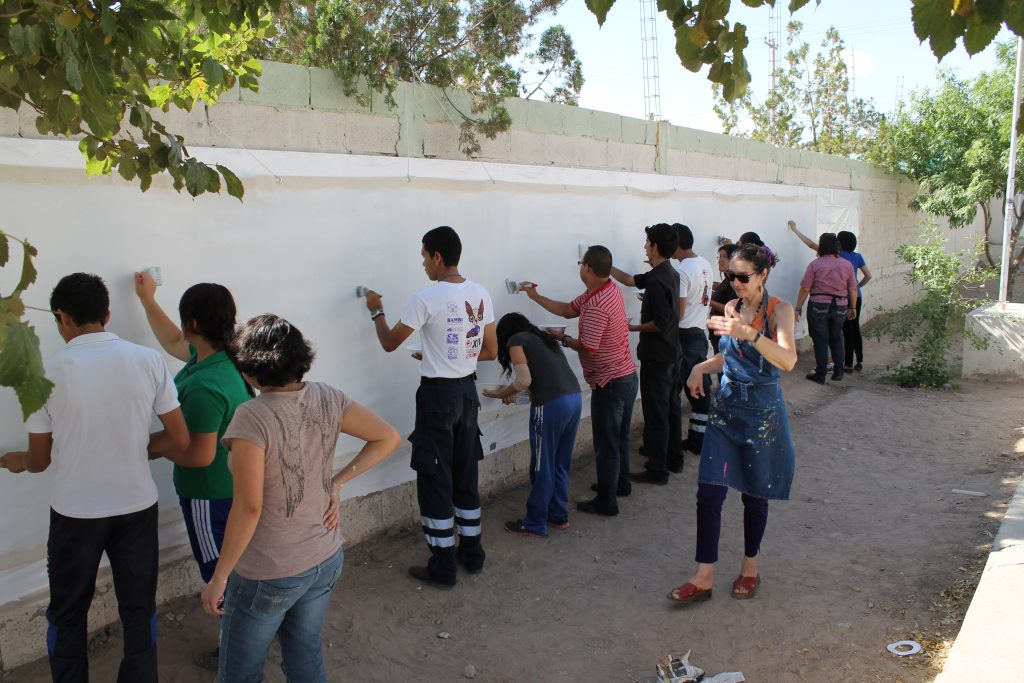
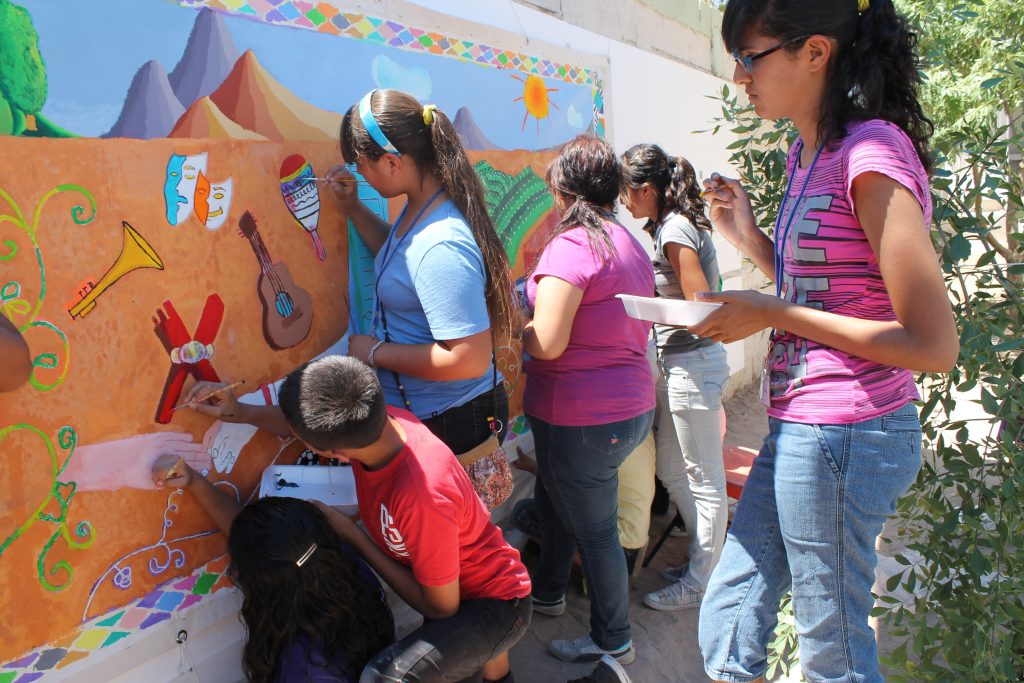
Young artists from Ciudad Juárez, in the state of Chihuahua, México, painting a collaborative and community-based mural on the theme of “youth affected by the effects of violence”/ “Jóvenes afectados por los efectos de la violencia”, 2013
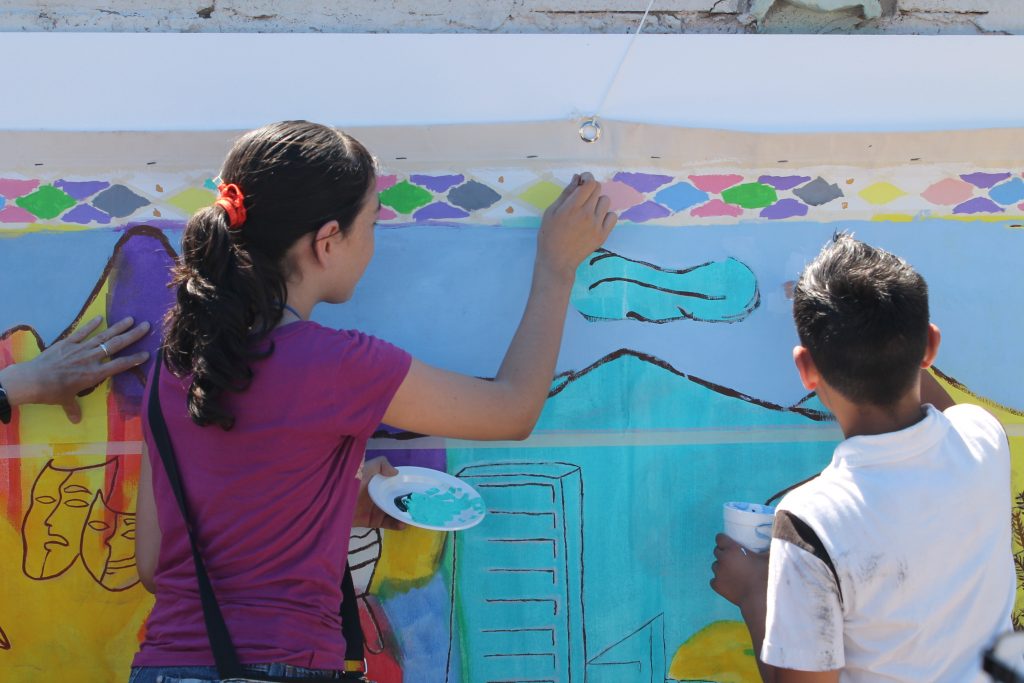
Artists of Ciudad Juárez starting the mural project by applying gesso on a 33 feet-long by 9 feet-high canvas attached to an existing wall located in a high school in central Ciudad Juárez. Photo credit: Claudia Verenice Flores Escolero
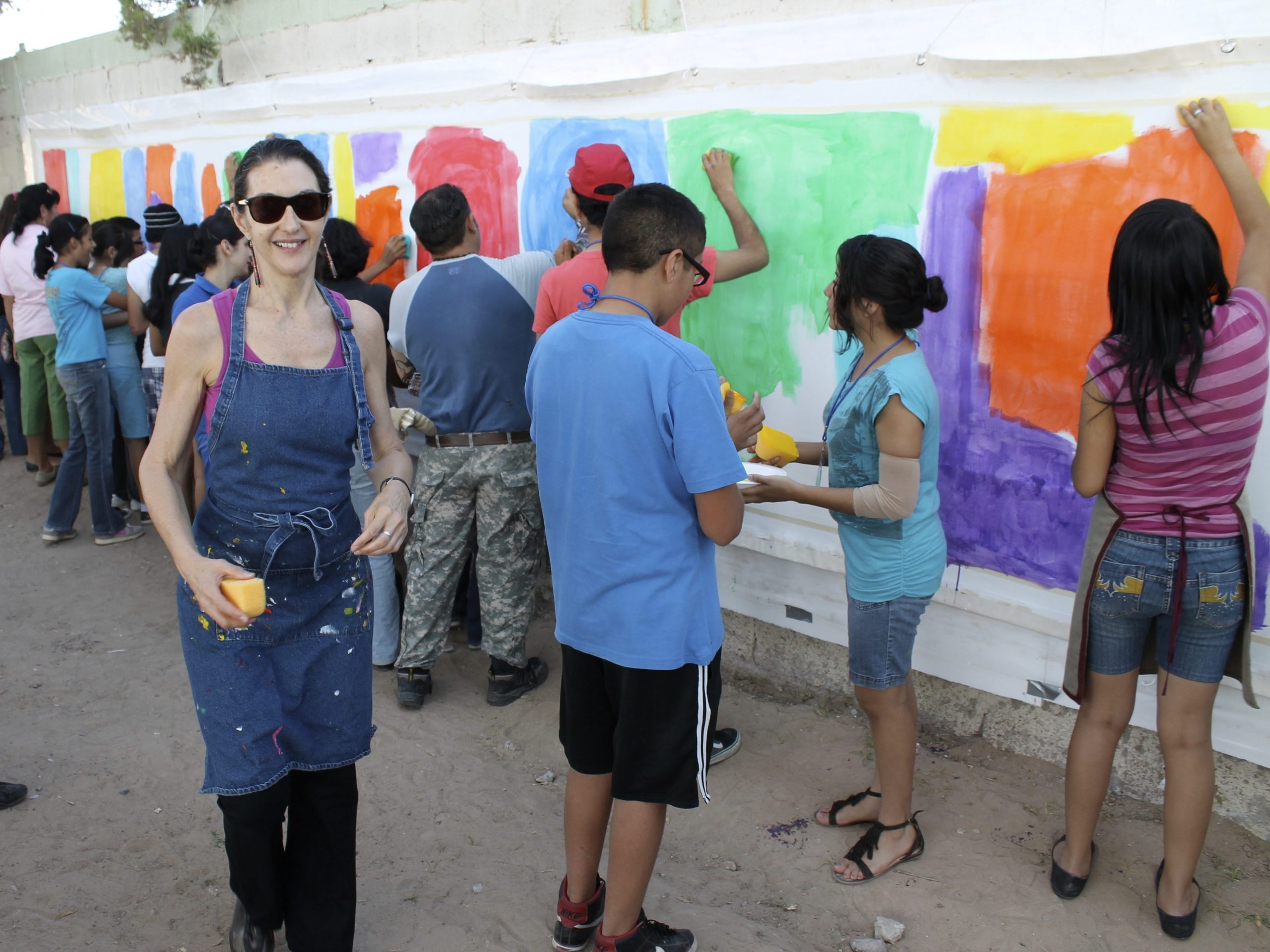
Artists of Ciudad Juárez apply the first thin/ watercolor-like layers of mural paint which will bring luminosity to the mural. Photo credit: Claudia Verenice Flores Escolero
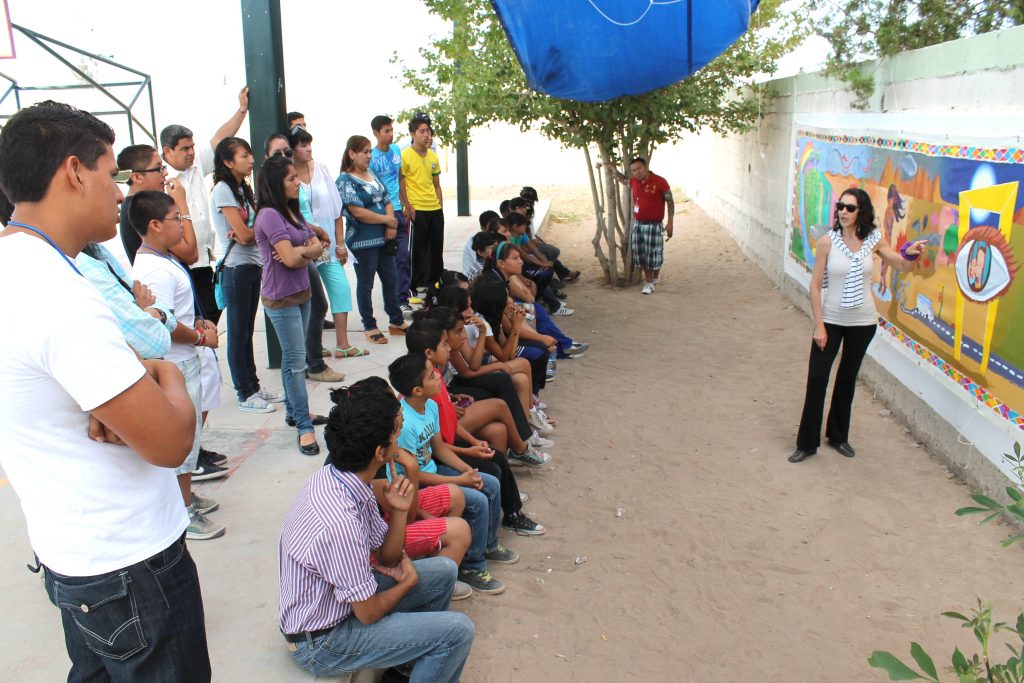
Artists of Ciudad Juárez gather around the mural to talk with Claudia Bernardi about the evolution of the painting, whether it needs anything more, or if it needs to subtract information that was already included. By consensus, the group decides and establishes the direction that the mural needs to take towards its completion. Photo credit: Claudia Verenice Flores Escolero
Artists of Ciudad Juárez advance with the painting of the mural, working collaboratively.
Artists of Ciudad Juárez work on the design of the border that acquired an abstract resolution in which colors were selected to represent a transformation from darkness to light, from violence to peace, from danger to calm, from fear to hope.
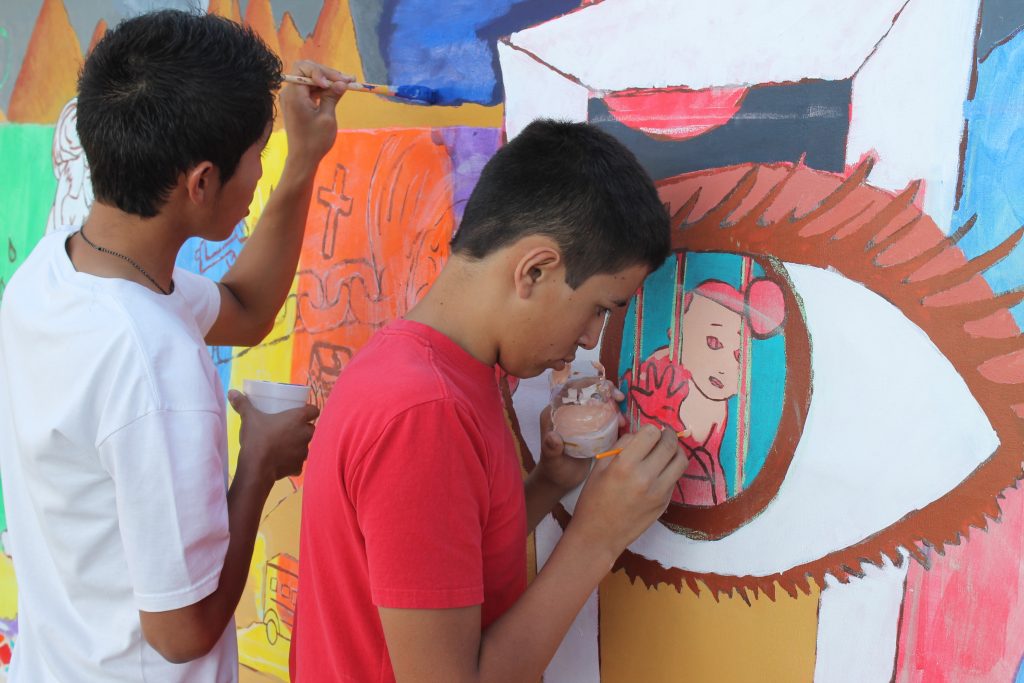
Young artist painting an eye in the very center of the mural. Inside the eye, there is a portrait of a toddler behind bars that represented how trapped the participating youth felt and how very few options they could find to be free, to interact with friends, etc.
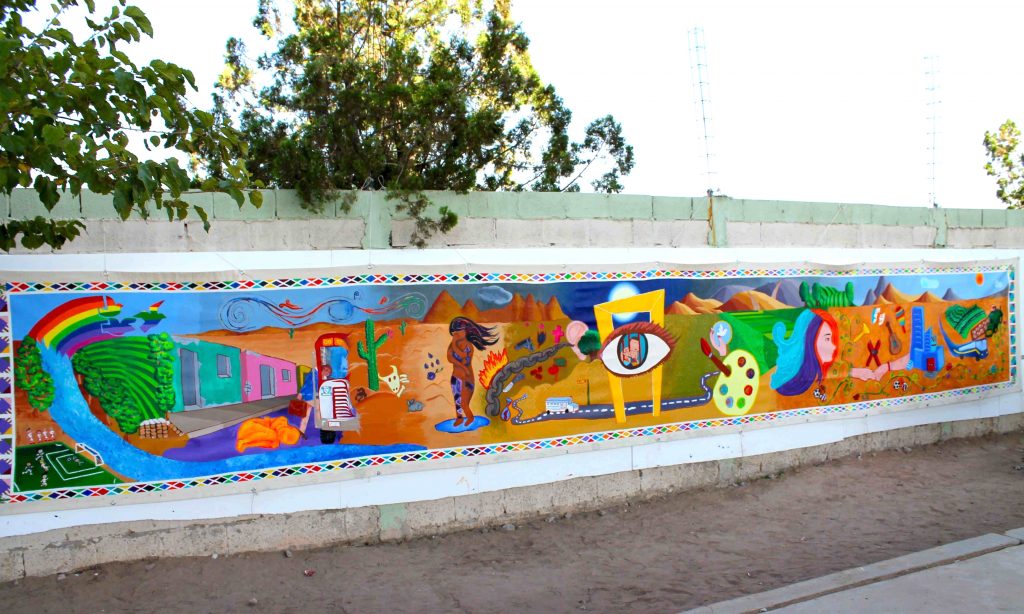
Partial view of the completed mural.
Young artists of Ciudad Juárez after the mural was completed. Photo credit: Claudia Verenice Flores Escolero
Chapter Seven
The Disappeared Are Appearing: Families of the Disappeared Paint a Mural in a Former Clandestine Detention, Torture, and Extermination Center in Argentina
Families and Relatives of Argentine disappeared men and women painted a collaborative and community-based mural at ESMA, Escuela Superior de Mecánica de la Armada/ Mechanics Navy School, former Clandestine Detention, Torture and Extermination Center in Argentina in Buenos Aires, 2014.
Families of the disappeared start the mural project at the ILID building, Iniciativa Latinoamericana para la Identificación de Personas Desaparecidas/ Latin American Initiative for the Investigation of Disappeared People.
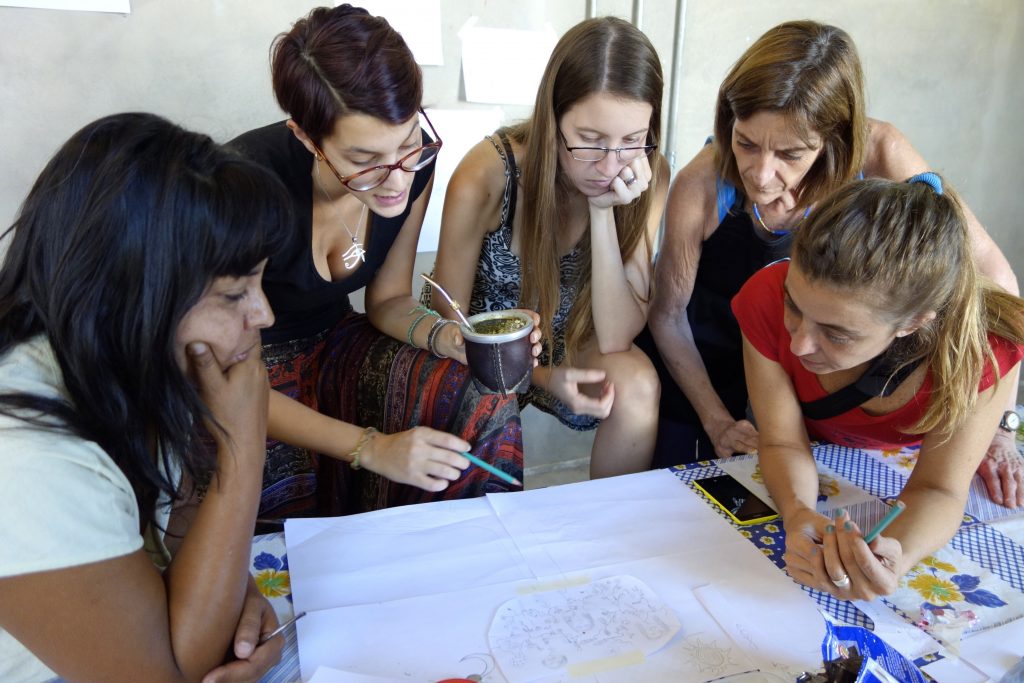
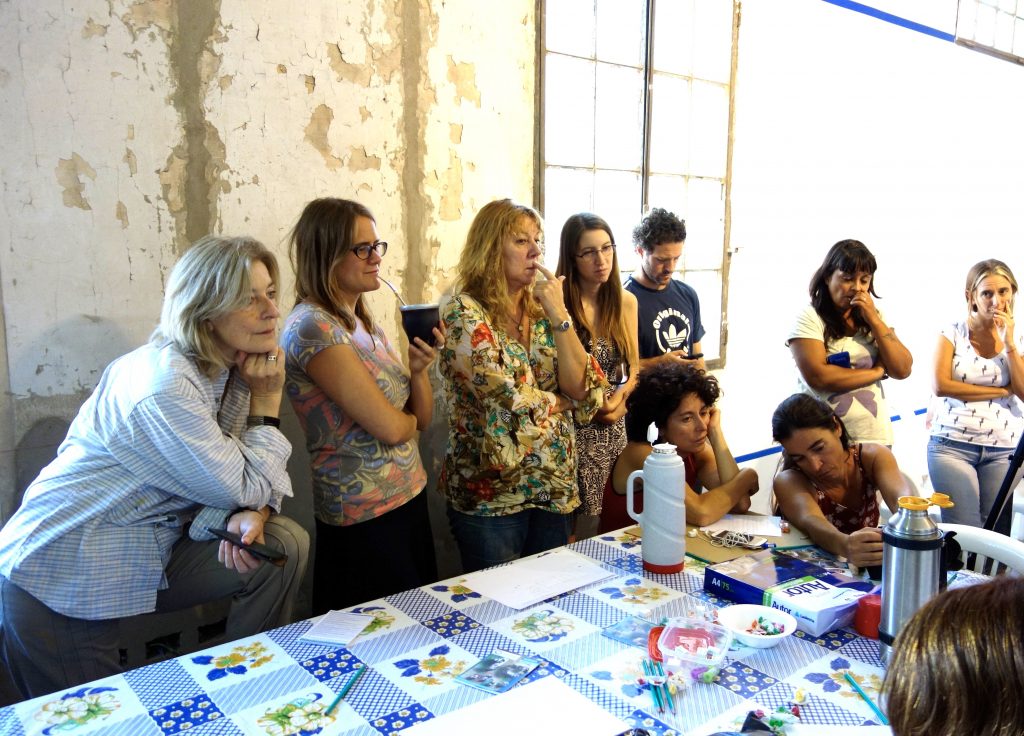
A group of participating artists talk about the evolution of the selected theme which will determine the composition of the mural.
Participating artists apply the first layers of thin/watercolor-like mural paint over the three selected walls upon which the mural would be painted.
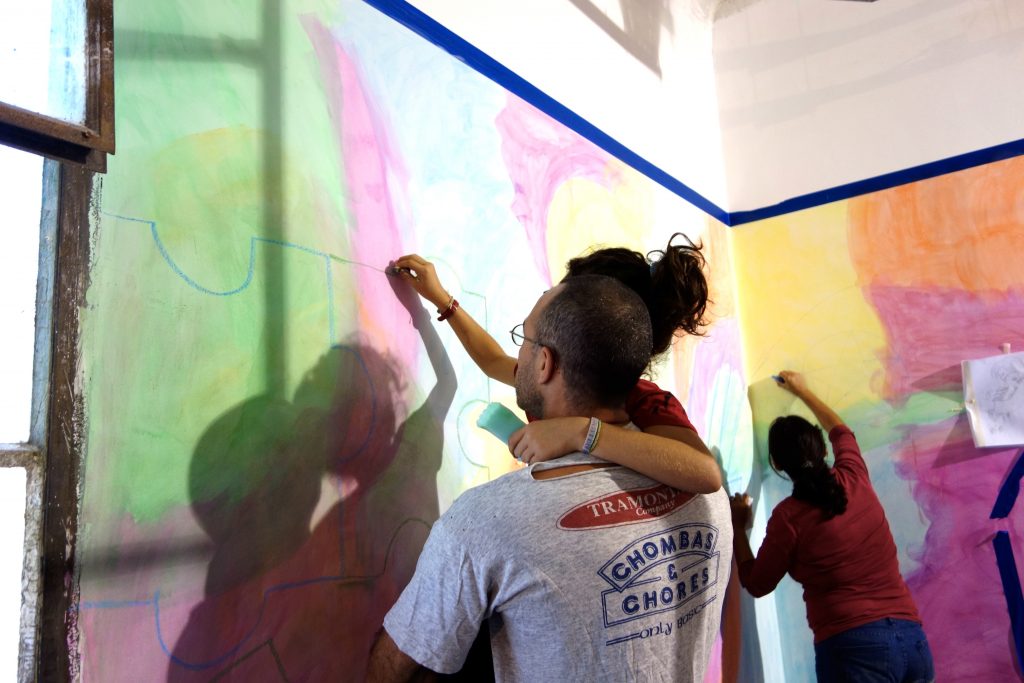
Federico Ciancio, son of Luis Ciancio and Patricia Dillon, both kidnapped and disappeared on December 6th, 1976, with his daughter Galatea, transporting selected drawing on the mural surface.
The participating artists take a moment to reflect upon the evolution of the mural and to talk about what may be needed towards the completion of the piece.
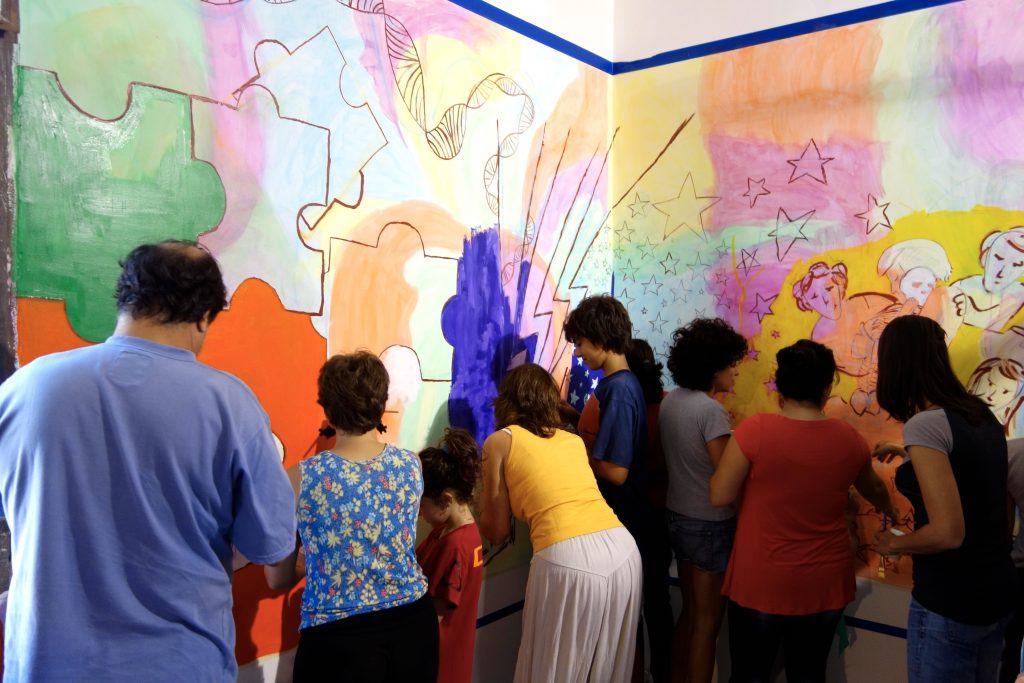
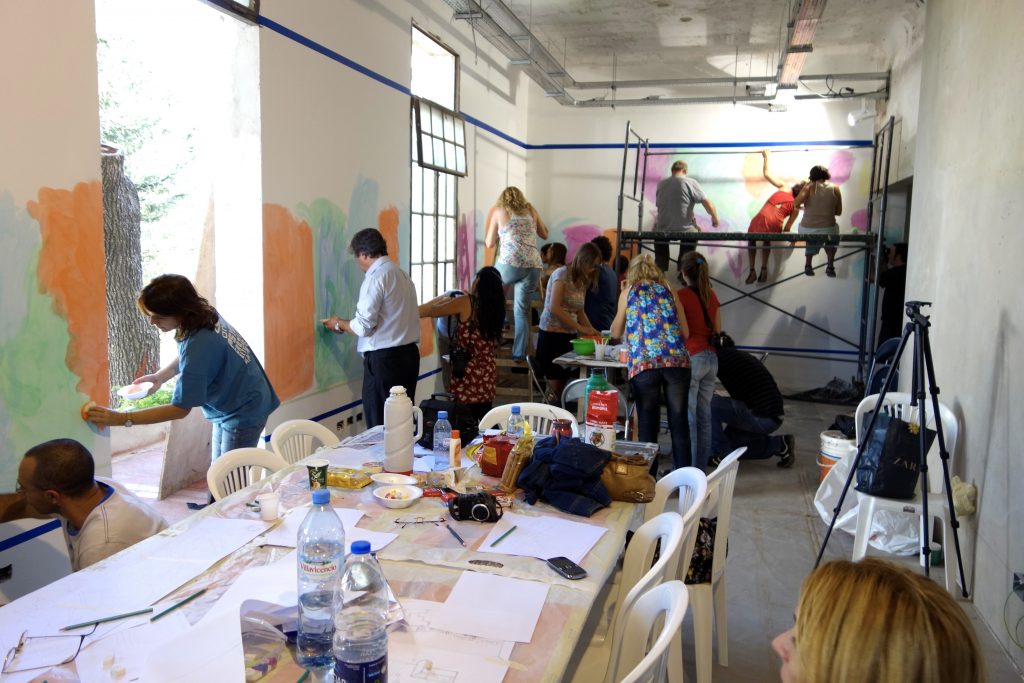
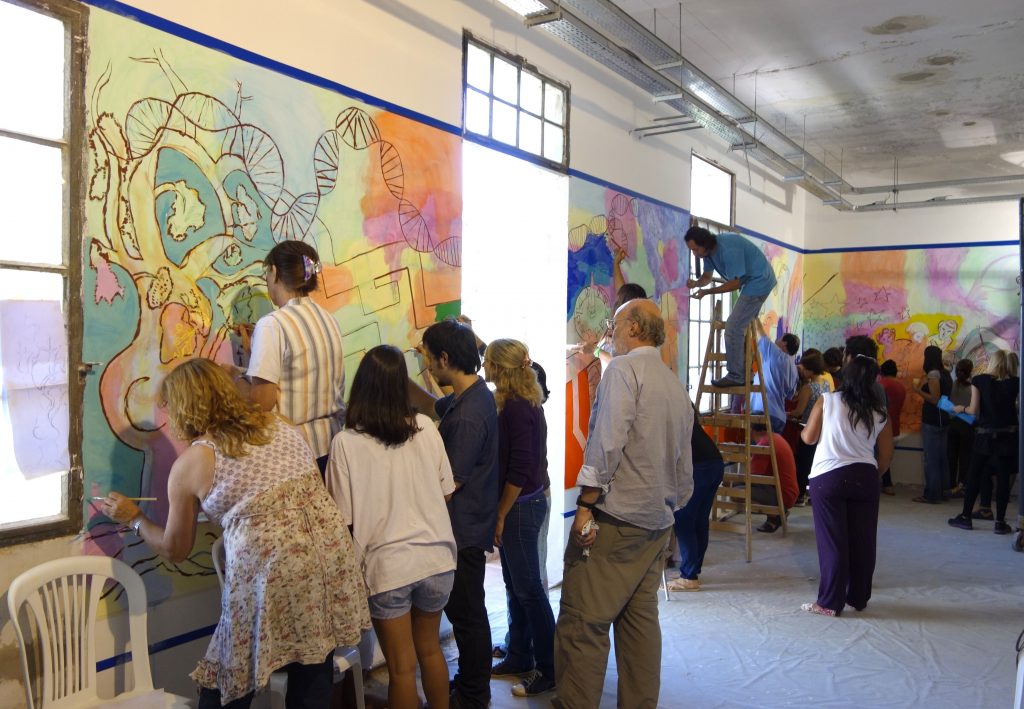
Artists painting the mural collaboratively on the three selected walls in the interior of the ILID building at ESMA.
Haydeé García Gastelú and Vera Jarach, legendary Mothers of Plaza de Mayo, talk to Manuel Massolo, son of Maria Eugenia Sanllorenti de Massolo, kidnapped and disappeared on December 1, 1976, about the progression of the mural.
Particpating artists, relatives of the disappeared, in front of the completed mural. Photo credit: Viviana D’Amelia, EAAF.
Chapter Eight
Unspoken Words, Steps on Sand: A Visual Investigation of the Journey of Undocumented, Unaccompanied Central American Migrant Minors Detained in a Juvenile Detention Center in the United States
The Train of Dreams Project
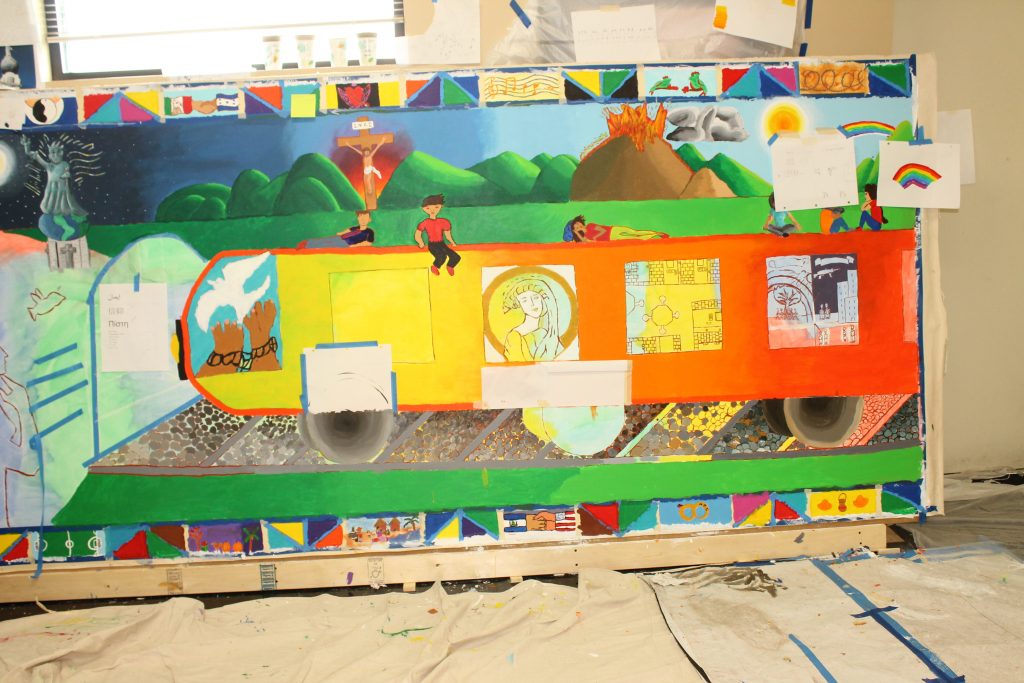
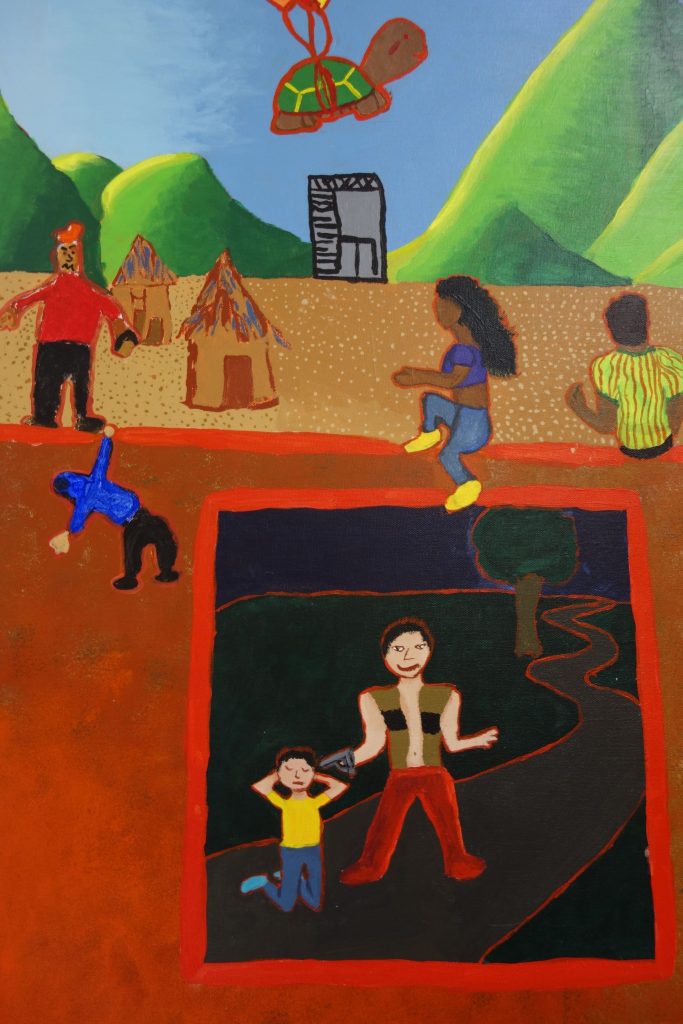
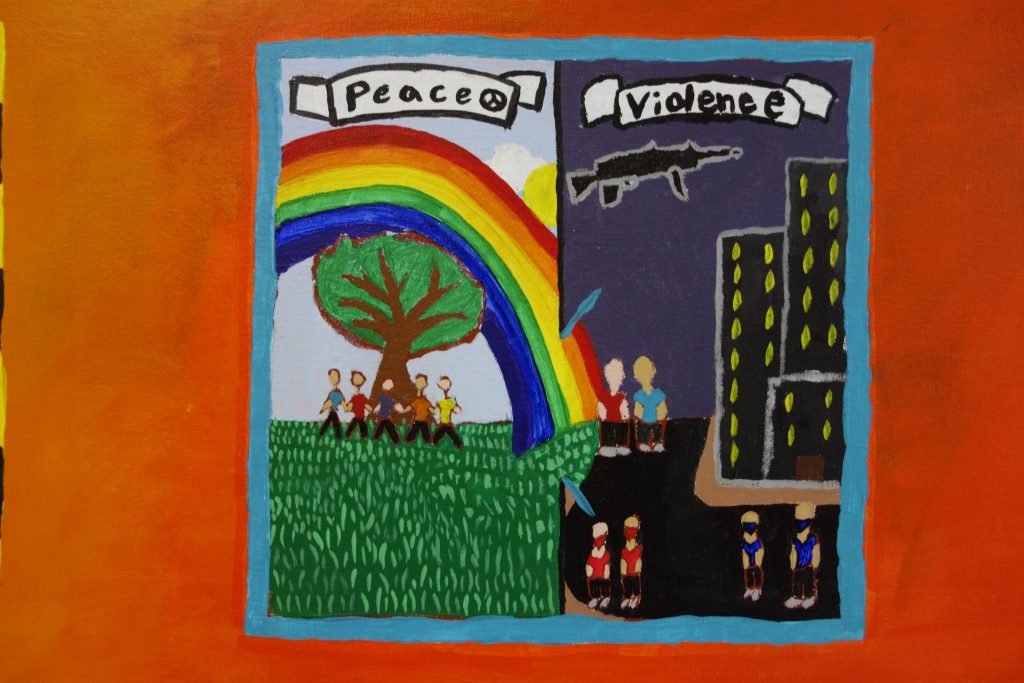
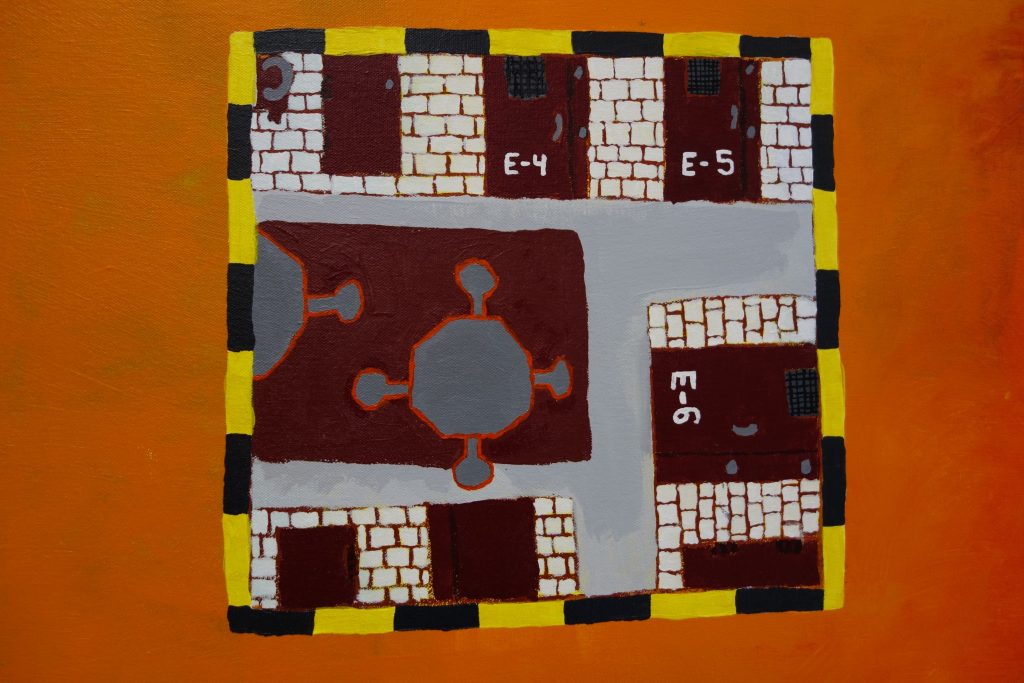
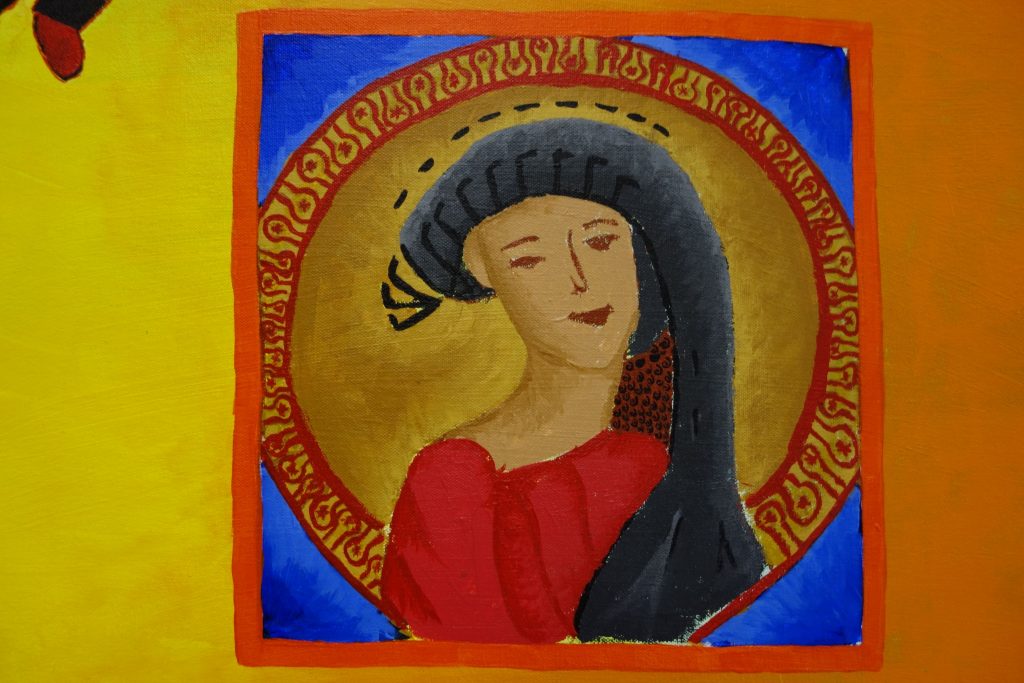
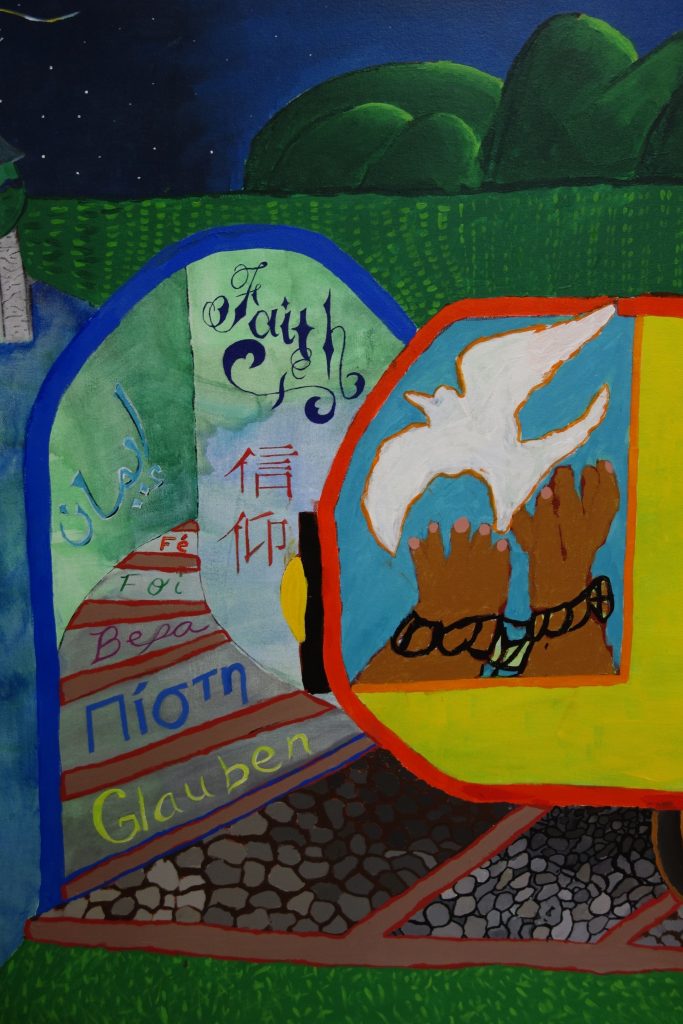
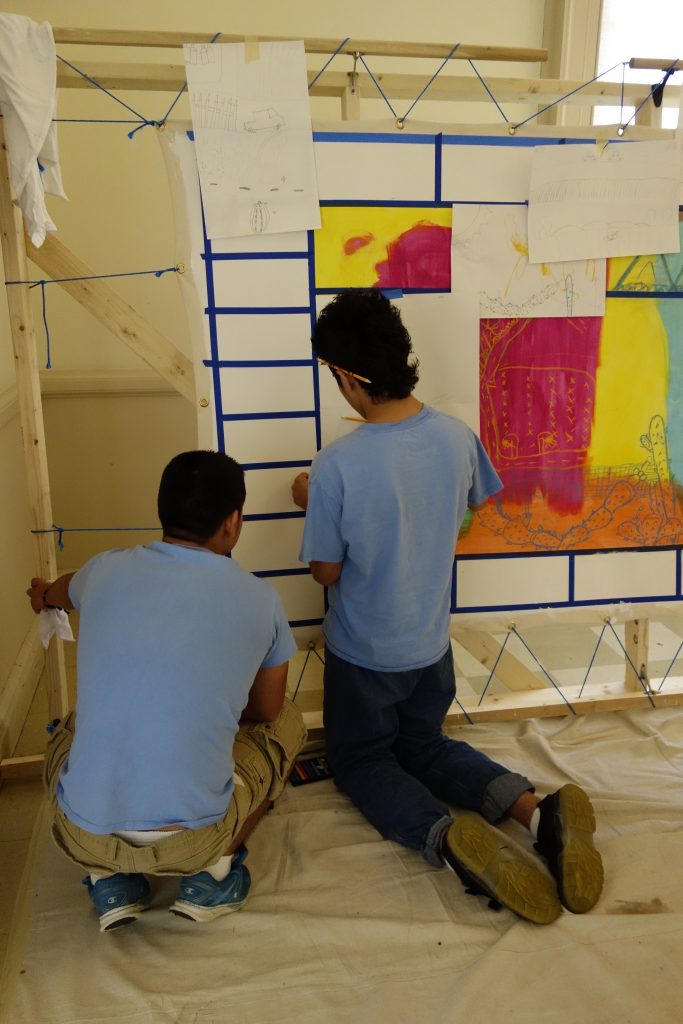
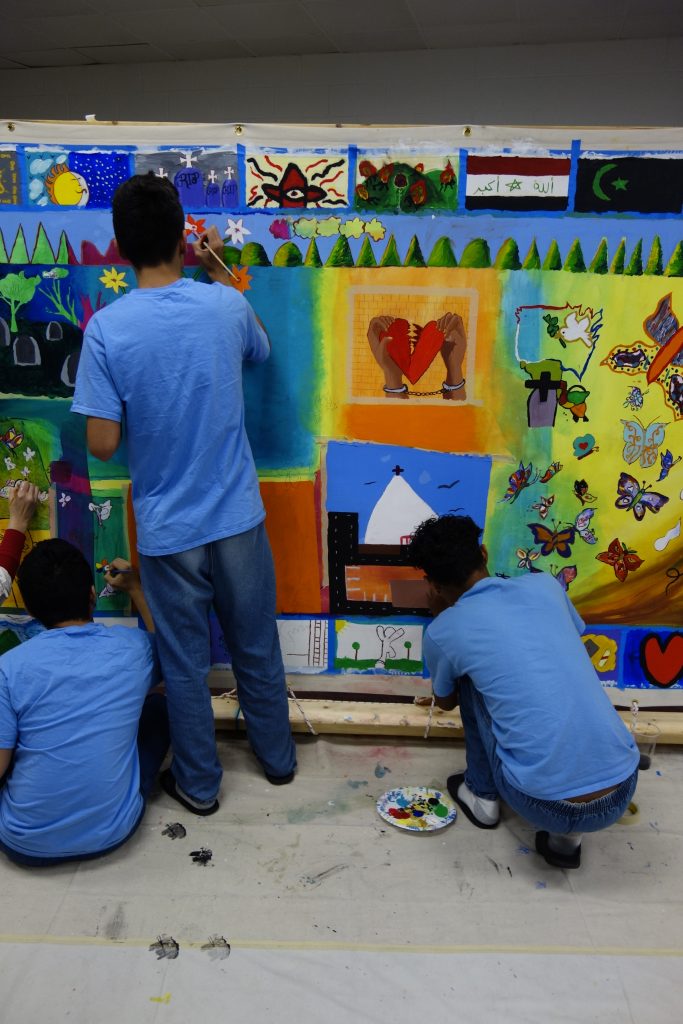
Image of the mural “Train of Dreams/ La Bestia” in progress painted by Undocumented, Unaccompanied Central American Migrant Minors Detained in a Juvenile Detention Center in the United States. The depicted train has 7 windows each of which tell the story of one of the participating artists.
Window #1, A fifteen-year-old Honduran girl from San Pedro Sula escaped from her house when she learned that her brother had been killed by members of an adversary gang.
A sixteen-year-old Mexican boy from Michoacán visiting his cousin from her mother side witness his cousing being murdered by members of an organized narcotraffic group.
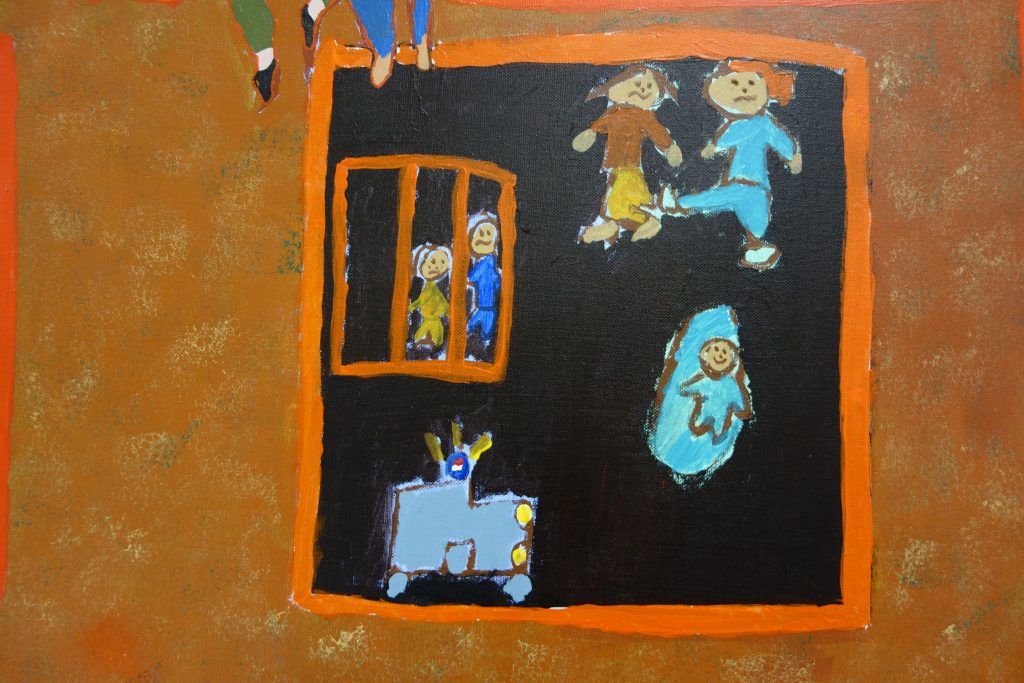
A fourteen-year-old Salvadoran boy divided a square into symmetrical parts where the right side, mostly depicted in grays, represented his life in the “now” in jail, and the left side, by contrast, was light and sunny representing a possible future.
A sixteen-year-old boy from Honduras, proud of his African-Honduran and his Garífona ancestry painted the only reality that he could think of jail and confinement.
A sixteen-year-old Guatemalan boy painted the image of the Virgin Mary alluding to the suffering of women who see their sons and daughters being murdered senselessly, daily, in Guatemala.
A sixteen-year-old Honduran boy had left Honduras, crossed the border and was now in prison in the US. What he wanted the most was to return to Siguatepeque.
A sixteen-years-old boy from Honduras got involved in gangs, not knowing what he was doing. Now he wanted to sing and tell his story and the stories of many other imprisoned Central American boys and girls to show the world that they deserve a second chance.
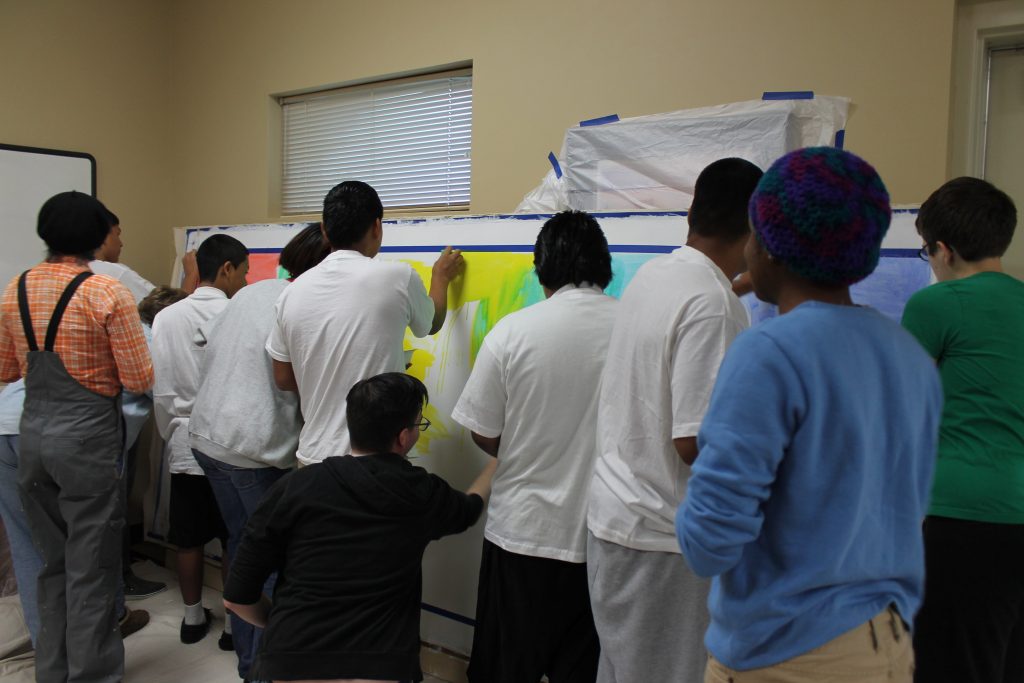
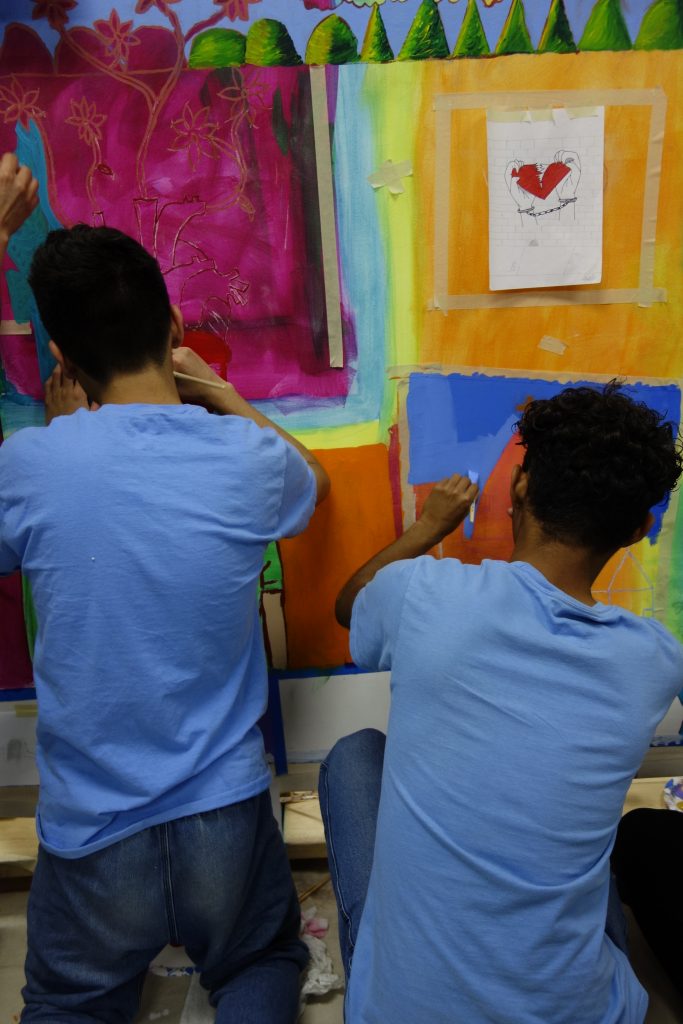
Incarcerated Central American youth painting a mural at a detention center in the United States.
The Tree of Life Project
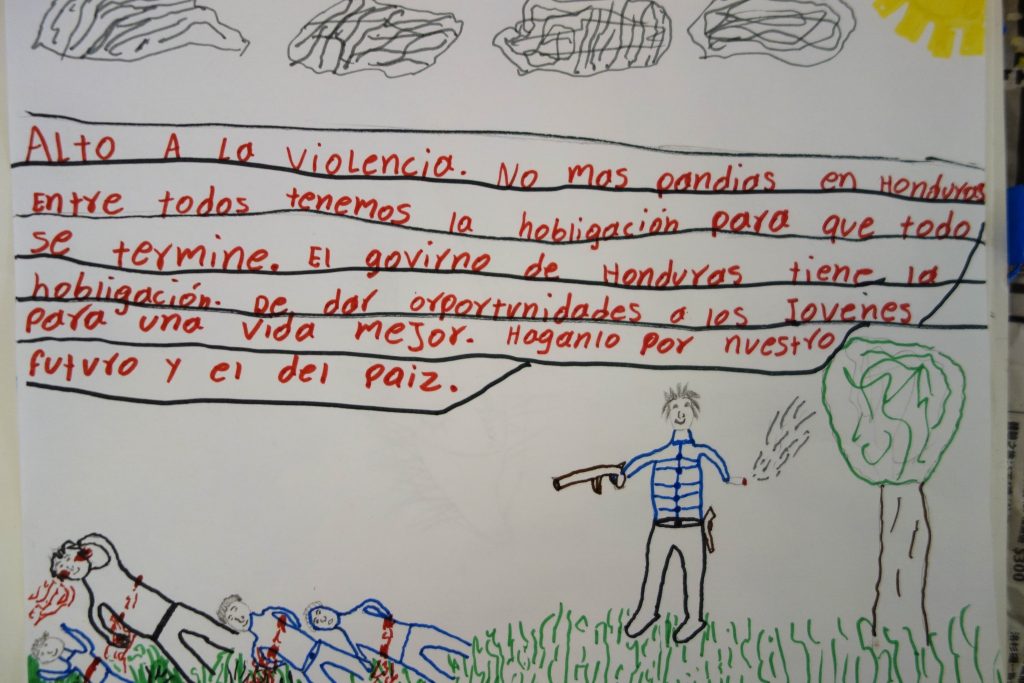
Floreal, a 16-year-old from Honduras drew a potent image that says: “Alto a la violencia. No más pandillas en Honduras. Entre todos tenemos la obligación para que todo se termine. El gobierno de Honduras tiene la obligación de dar oportunidades a los jóvenes para una vida mejor. Háganlo por nuestro futuro y por la paz.” / “Stop the violence. No more gangs in Honduras. We all have an obligation to put an end to it and to them. The Honduran government has an obligation to provide opportunities to the youth for a better life. Do it for our future and for peace.”
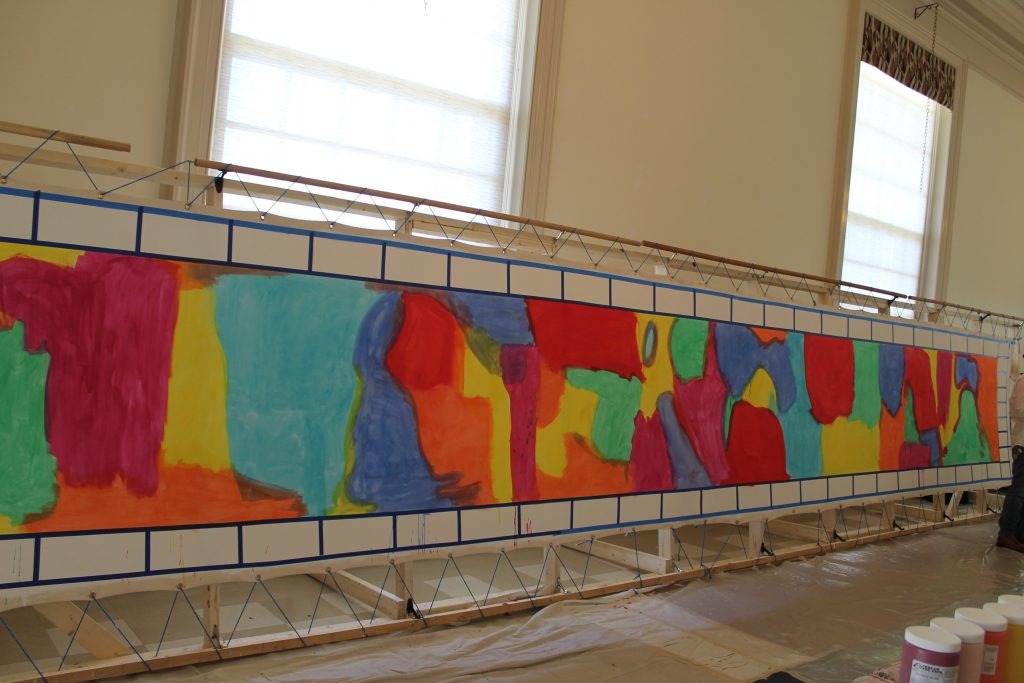
Mural painted on 35 feet long by 5 feet high stretched canvas on a wooden structure. This image shows that thin / watercolor-like layers of mural paint have already been applied on the surface of the entire mural.
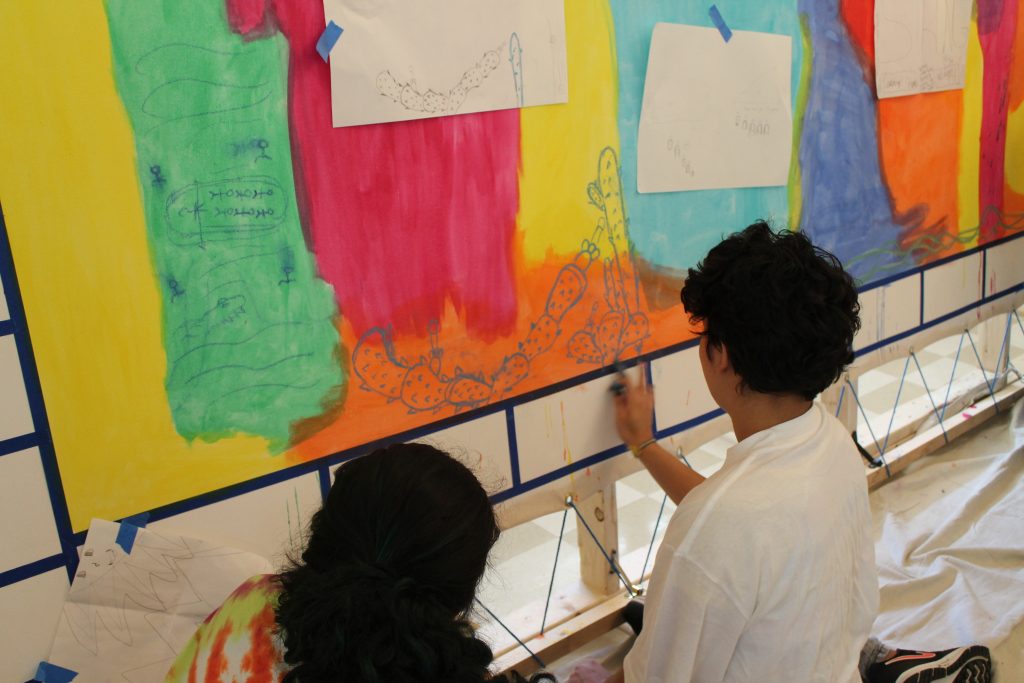
Two of the undocumented Central American migrant minors participating in this project are drawing on the mural.
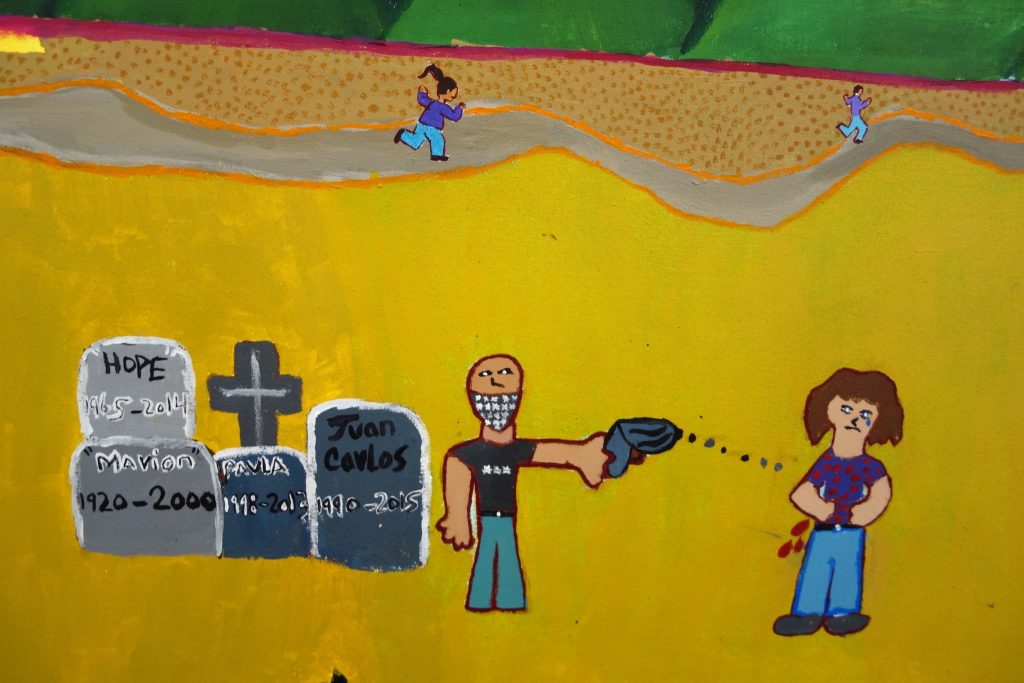
Detail of a scene in the mural representing violence at the US/ Mexico border.
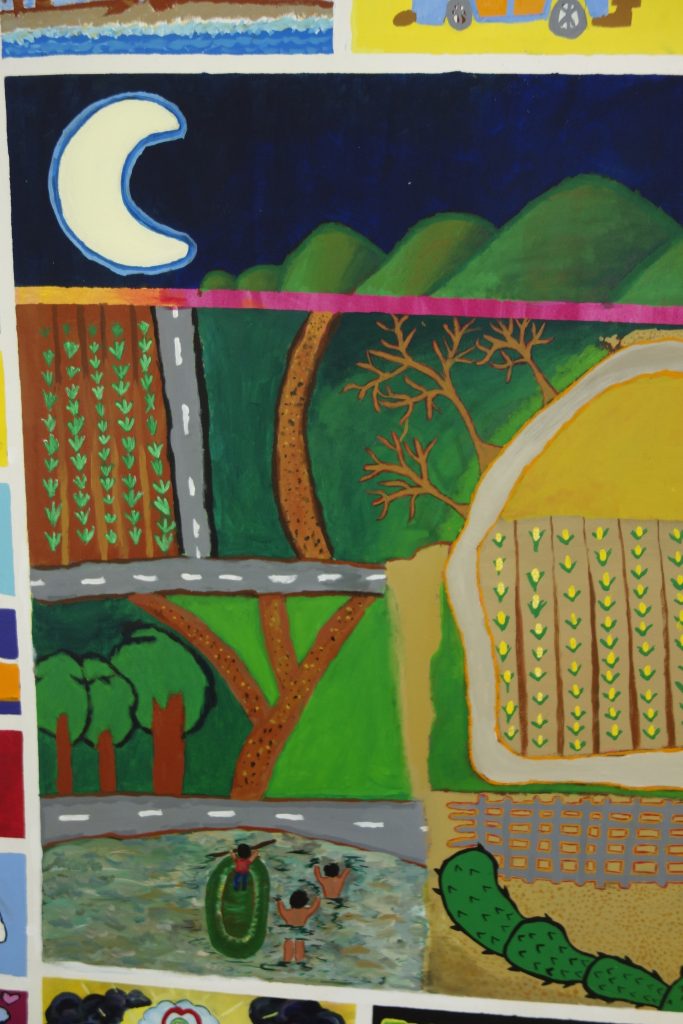
Detail of scene in the mural depicting the dangerous crossing of the Rio Bravo. Many Central American minors died in this perilous journey.
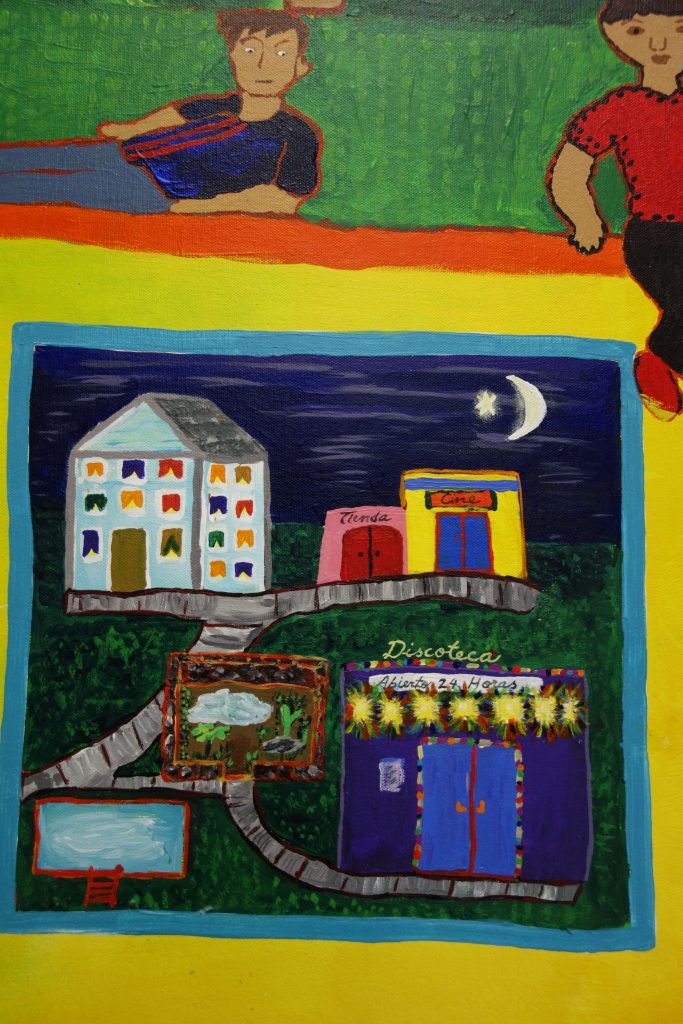
Central American undocumented minors incarcerated in the United States are painting the border of the mural with scenes representing their arrival to the US, and their imprisonment within the United Sates criminal justice system.
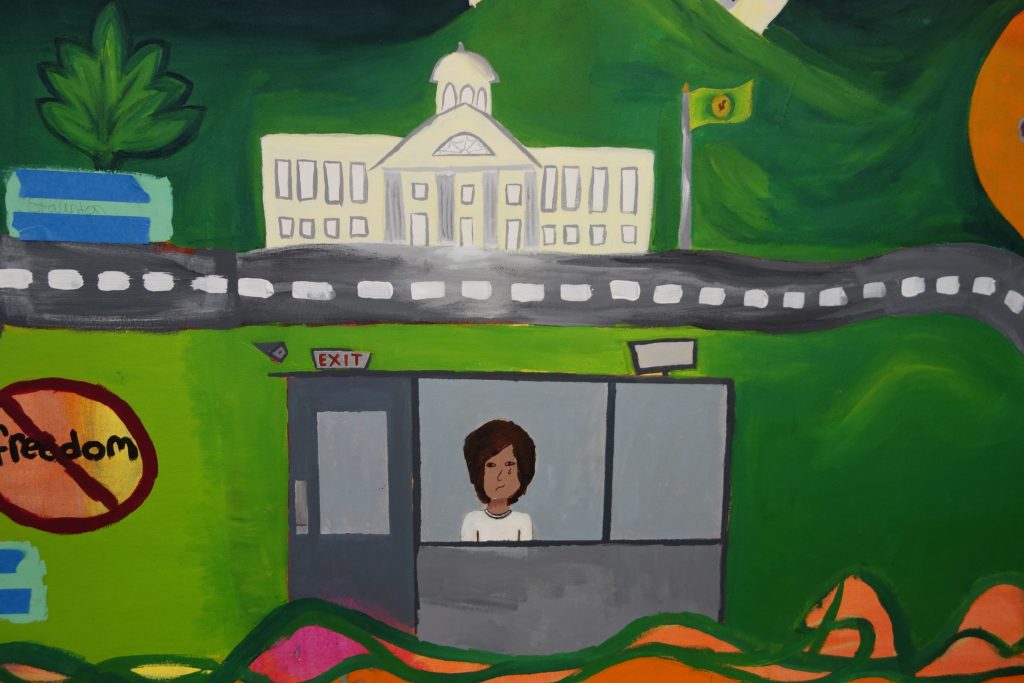
A Guatemalan girl featured in this image in solitary confinement, looks at the building of a university, depicted above her, wondering if she ever would have the chance to get out of jail and attend a university, be a student, become an independent young woman.
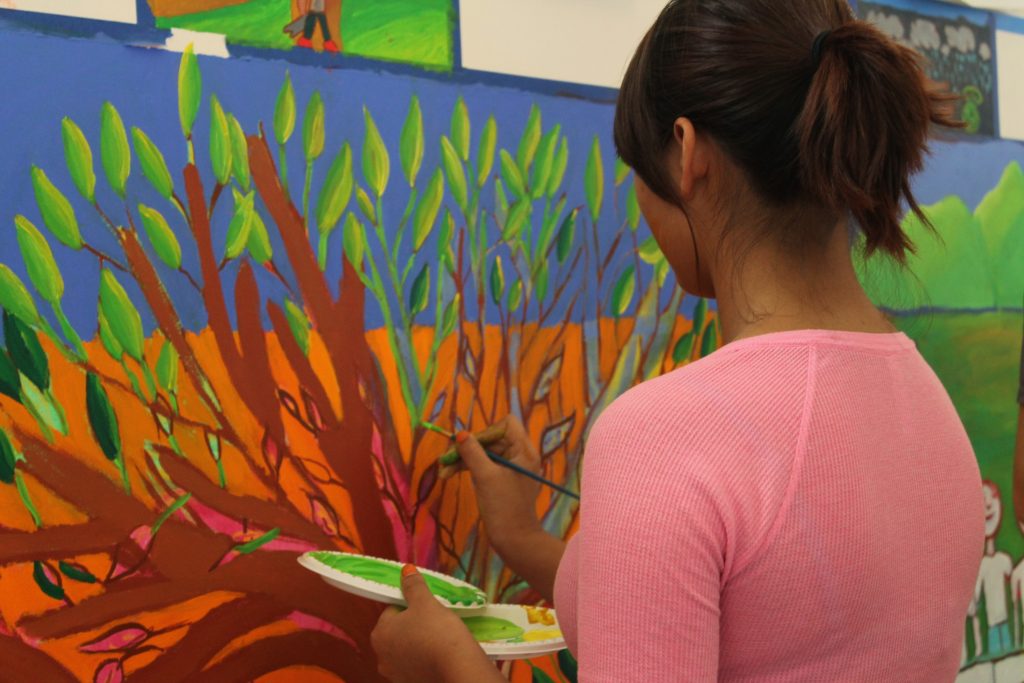
A Central American undocumented girl, incarcerated in the United States, paints the central part of Tree of Life.
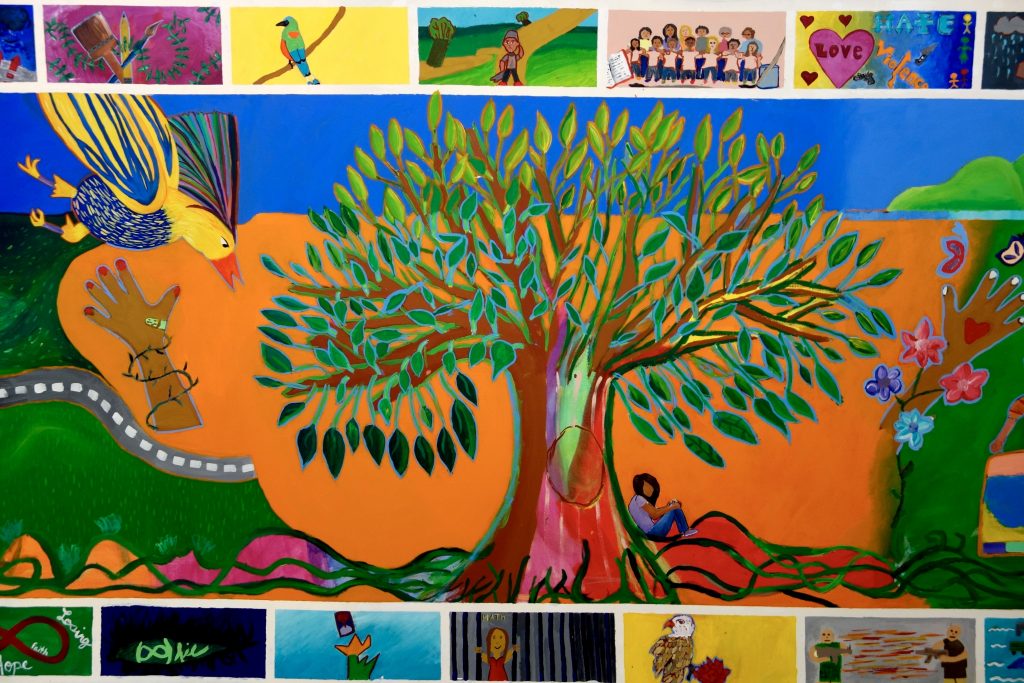
Part of the completed mural, The Tree of Life
Allow Me to Flower One More Time Project
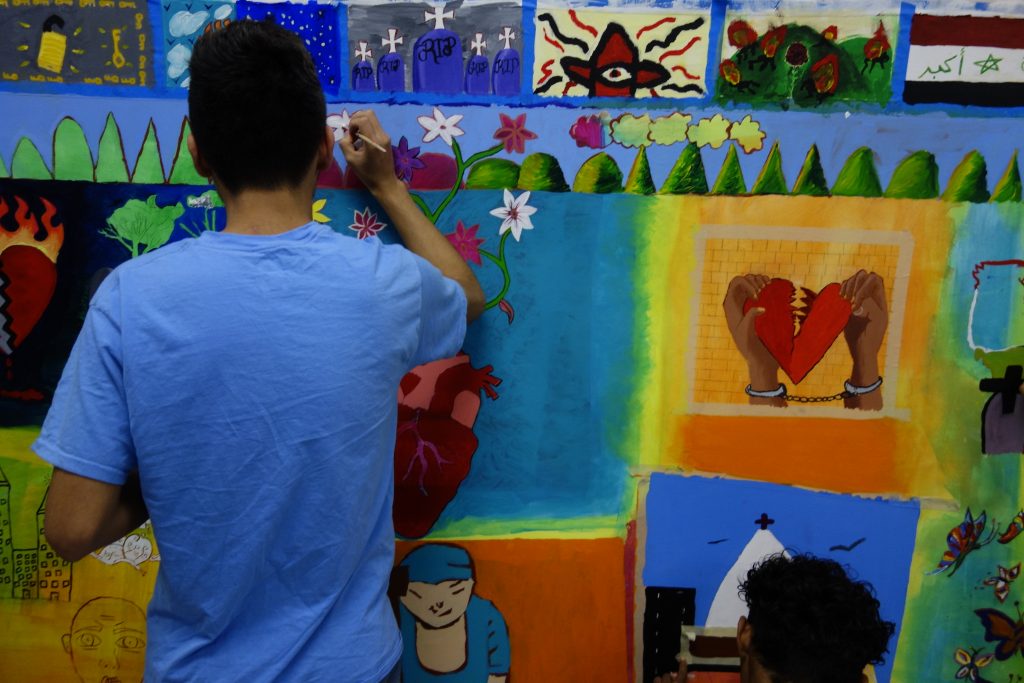
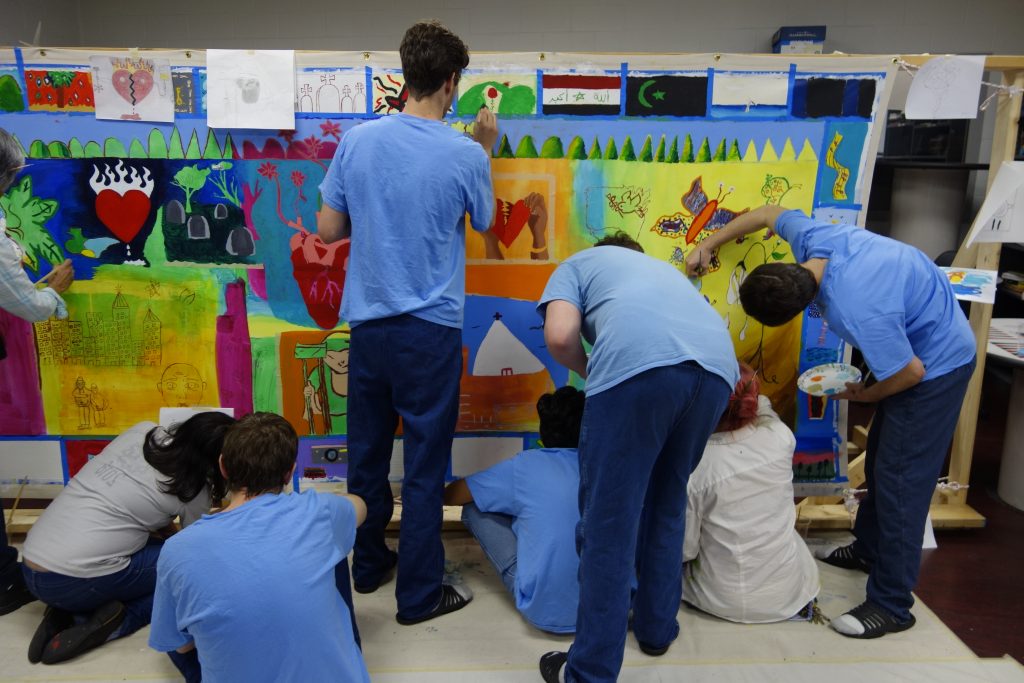
Central American migrant minors incarcerated in the United States work on a collaborative and community-based mural.
A Guatemalan undocumented migrant minor incarcerated in the United States paints the border of the mural.
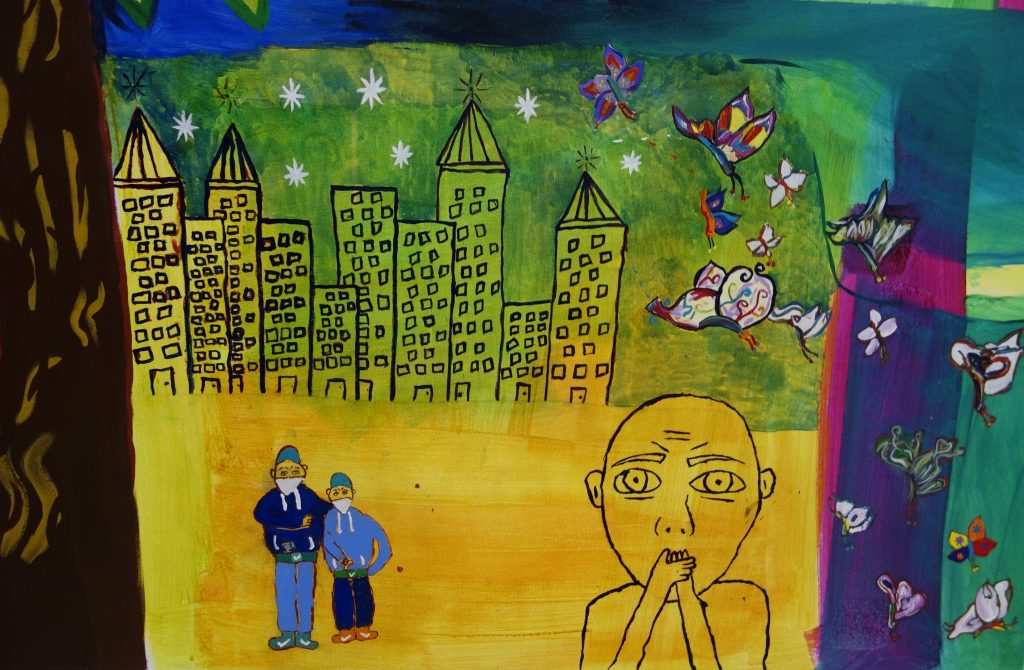
A Salvadoran undocumented migrant minor incarcerated in the United States painted this scene that depicts the fear, loneliness and extreme cold he felt when he arrived in New York after crossing many borders from El Salvador to the US. He was detained and incarcerated in New York.
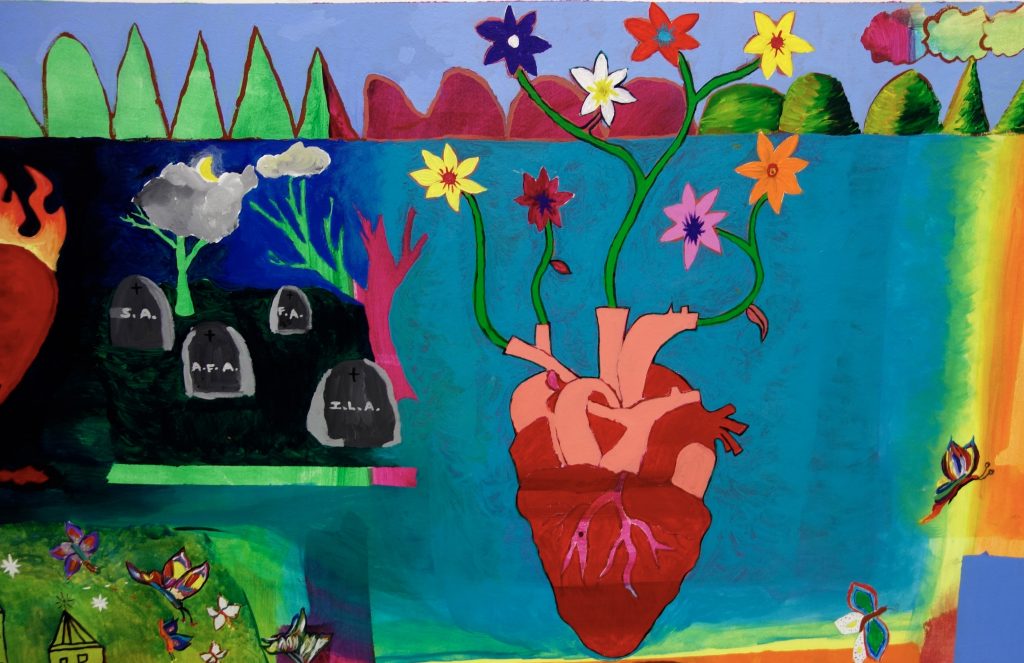
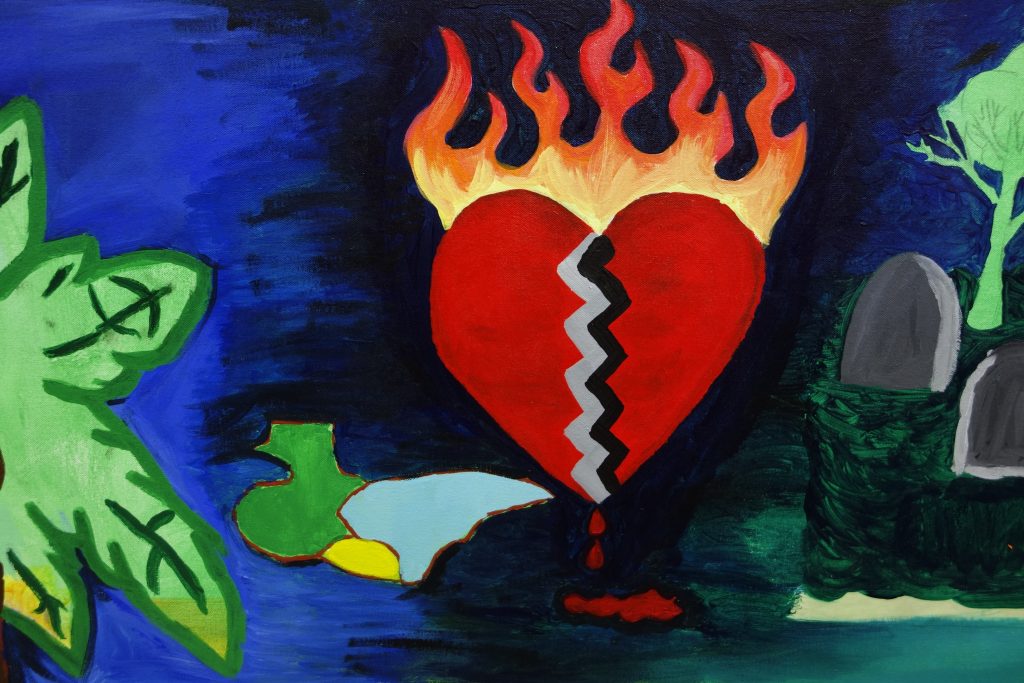
A Guatemalan undocumented migrant minor incarcerated in the United States painted a bleeding heart located in the middle of the mural symbolizing the sorrow, the confusion, the fear that Central American undocumented minors feel when they are taken to jails and prisons in the United States.
Central American migrant minors incarcerated in the United States work on a collaborative and community-based mural.
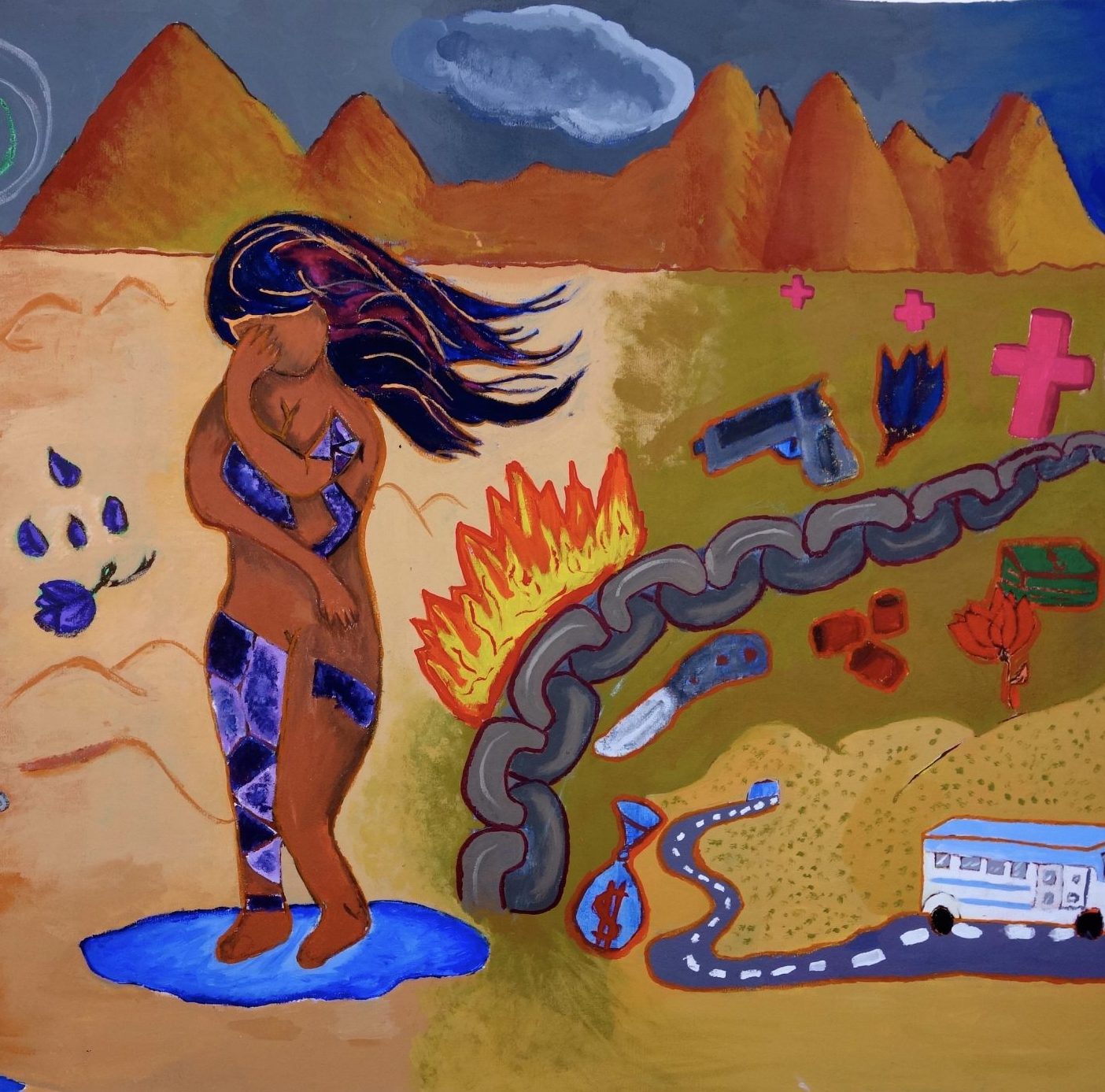
In the left side of the mural, a bleeding and burning heart torn into two pieces represent the very difficult decision that the Central American youth had to face when they initiated their long and perilous journey to the United States. None of the participating young artists wanted to leave their countries, but they all felt that it was a decision based on their opportunity to survive elsewhere or die at the hands of narcotraffic violence and gangs. Their hearts were torn apart by this choice.
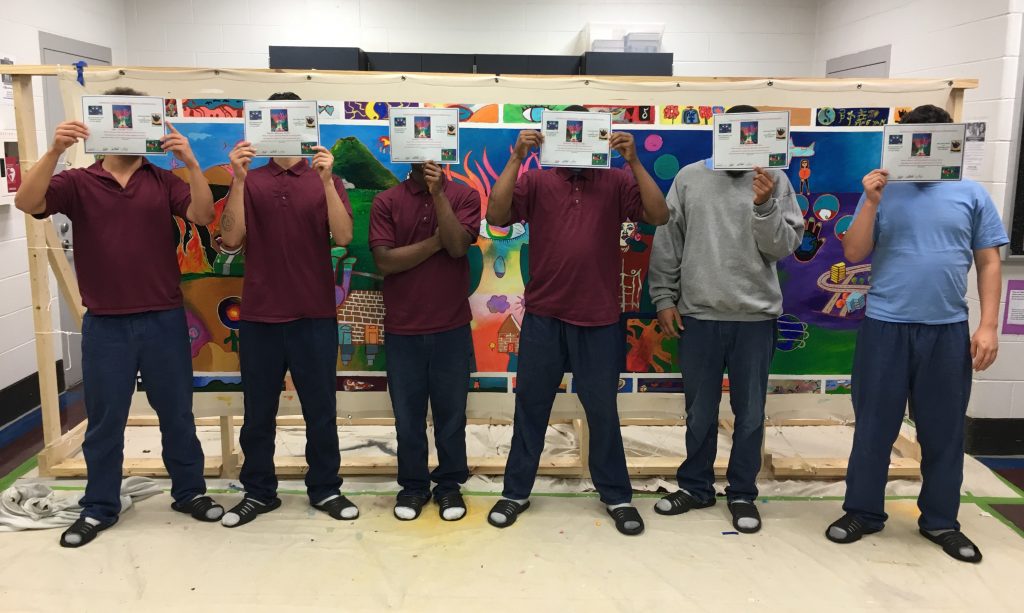
Central American migrant minors incarcerated in the United States completing a collaborative and community-based mural.
Central American migrant minors incarcerated in the United States received a certificate acknowledging and congratulating them for having worked on, and successfully completed, a collaborative and community-based mural.
Chapter Nine
Whispers Flowing in an Endless River: Mural Painting with the Yurok Tribe
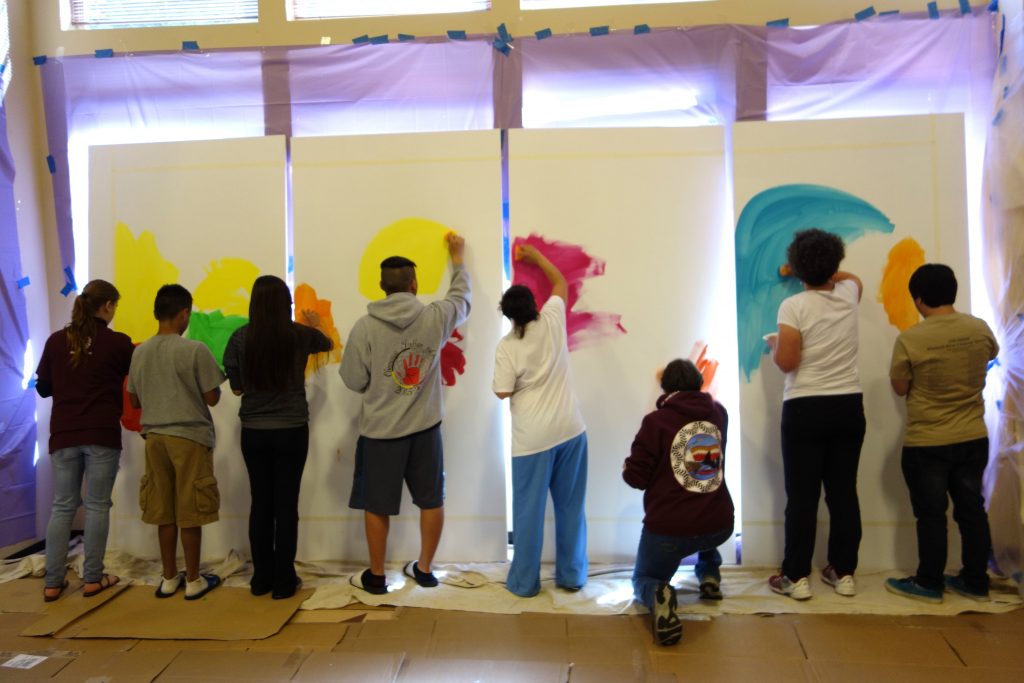
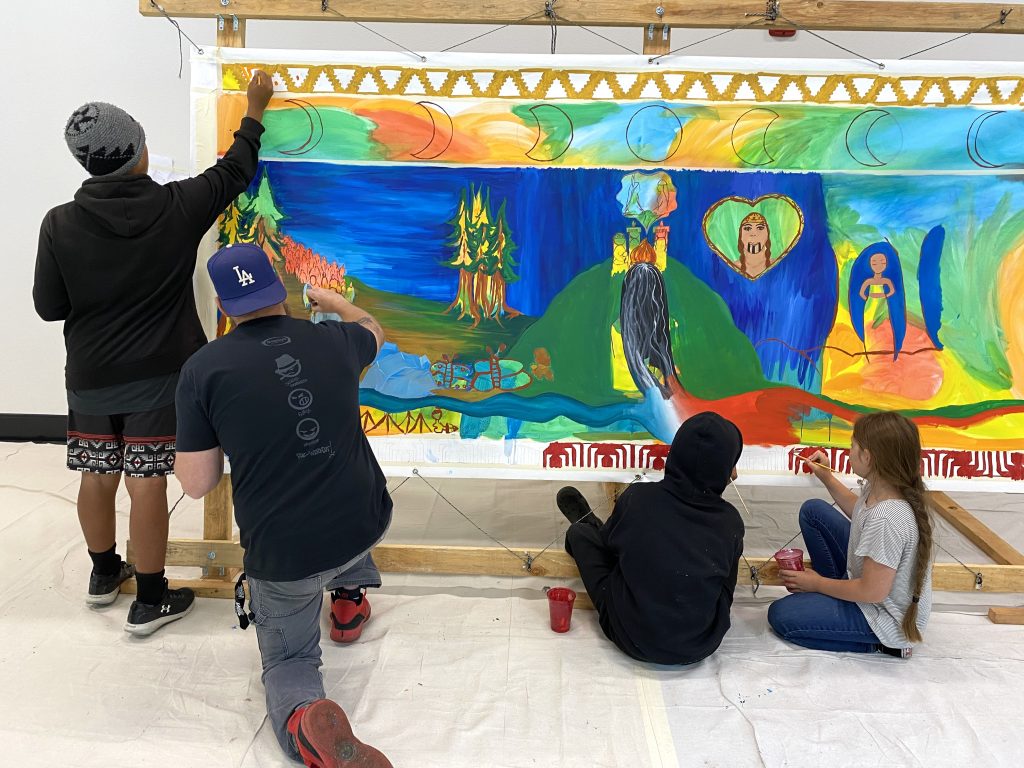
Yurok youth, adults and children met in 2016 at the Klamath Court House to paint a collaborative and community-based mural.
Silent Words, Weeping Hearts Project
Yurok youth, adults and children met in 2016 at the Klamath Court House to pain a collaborative and community-based mural.
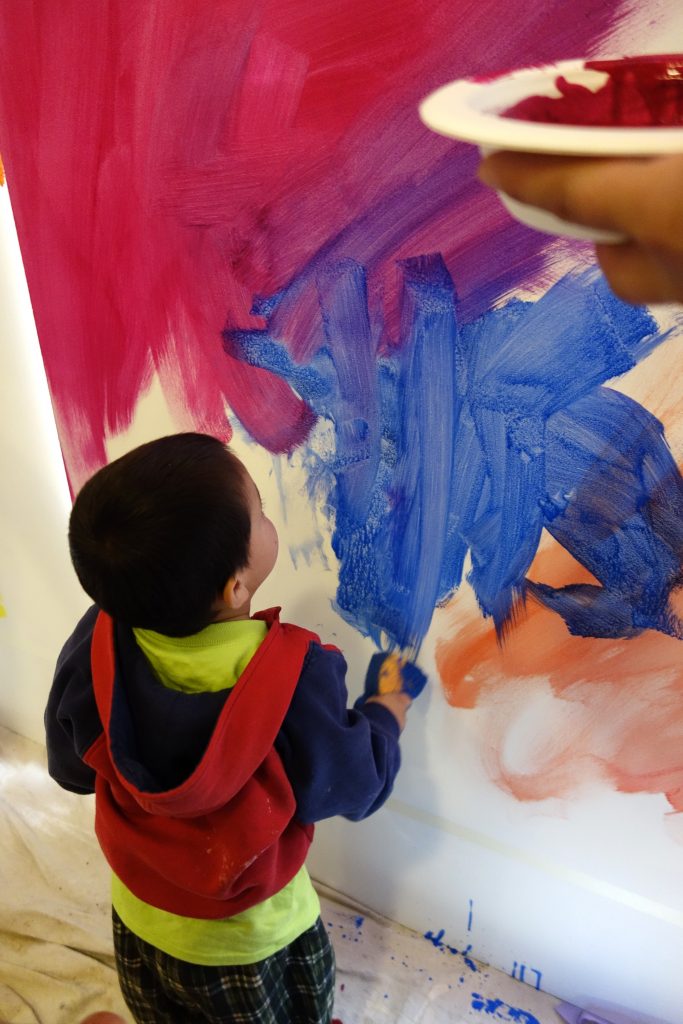
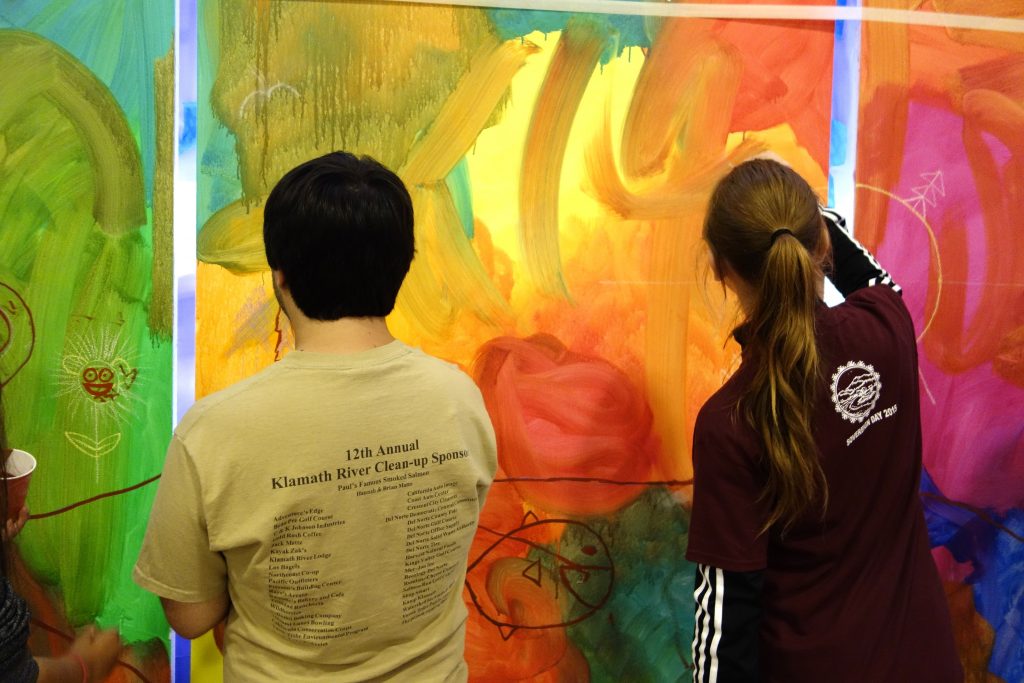
Young Yurok artist applying color on the mural.
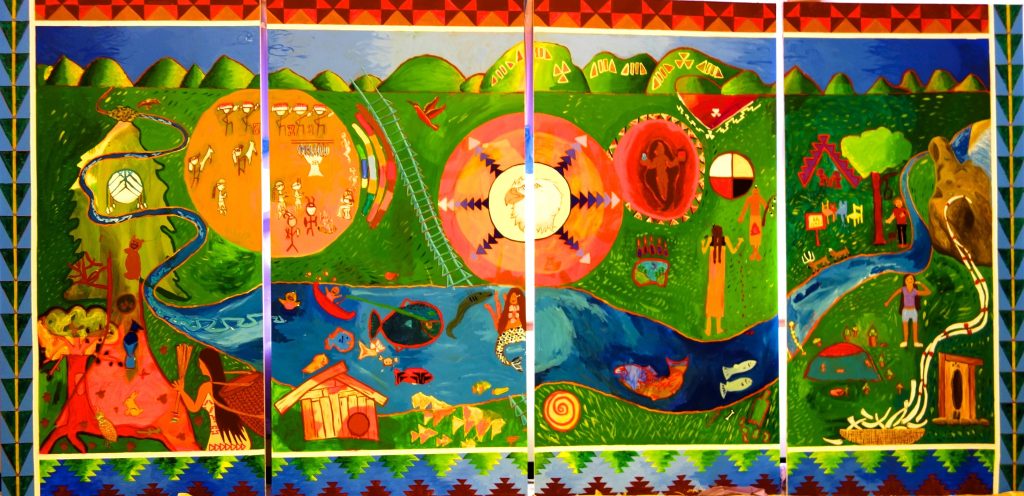
Yurok artists applying thin/watercolor-like mural paint on the surface of the mural, which was painted on four panels, 6 feet-high by 3 feet-wide, each.
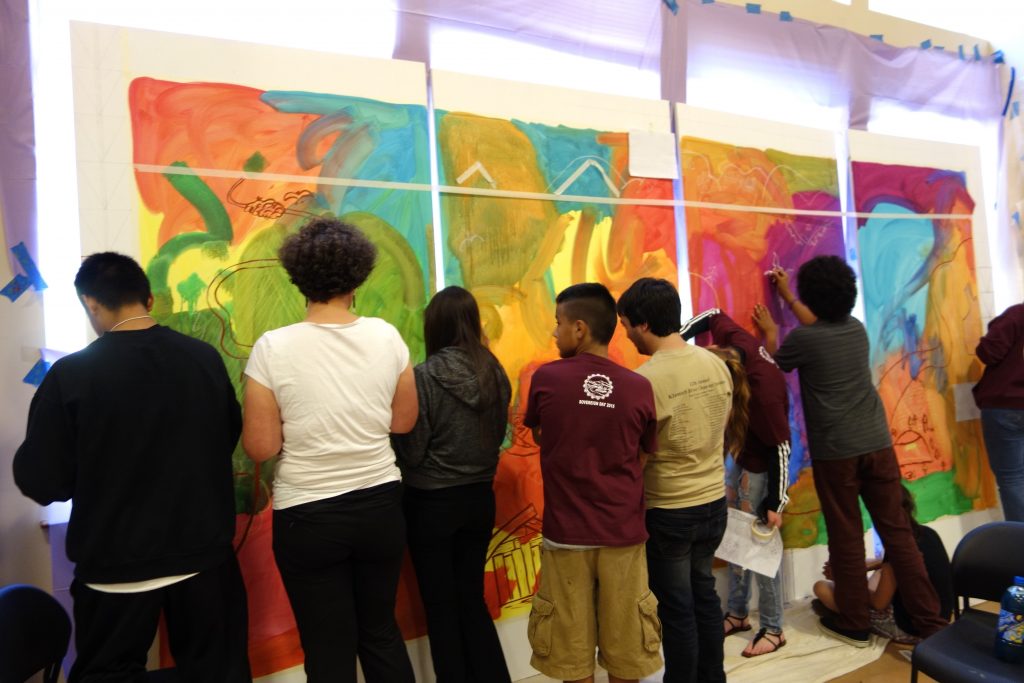
Yurok artists advancing on the painting of the mural.
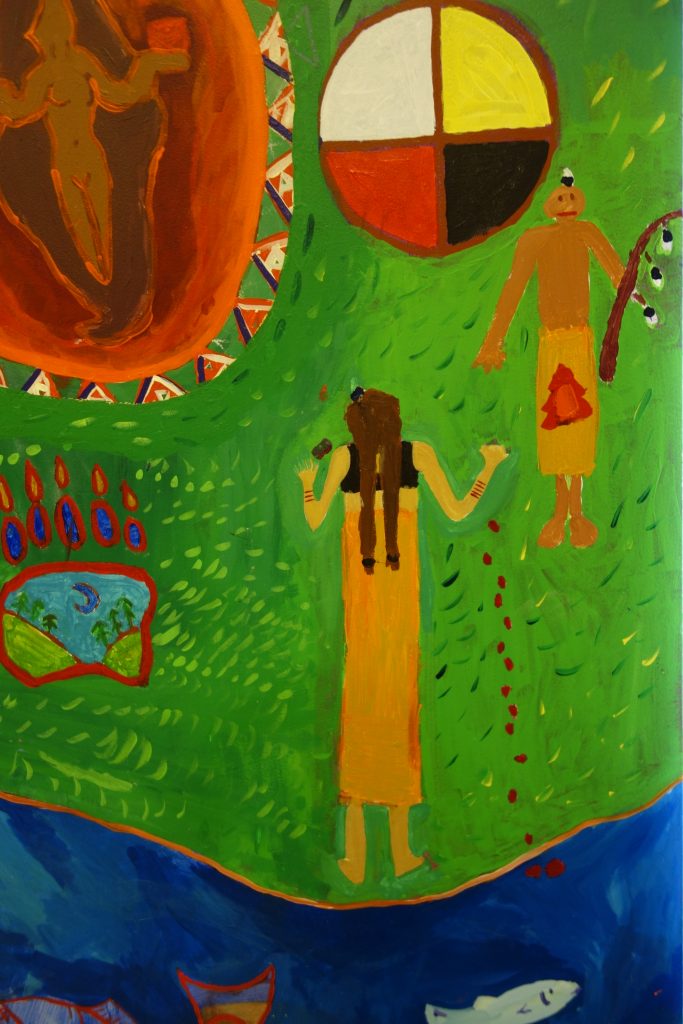
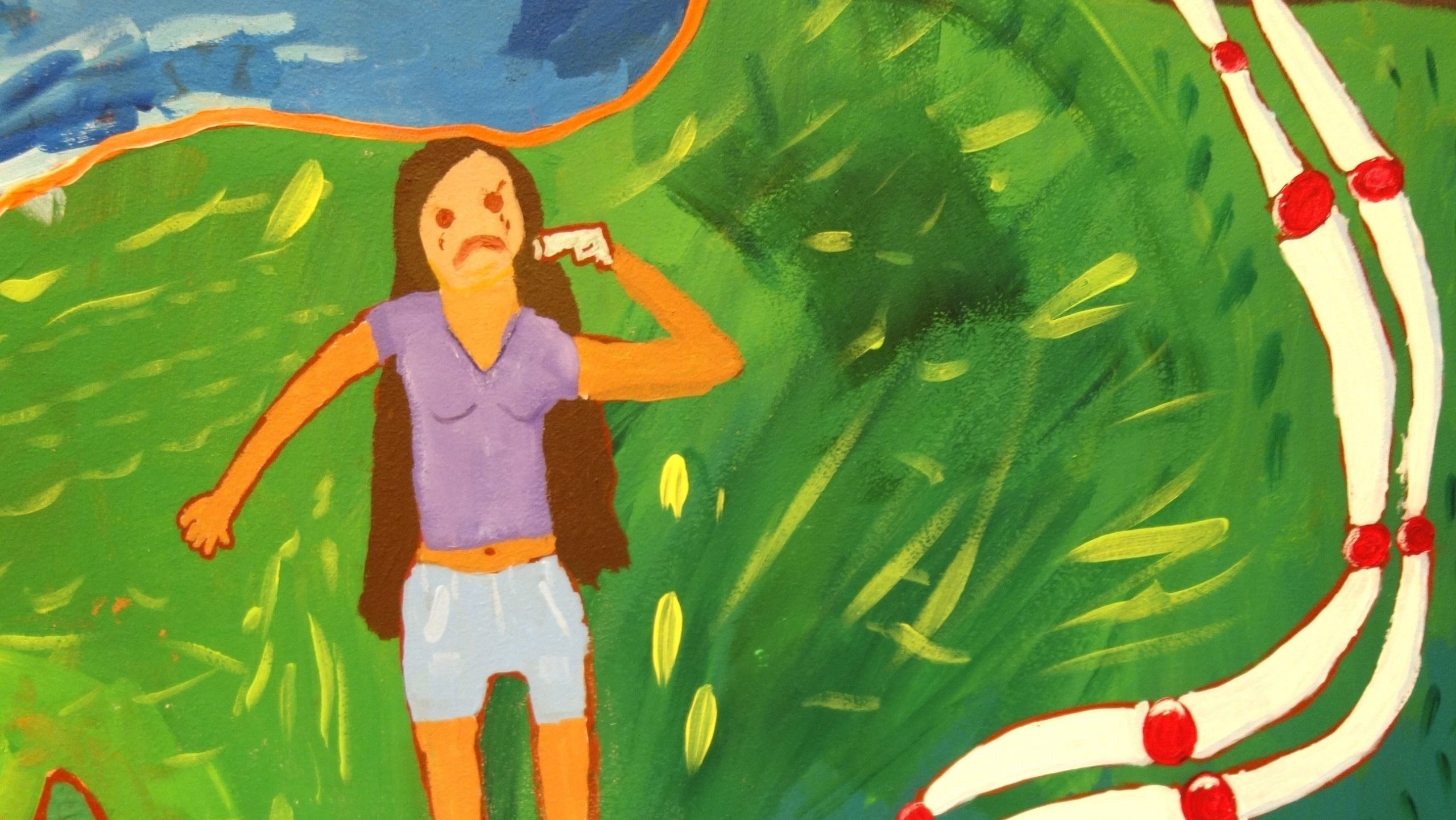
Scene located at the extreme right of the mural, depicting a young Yurok girl about to commit suicide.
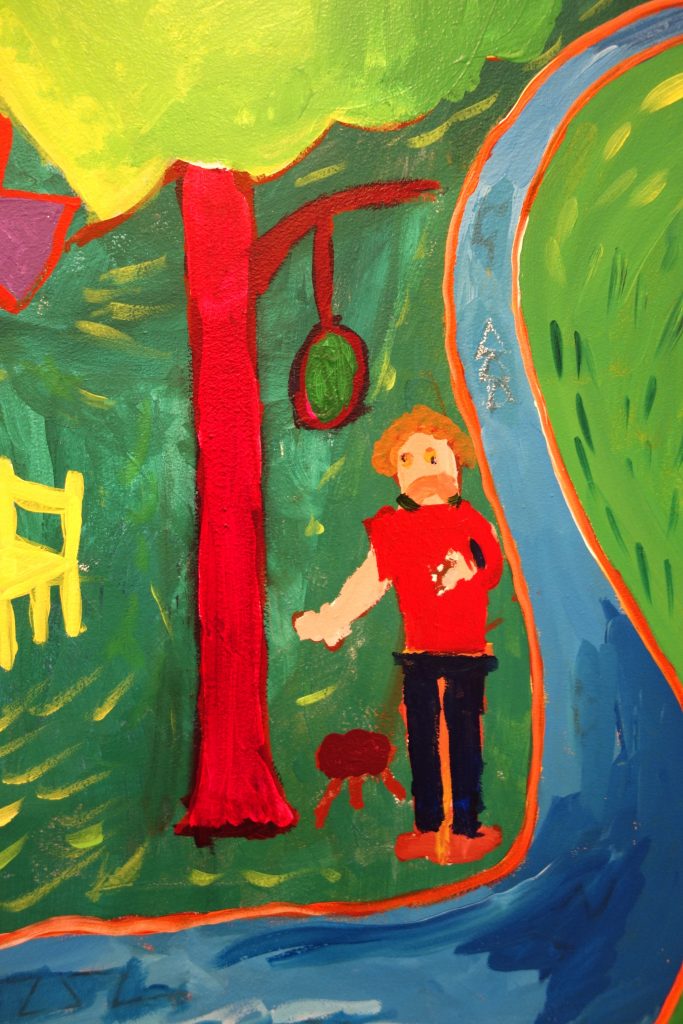
Scene located at the extreme right of the mural, depicting a young Yurok boy contemplating killing himself by hanging.
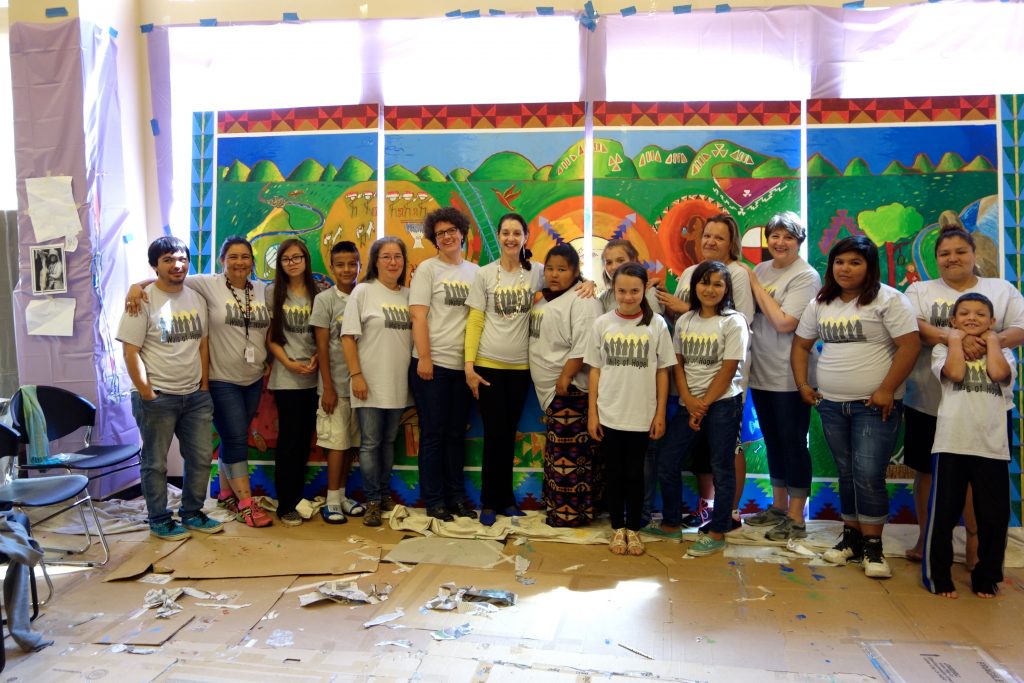
Yurok artists who participated in this mural project.
Completed mural located at the entrance of the Yurok Court House in Klamath, California.
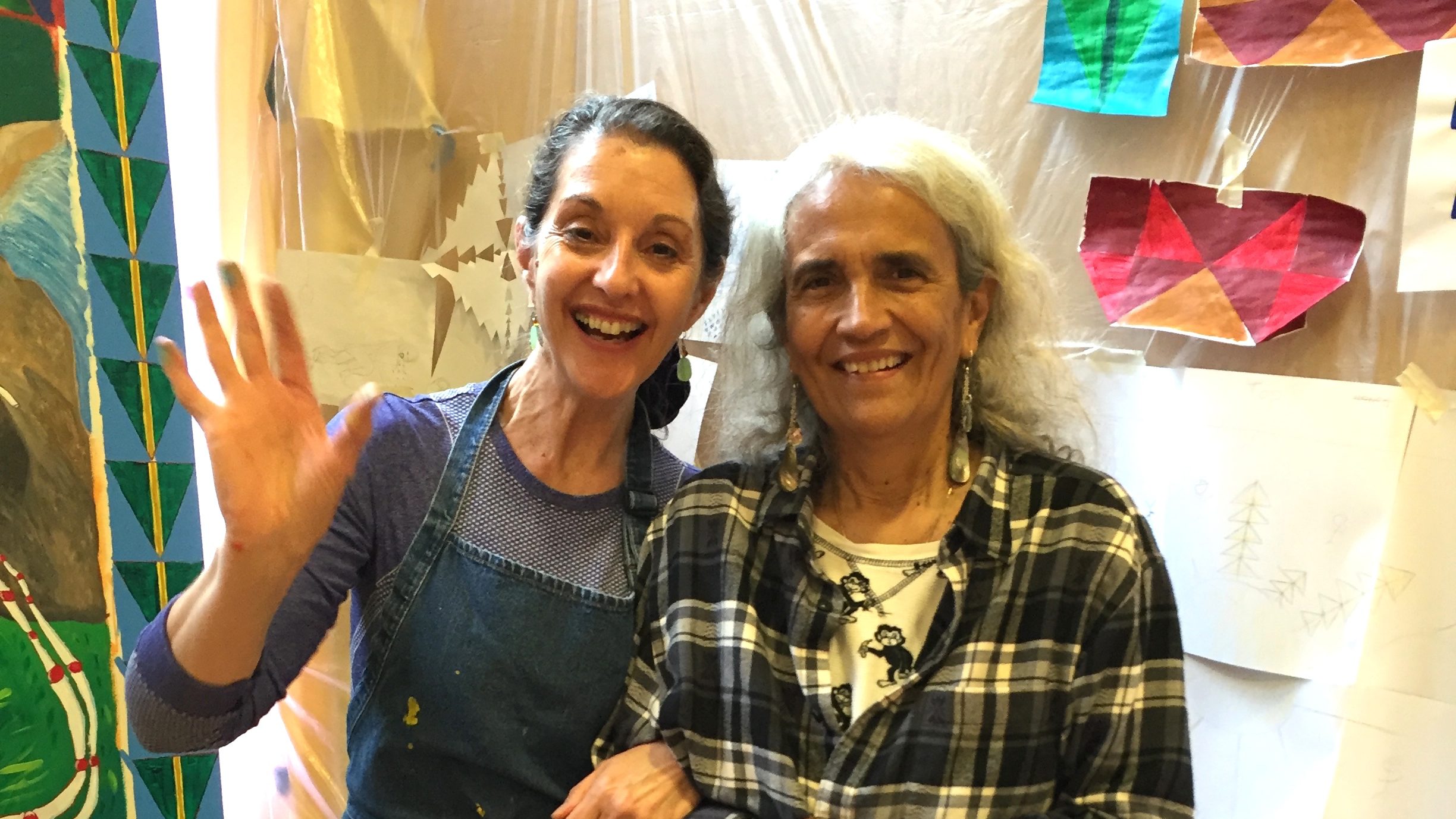
Abby Abinanti and Claudia Bernardi. Photo credit: Laura Woods
A Bleeding Moon Project
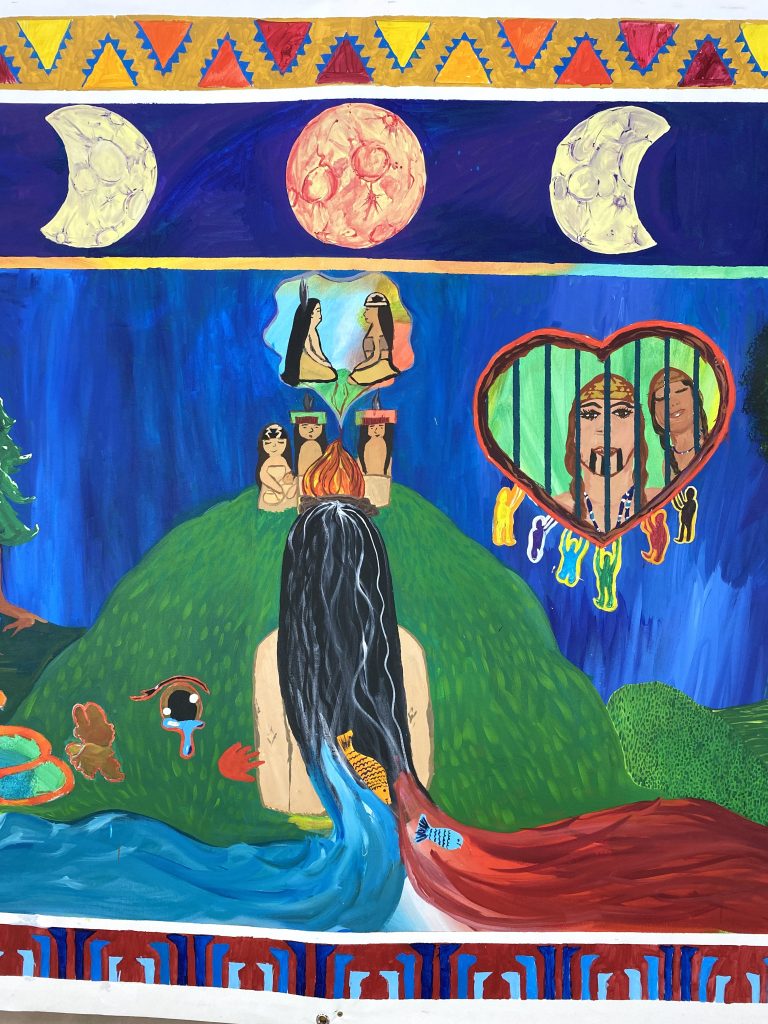
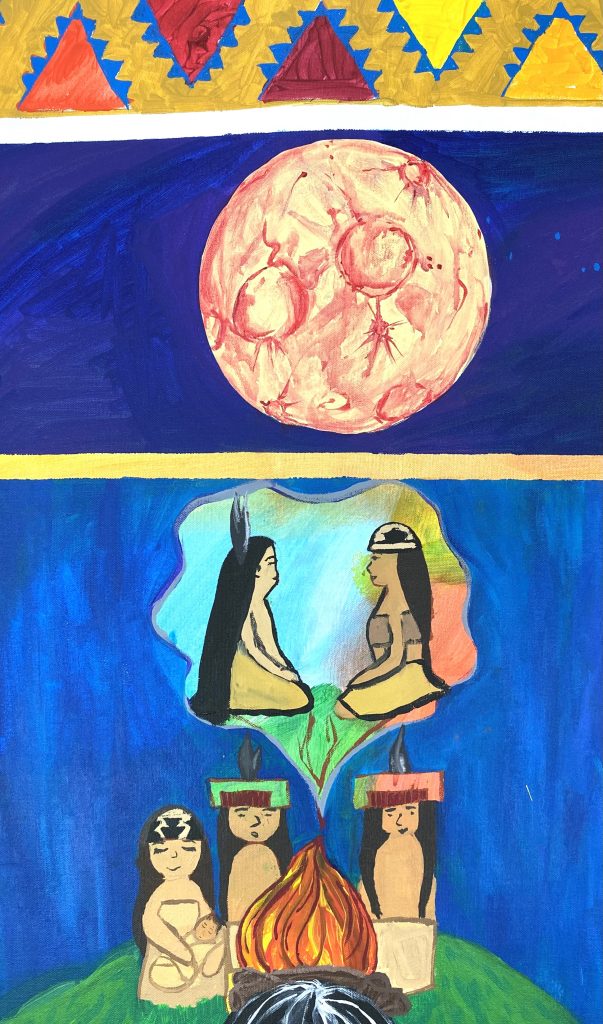
Yurok artists painted a mural in Klamath, in 2022, in which a main character located prominently in the center of the piece is rendered as a person of unknown age, sex or provenance. He/ She/ They represent all the members of the Yurok Tribe.
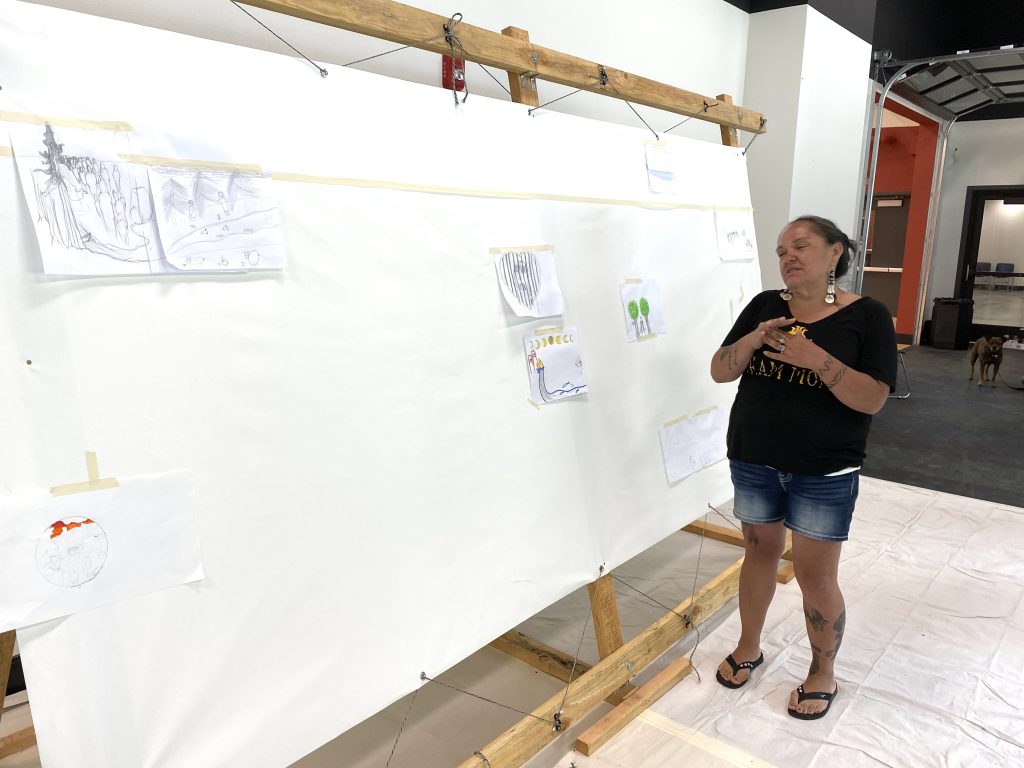
A Yurok mother of six children shares with the participating artists his drawings identifying ideas for the development of the theme of the mural.
Yurok artists are applying the first layers of thin/watercolor like mural paint to bring light to the mural.
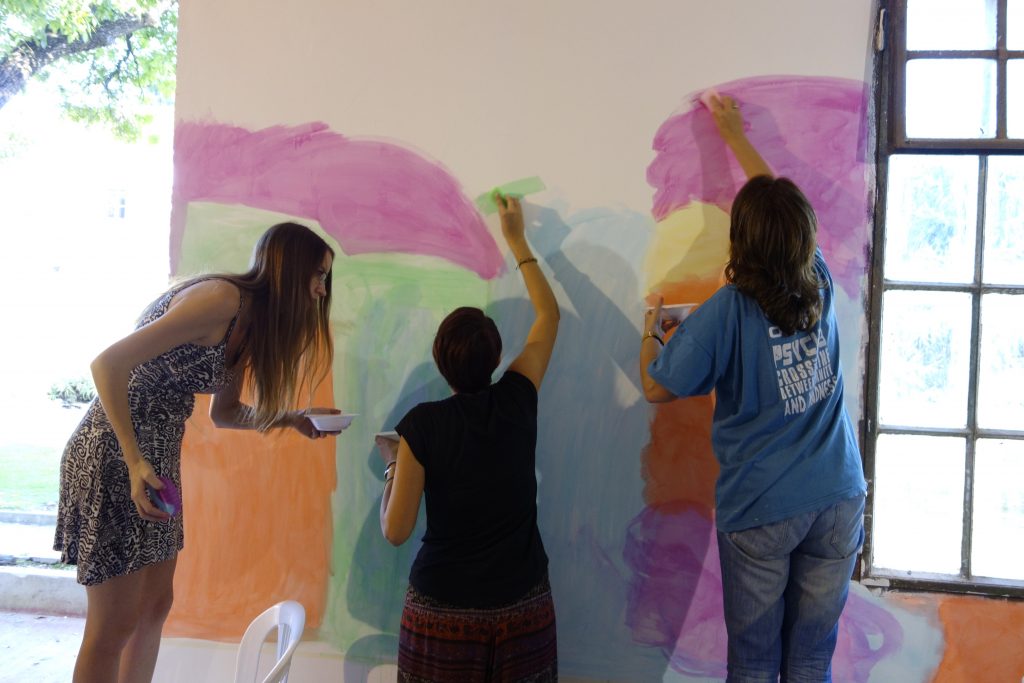
Yurok artists painting together on the collaborative and community-based mural.
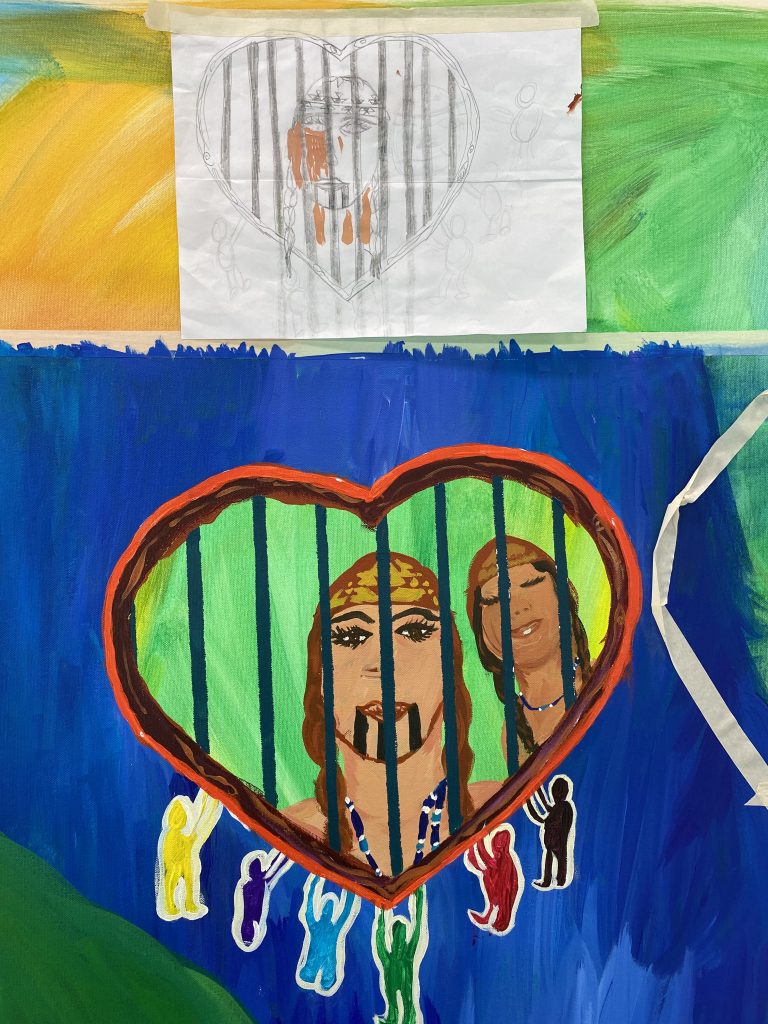
A young Yurok woman is trapped behind bars and cannot get out.
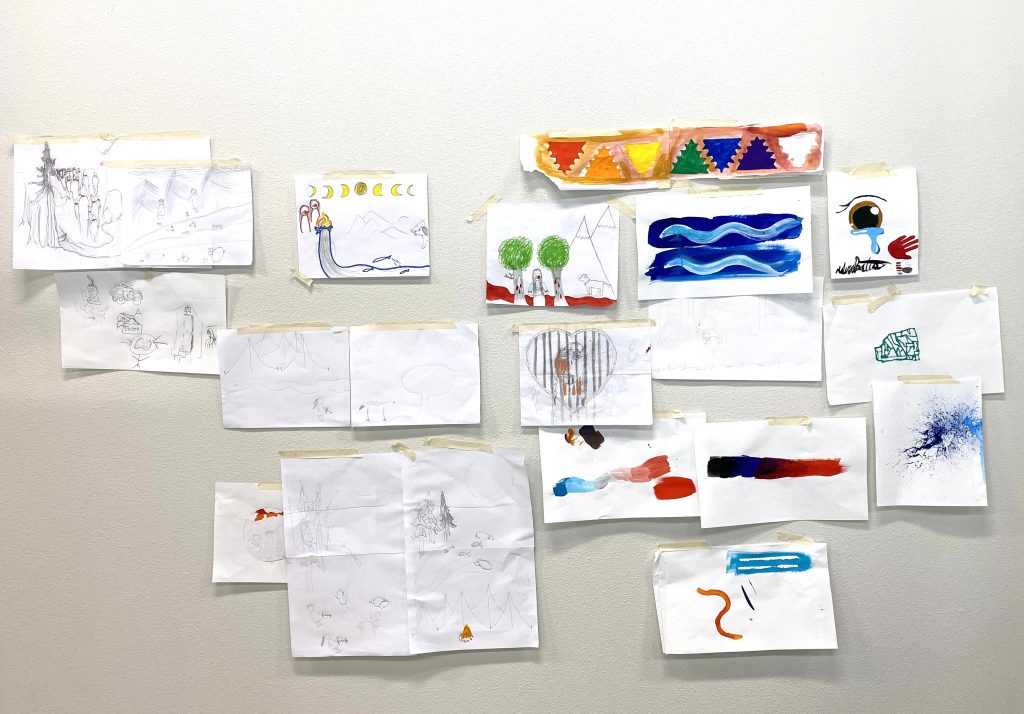
Sketches and drawings representing ideas to design the four borders of the mural.
Yurok artists working together on the mural.
Part of the completed mural. Photo credit, Kendall Allen-Guyer
Chapter Ten: Conclusion
“The Brush Is Like a Candle; It Has Light on One End”: The Unpredictability of Endless Fear and the Determination of Hope
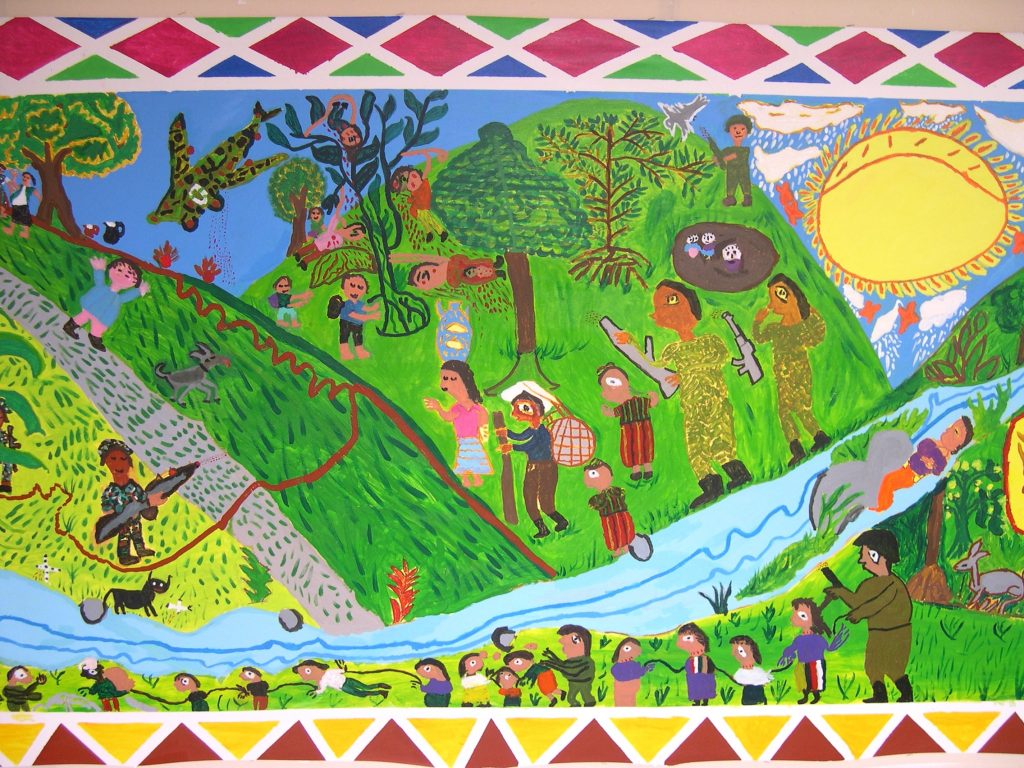
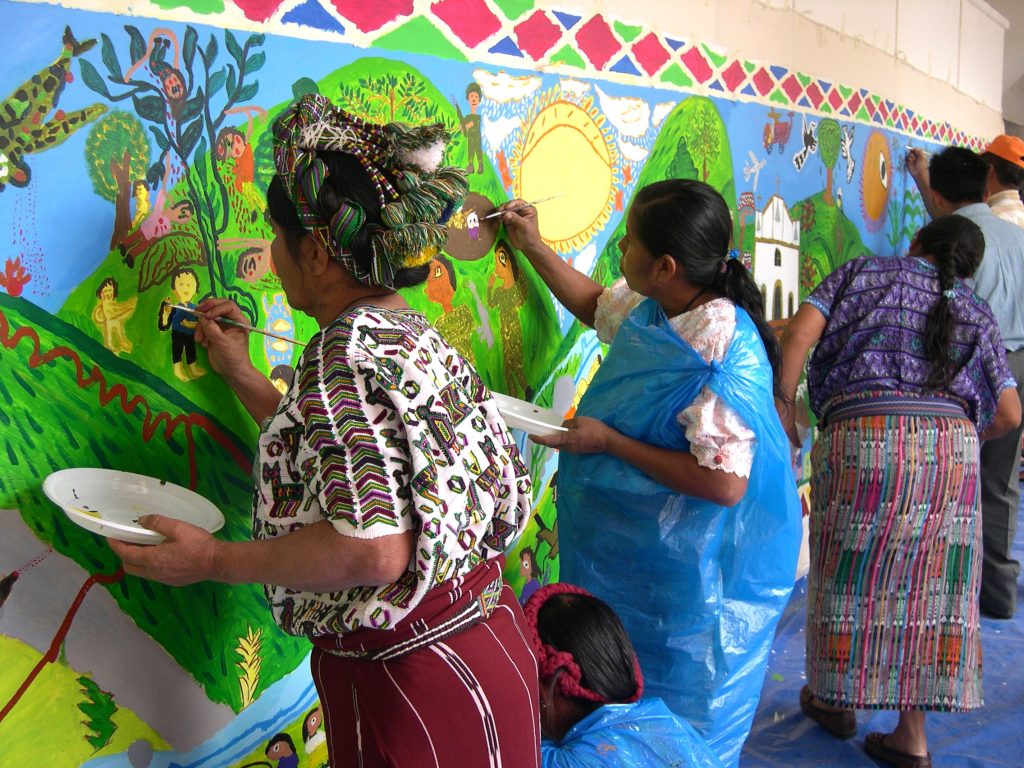
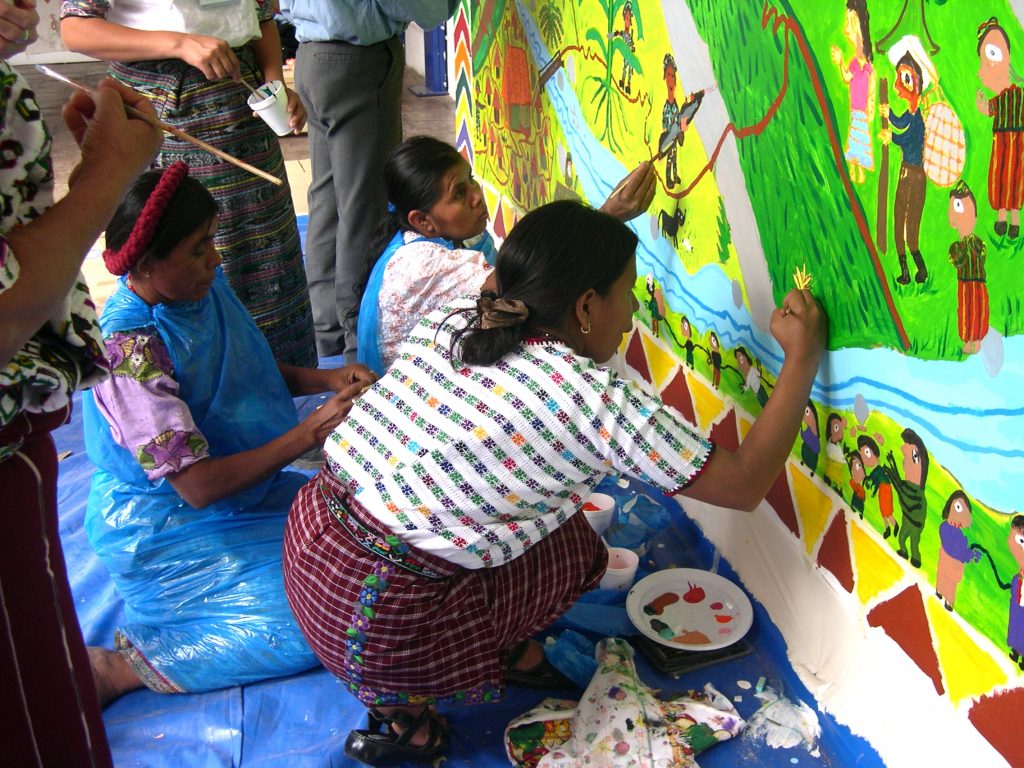
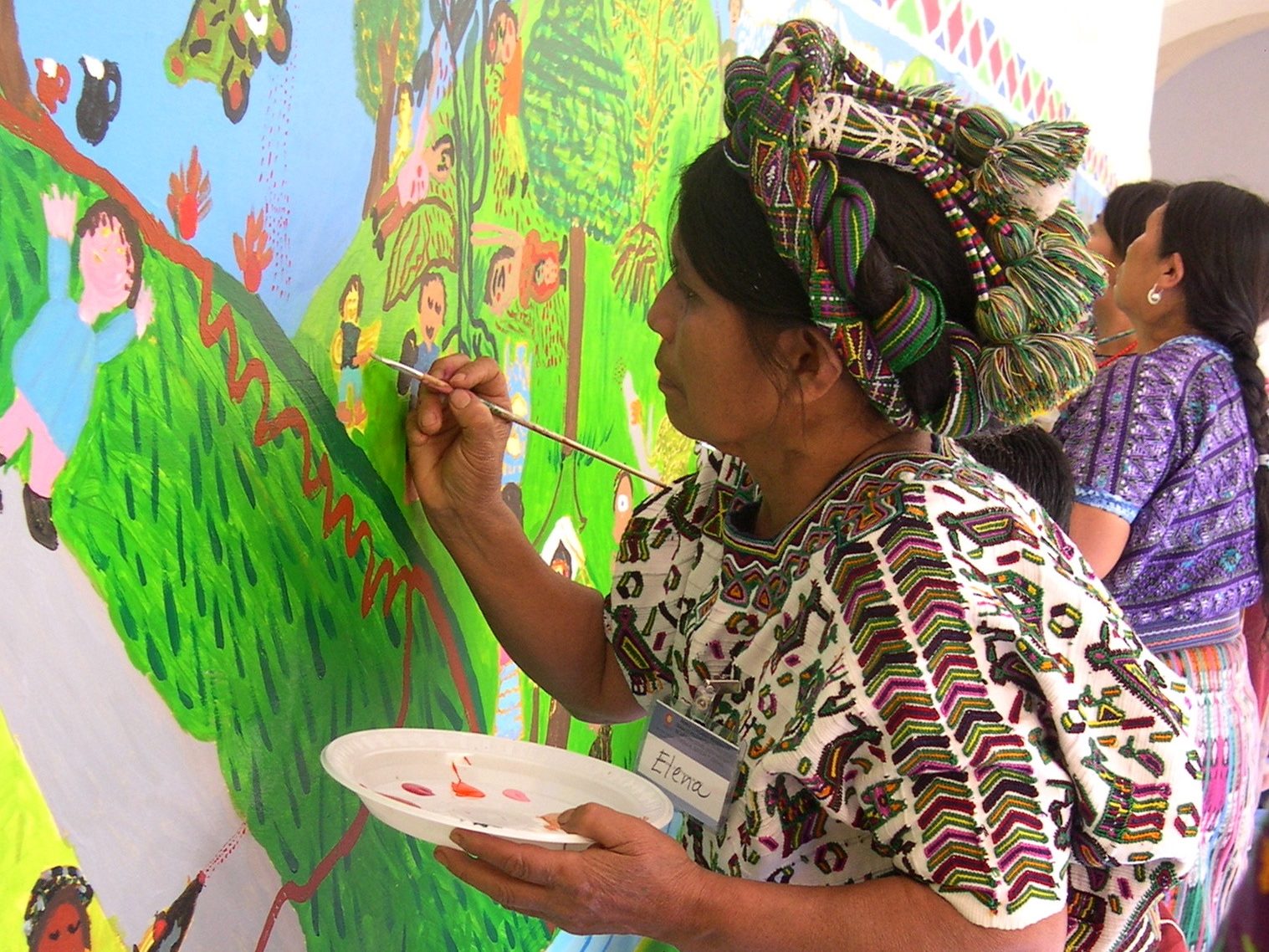
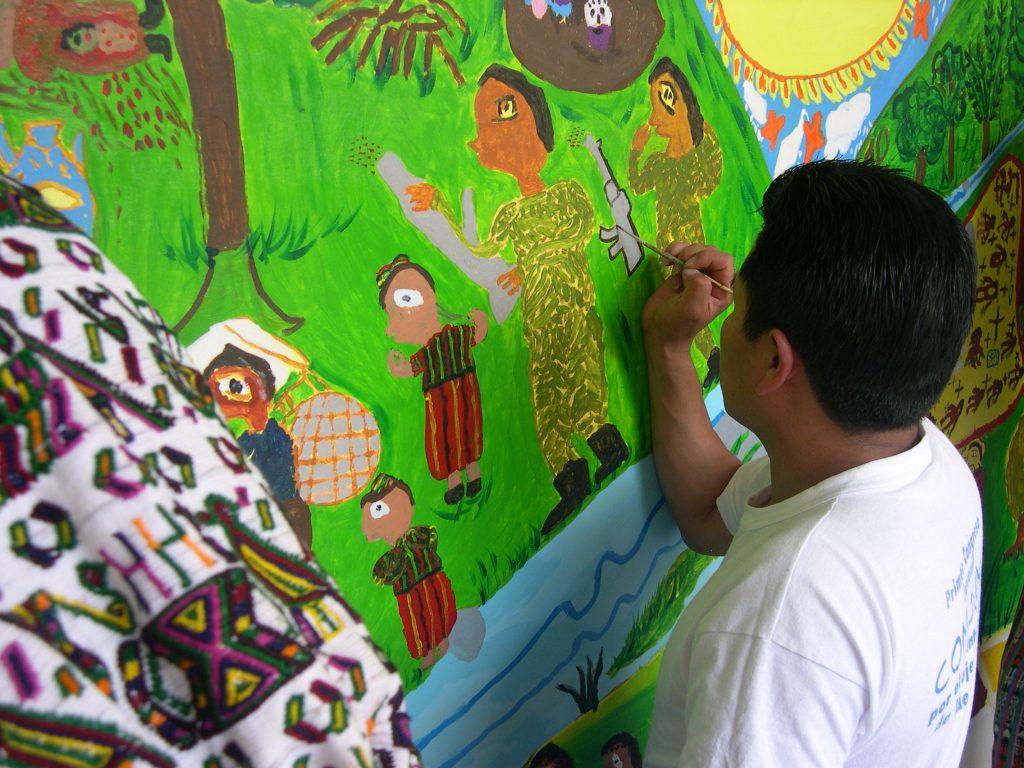
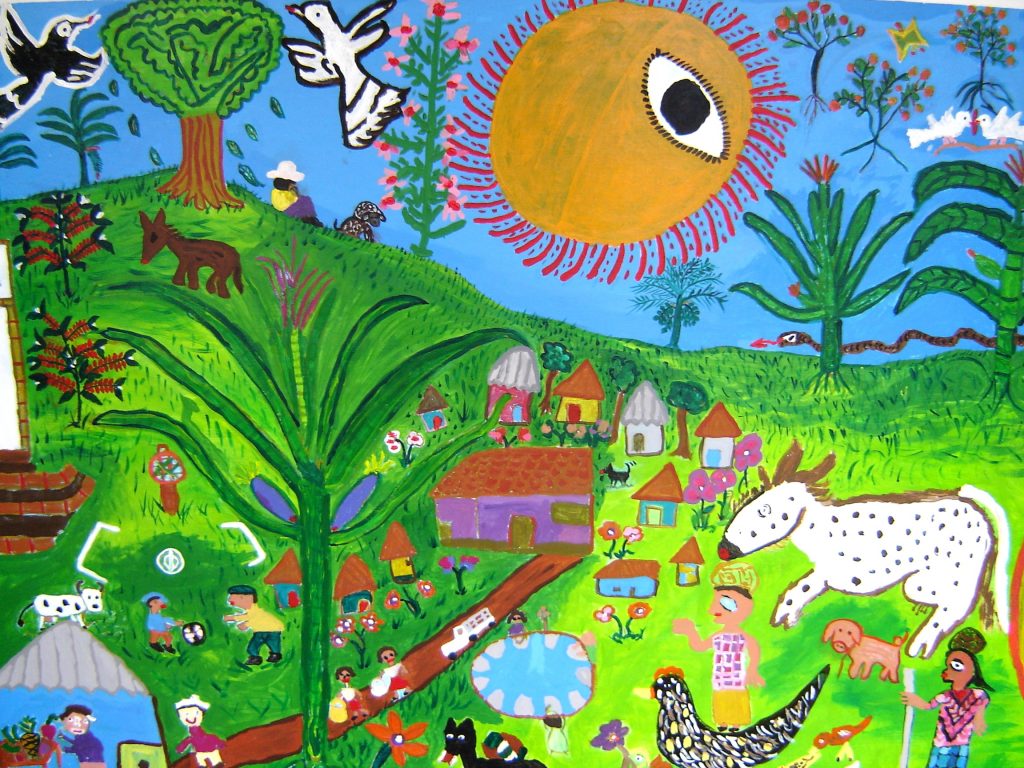
In 2008 indigenous people, survivors of massacres in Ixil, Ixcán, Nebaj, Chajul, Chimaltenango, and Rabinal, Guatemala, met in La Antigua to paint a collaborative and community-based mural addressing the violence that they had faced, the crimes they had endured and the memories of their survival. This part of the mural depicts the Guatemalan army brutalizing the indigenous communities.
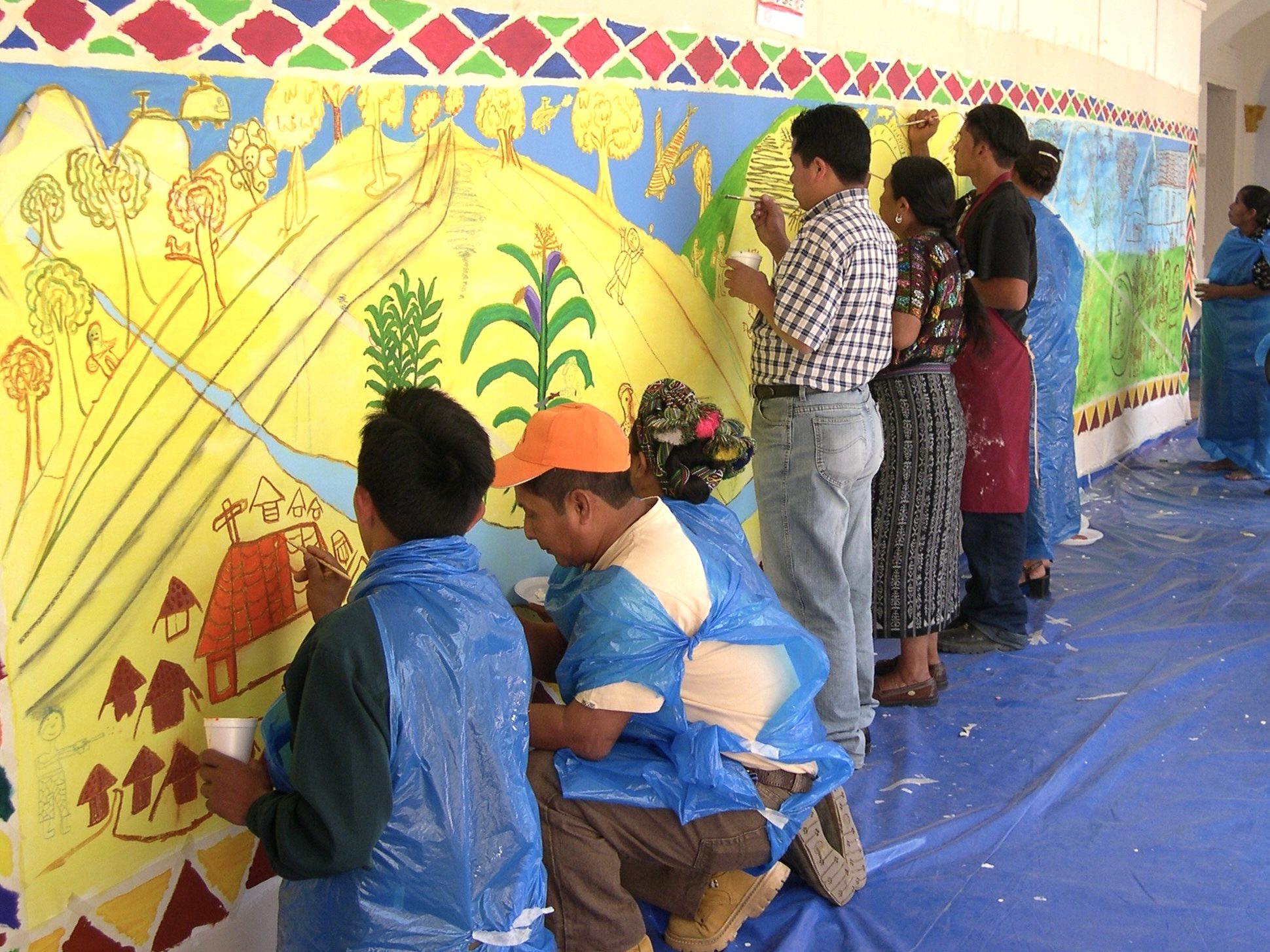
Indigenous Guatemalan artists starting the mural process in La Antigua, Guatemala.
Artists from Nebaj and Chimaltenango painting together.
Indigenous Guatemalan artists painting the lower part of the mural.
Artist from Nebaj painting a helicopters.
Artists, survivors of the massacre of Estrella Polar, painting together in La Antigua.
Artists from Ixil, Ixcán and Chajul, painting together in La Antigua.
A central image in the mural represents a sun with a watchful eye that will protect the indigenous communities from further harm.
Indigenous Guatemalan artists, participants of the creation of the mural in La Antigua, Guatemala, 2008. Photo credit: Olga Alicia Paz
“What we have done today, we couldn’t do in twelve years of war.”
– former FMLN combatant after a community caricature workshop